


Interaction of GPER-1 with the endocrine signaling axis in breast cancer
- PMID: 39936103
- PMCID: PMC11811623
- DOI: 10.3389/fendo.2025.1494411
Interaction of GPER-1 with the endocrine signaling axis in breast cancer
Abstract
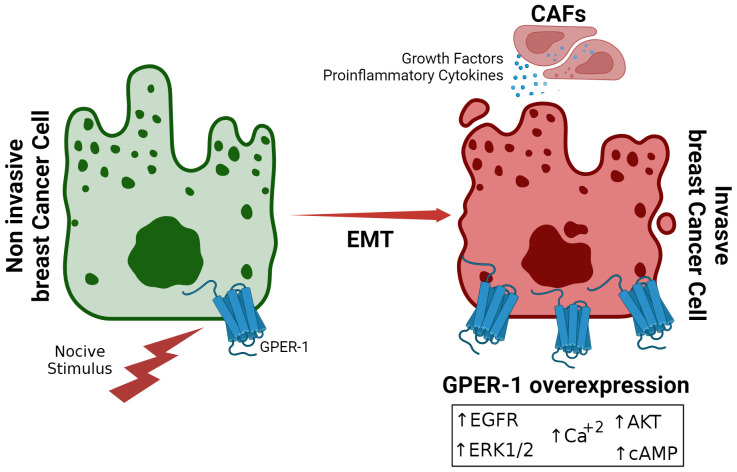
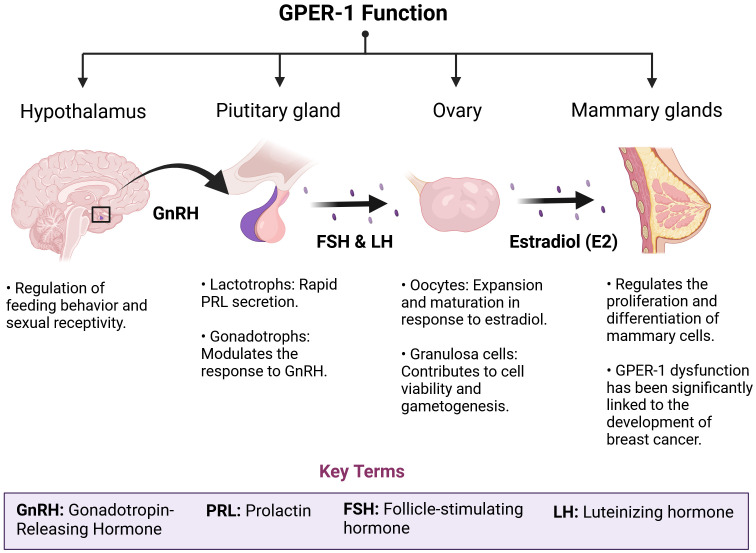
G Protein-Coupled Estrogen Receptor 1 (GPER-1) is a membrane estrogen receptor that has emerged as a key player in breast cancer development and progression. In addition to its direct influence on estrogen signaling, a crucial interaction between GPER-1 and the hypothalamic-pituitary-gonadal (HPG) axis has been evidenced. The novel and complex relationship between GPER-1 and HPG implies a hormonal regulation with important homeostatic effects on general organ development and reproductive tissues, but also on the pathophysiology of cancer, especially breast cancer. Recent research points to a great versatility of GPER-1, interacting with classical estrogen receptors and with signaling pathways related to inflammation. Importantly, through its activation by environmental and synthetic estrogens, GPER-1 is associated with hormone therapy resistance in breast cancer. These findings open new perspectives in the understanding of breast tumor development and raise the possibility of future applications in the design of more personalized and effective therapeutic approaches.
Keywords: GPER-1; breast cancer; endocrine resistance; estrogen; hypothalamic-pituitary-gonadal axis; personalized medicine.
Copyright © 2025 Molina Calistro, Arancibia, Olivera, Domke and Torres.
Conflict of interest statement
The authors declare that the research was conducted in the absence of any commercial or financial relationships that could be construed as a potential conflict of interest.
Figures
References
Publication types
MeSH terms
Substances
LinkOut - more resources
Full Text Sources
Medical
