


Early signs of long-term pain: prospective network profiles from late adolescence and lifelong follow-up
- PMID: 39939815
- PMCID: PMC11822022
- DOI: 10.1038/s44184-025-00122-0
Early signs of long-term pain: prospective network profiles from late adolescence and lifelong follow-up
Abstract
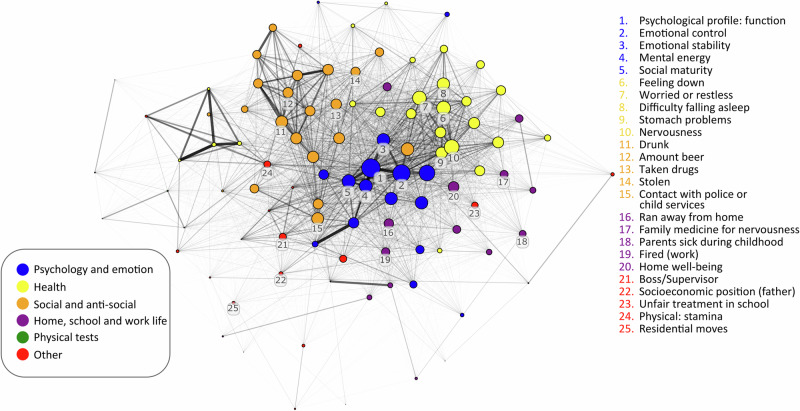
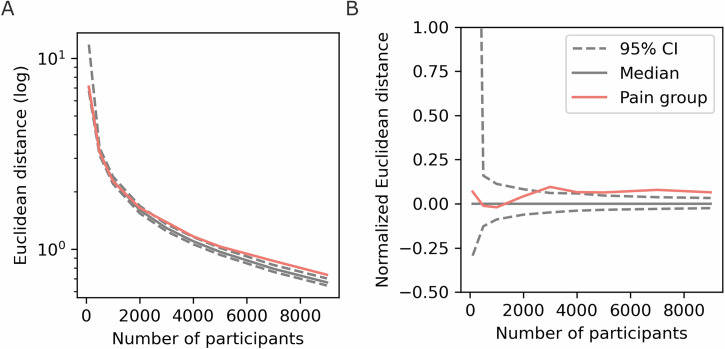
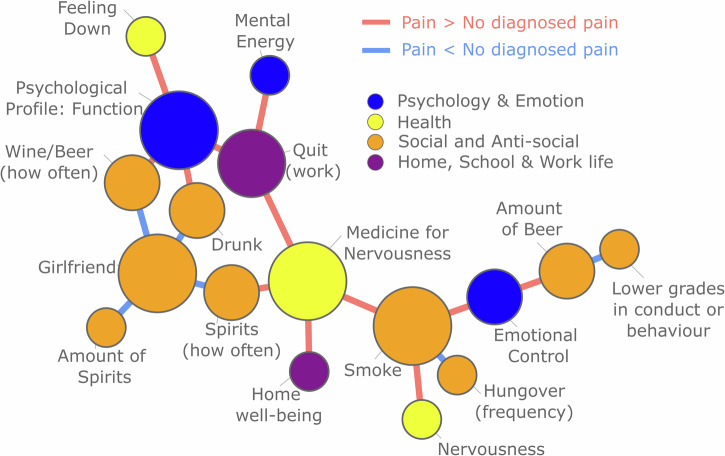
This study applies network theory to registry data to identify prospective differences between individuals who develop long-term pain later in life and those who do not. The research is based on assessments of biological, psychological, and social variables in late adolescence during military conscription in Sweden. The analysis reveals significant differences in the network profiles of adolescent men who later developed long-term pain. These differences are reflected in several network-based outputs, including global, nodal, and edge levels, revealing a consistent picture of the pain-associated network profile. This profile demonstrates how those vulnerable to long-term pain have a specific configuration of variables that skew away from the rest of the population, mainly relating to psychosocial aspects.
© 2025. The Author(s).
Conflict of interest statement
Competing interests: The authors declare no competing interests.
Figures

References
-
- Ferrari, A. J. et al. Global incidence, prevalence, years lived with disability (YLDs), disability-adjusted life-years (DALYs), and healthy life expectancy (HALE) for 371 diseases and injuries in 204 countries and territories and 811 subnational locations, 1990–2021: a systematic analysis for the Global Burden of Disease Study 2021. Lancet403, 2133–2161 (2024). - PMC - PubMed
-
- Gaskin, D. J. & Richard, P. The economic costs of pain in the United States. J. Pain13, 715–724 (2012). - PubMed
-
- Yong, R. J., Mullins, P. M. & Bhattacharyya, N. Prevalence of chronic pain among adults in the United States. Pain163, e328–e332 (2022). - PubMed
-
- IoM. Relieving Pain in America: A Blueprint for Transforming Prevention, Care, Education, and Research. xvii, 364 (National Academies Press, Washington, DC, US, 2011). - PubMed
-
- IPRCC. National Pain Strategy. A Comprehensive Population Health-Level Strategy for Pain. Report by the Interagency Pain Research Coordinating Committee. United States 2011. (2011).
Grants and funding
LinkOut - more resources
Full Text Sources
