


Improving Stroke Treatment Using Magnetic Nanoparticle Sensors to Monitor Brain Thrombus Extraction
- PMID: 39943310
- PMCID: PMC11820568
- DOI: 10.3390/s25030672
Improving Stroke Treatment Using Magnetic Nanoparticle Sensors to Monitor Brain Thrombus Extraction
Abstract
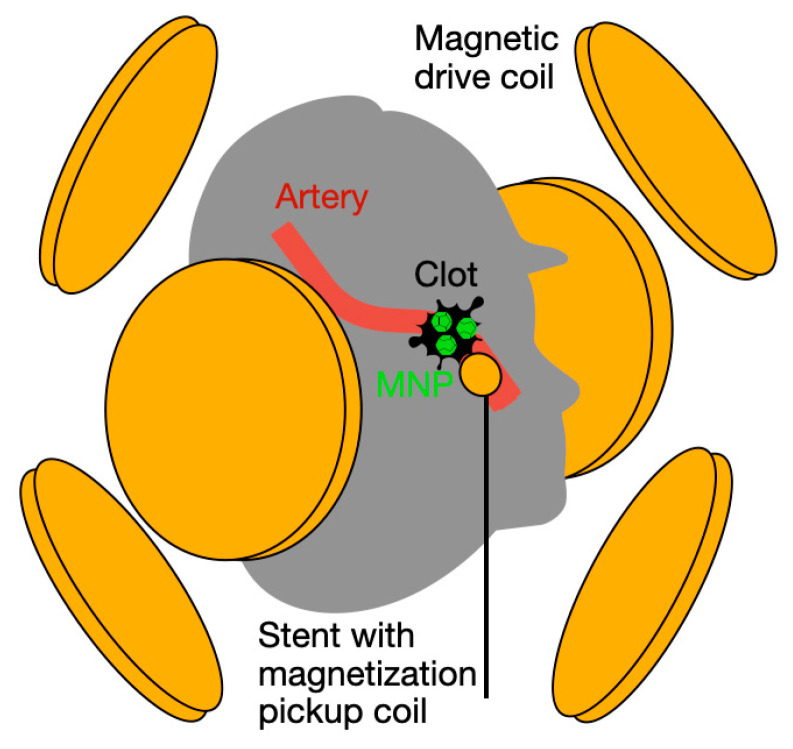
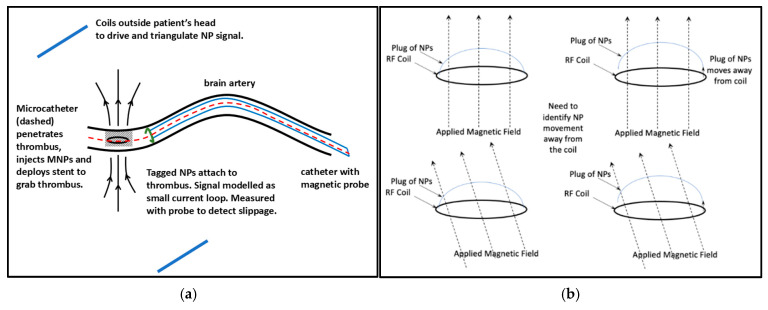
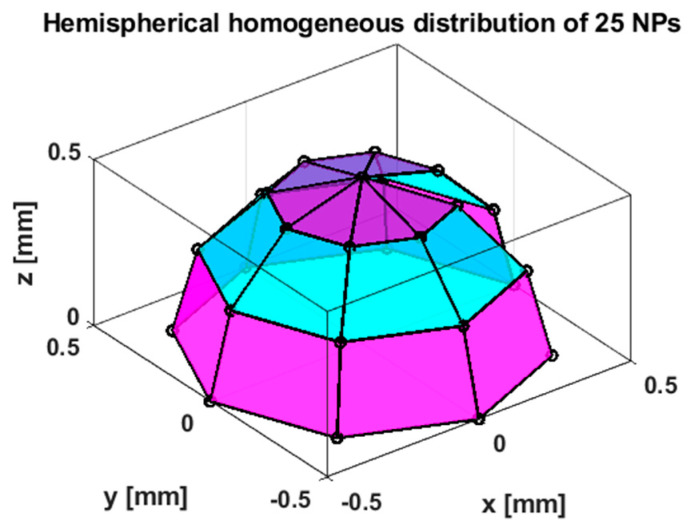
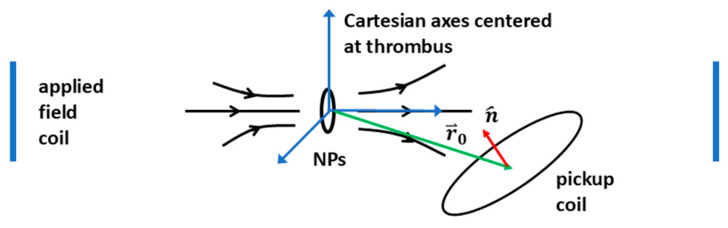
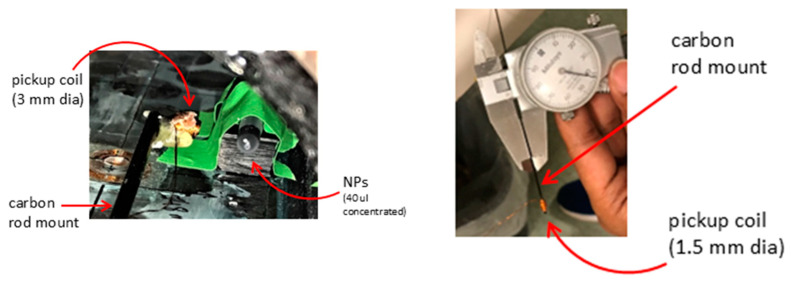
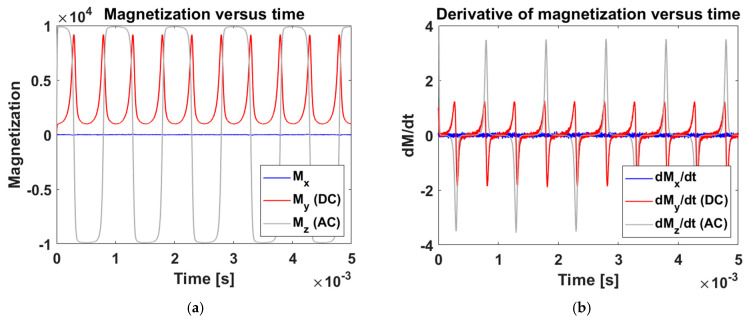
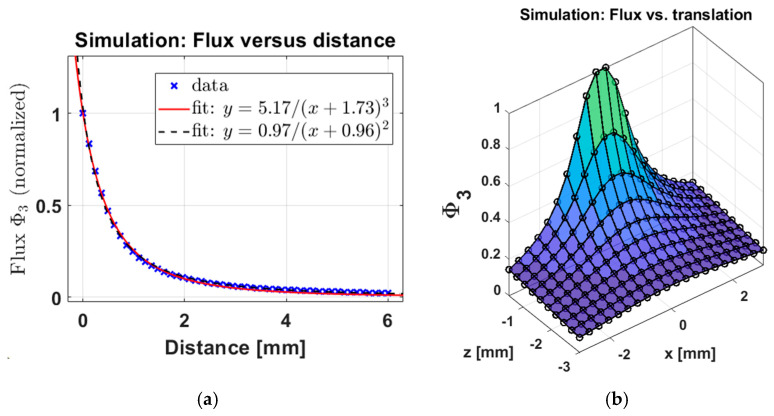
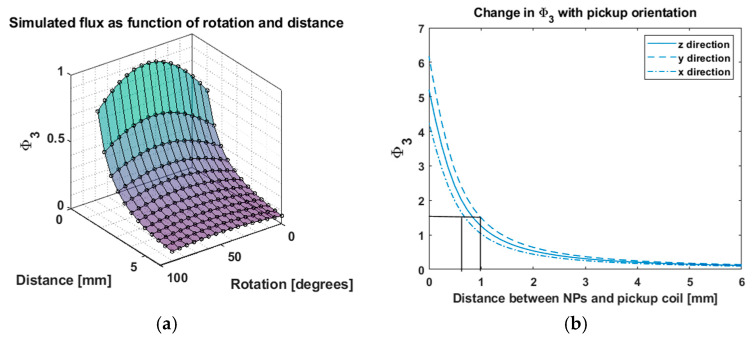
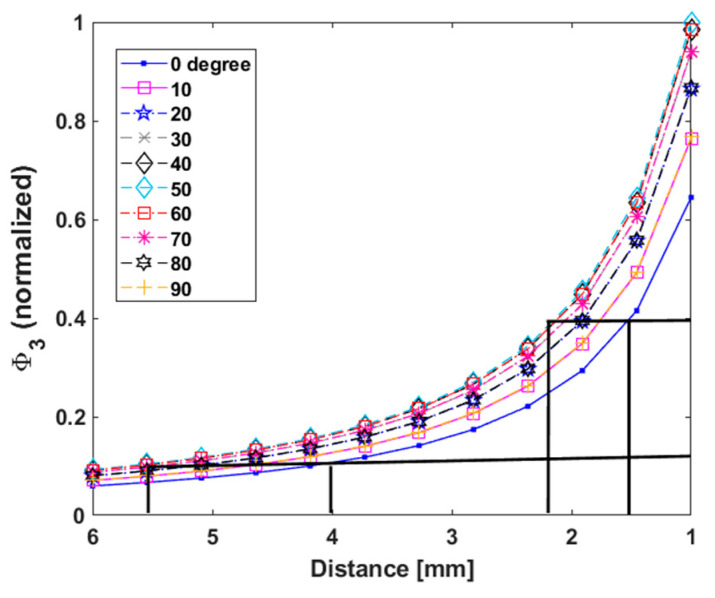
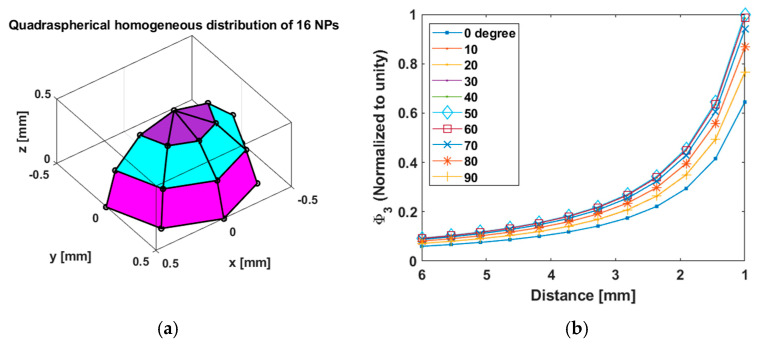
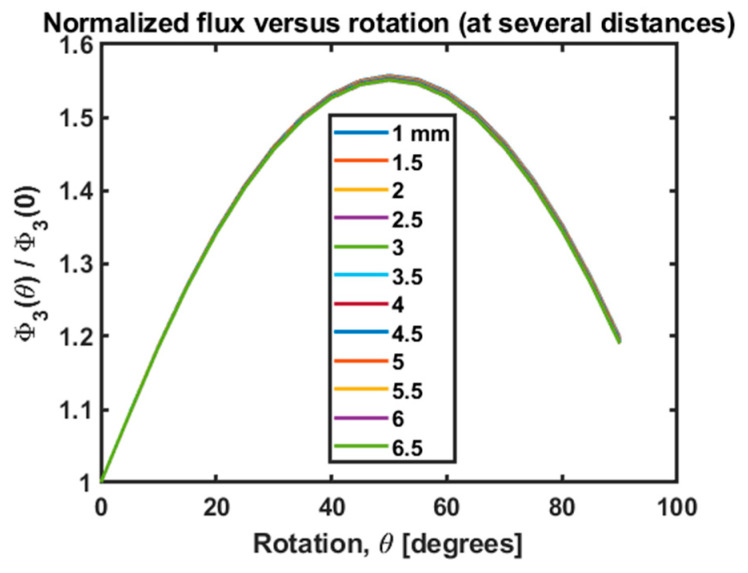
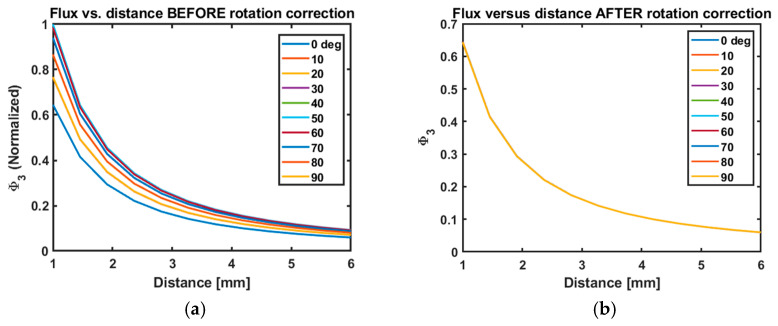
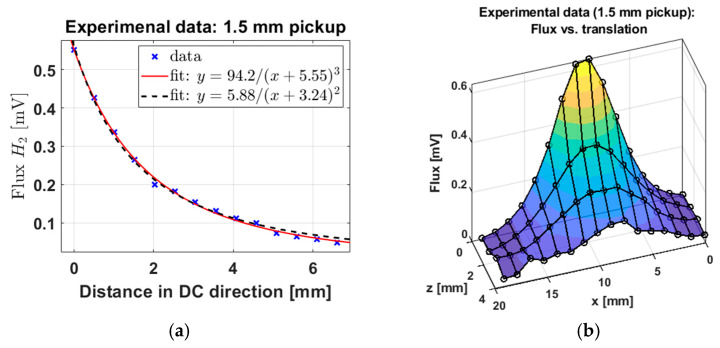
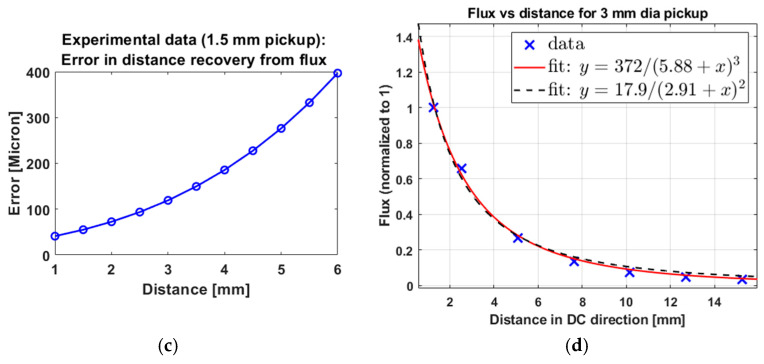
(1) Background: Mechanical thrombectomy (MT) successfully treats ischemic strokes by extracting the thrombus, or clot, using a stent retriever to pull it through the blood vessel. However, clot slippage and/or fragmentation can occur. Real-time feedback to a clinician about attachment between the stent and clot could enable more complete removal. We propose a system whereby antibody-targeted magnetic nanoparticles (NPs) are injected via a microcatheter to coat the clot, oscillating magnetic fields excite the particles, and a small coil attached to the catheter picks up a signal that determines the proximity of the clot to the stent. (2) Methods: We used existing simulation code to model the signal from NPs distributed on a hemispherical clot with three orthogonally applied magnetic fields. An in vitro apparatus was built that applied fields and read out signals from a 1.5 mm pickup coil at a variable distance and orientation angle from a sample of 100 nm iron oxide core/shell NPs. (3) Results: Our simulations suggest that the sum of the voltages induced in the pickup coil from three orthogonal applied fields could localize a clot to within 180 µm, regardless of the exact orientation of the pickup coil, with further precision added via rotation-correction formulae. Our experimental system validated simulations; we estimated an in vitro distance recovery precision of 41 µm with a pickup coil 1 mm from the clot. (4) Conclusions: Magnetic NP sensing could be a safe and real-time method to estimate whether a clot is attached to the stent retriever during MT.
Keywords: clot; magnetic dipole field; magnetic nanoparticles; mechanical thrombectomy; simulations; stroke; thrombus.
Conflict of interest statement
LCD Nanotech is held by J.W. DJ and SG employed by LCD Nanotech. The remaining authors declare that the research was conducted in the absence of any commercial or financial relationships that could be construed as a potential conflict of interest.
Figures
References
-
- Tsao C.W., Aday A.W., Almarzooq Z.I., Anderson C.A., Arora P., Avery C.L., Baker-Smith C.M., Beaton A.Z., Boehme A.K., Buxton A.E. Heart disease and stroke statistics—2023 update: A report from the American Heart Association. Circulation. 2023;147:e93–e621. - PubMed
-
- Goyal M., Menon B.K., van Zwam W.H., Dippel D.W., Mitchell P.J., Demchuk A.M., Dávalos A., Majoie C.B., van der Lugt A., de Miquel M.A., et al. Endovascular thrombectomy after large-vessel ischaemic stroke: A meta-analysis of individual patient data from five randomised trials. Lancet. 2016;387:1723–1731. doi: 10.1016/S0140-6736(16)00163-X. - DOI - PubMed
MeSH terms
Substances
Grants and funding
LinkOut - more resources
Full Text Sources
Medical
Miscellaneous
