


Co-occurring Early Adolescent ACEs and Associations With Later Peer Relationships
- PMID: 39945982
- PMCID: PMC12246021
- DOI: 10.1007/s10964-025-02157-0
Co-occurring Early Adolescent ACEs and Associations With Later Peer Relationships
Abstract
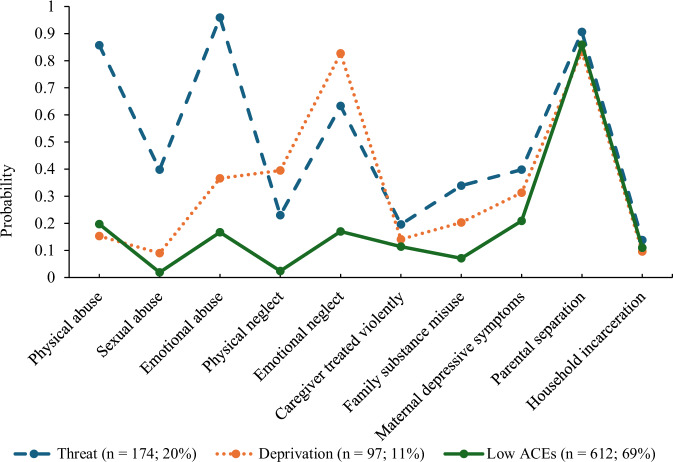
Research indicates complex associations between adverse childhood experiences (ACEs) and adolescent peer relationships. ACEs are related to lower peer status, yet the links between ACEs, peer characteristics, and peer relationship quality are inconclusive. The current literature has several further conceptual and methodological limitations, including a lack of attention to ACEs' co-occurring nature, the developmental timing of ACEs during adolescence, and the multifaceted nature of peer relationships. In addition, much of the literature is cross-sectional. The current study addresses these limitations by examining the associations of early adolescents' co-occurring ACEs at age 12 with three subsequent peer relationship aspects at age 16 (i.e., peer characteristics, peer status, and peer relationship quality) while controlling for demographics and early adversities. Participants included 883 youth from the Longitudinal Studies of Child Abuse and Neglect. Latent class analyses of the 10 ACEs, as examined in the original CDC-Kaiser ACE study, identified three distinct ACE classes at age 12 (threat, deprivation, and low ACEs) that were distinguished by gender, race, income, and early adversities. Further, the threat class was related to adverse outcomes in peer characteristics and status, while the deprivation class was associated with differences in peer relationship quality. These findings highlight the need for researchers and practitioners to consider ACEs' co-occurring nature and tailor trauma-informed care accordingly. Findings also underscore the salience of studying ACEs that occur in the developmental period of early adolescence.
Keywords: Adolescent; Adverse childhood experiences; Latent class analysis; Peer relationships; Trauma-informed care.
© 2025. The Author(s).
Conflict of interest statement
Compliance with ethical standards. Conflict of interest: The authors declare no competing interests. Ethical Approval: This study used an archived public dataset and was exempted from review or approval from the Institutional Review Board at the authors’ institutions. Informed Consent: Parent consent and youth assent were collected in the original LONSCAN study, where the data of the current study was derived.
Figures

References
-
- Alto, M., Handley, E., Rogosch, F., Cicchetti, D., & Toth, S. (2018). Maternal relationship quality and peer social acceptance as mediators between child maltreatment and adolescent depressive symptoms: Gender differences. Journal of Adolescence, 63(1), 19–28. 10.1016/j.adolescence.2017.12.004. - DOI - PMC - PubMed
-
- Asparouhov, T., & Muthén, B. (2021). Auxiliary variables in mixture modeling: Using the BCH method in Mplus to estimate a distal outcome model and an arbitrary secondary model. Mplus Web Notes, 21(11), 1–80. https://www.statmodel.com/examples/webnotes/webnote21.pdf
MeSH terms
LinkOut - more resources
Full Text Sources
Medical
Miscellaneous
