


Management of cardiovascular disease by cerium oxide nanoparticles via alleviating oxidative stress and adipokine abnormalities
- PMID: 39962072
- PMCID: PMC11833101
- DOI: 10.1038/s41598-025-85794-6
Management of cardiovascular disease by cerium oxide nanoparticles via alleviating oxidative stress and adipokine abnormalities
Abstract
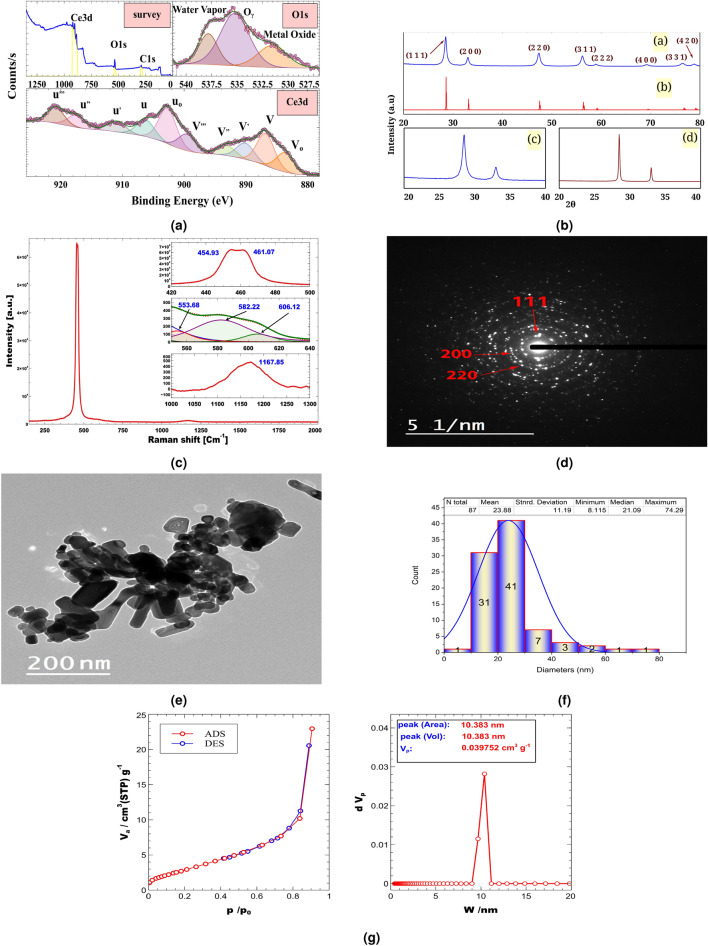
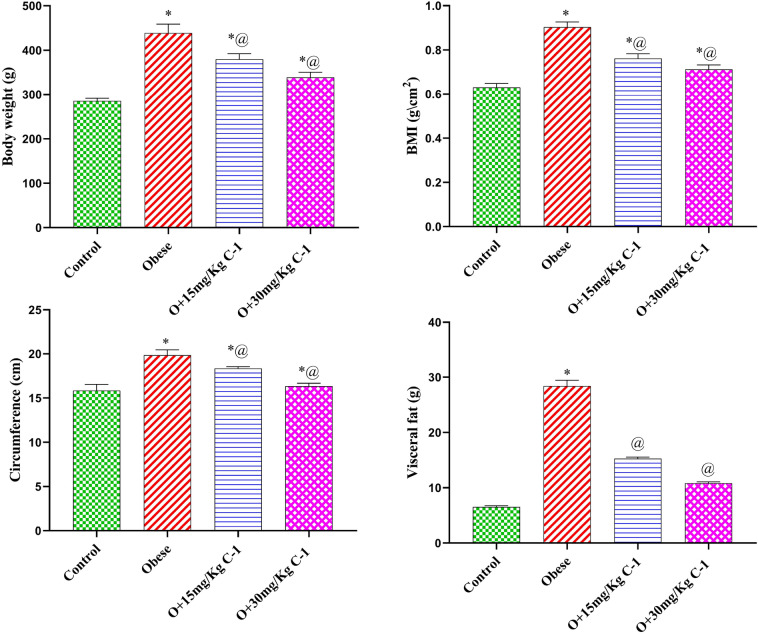
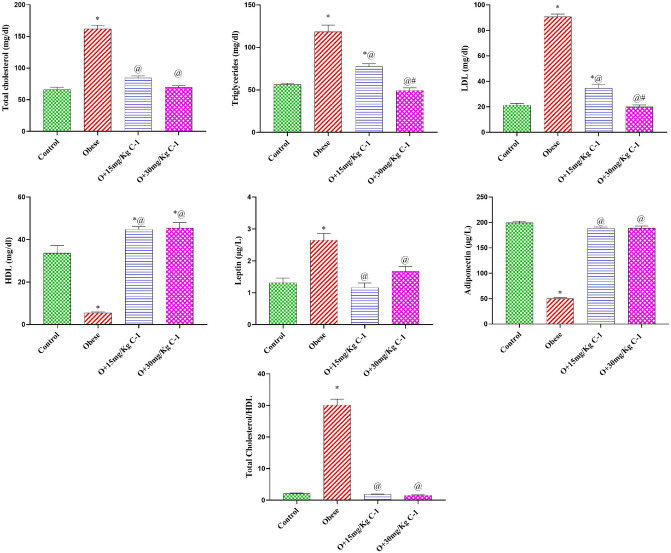
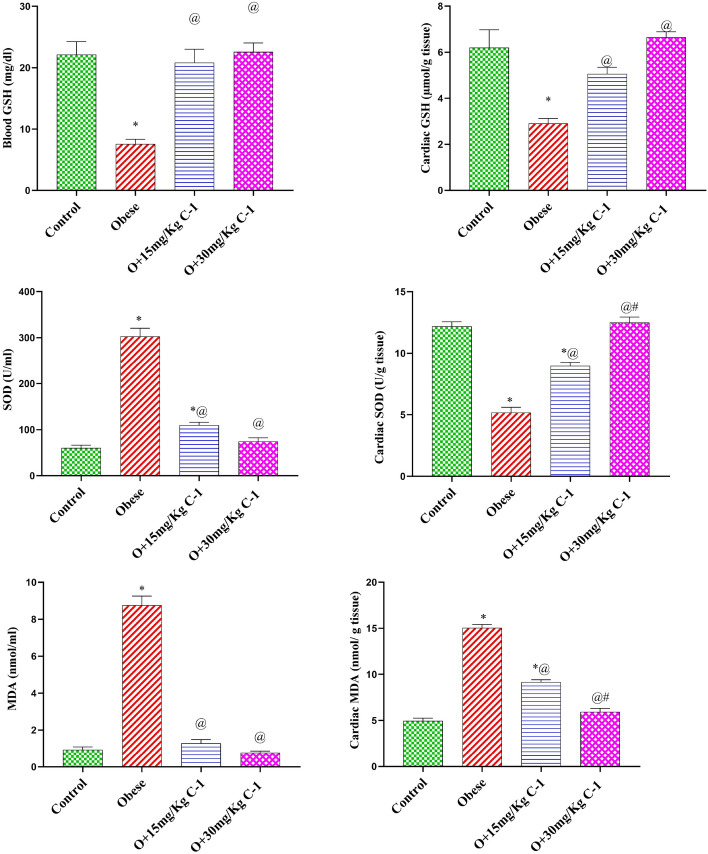
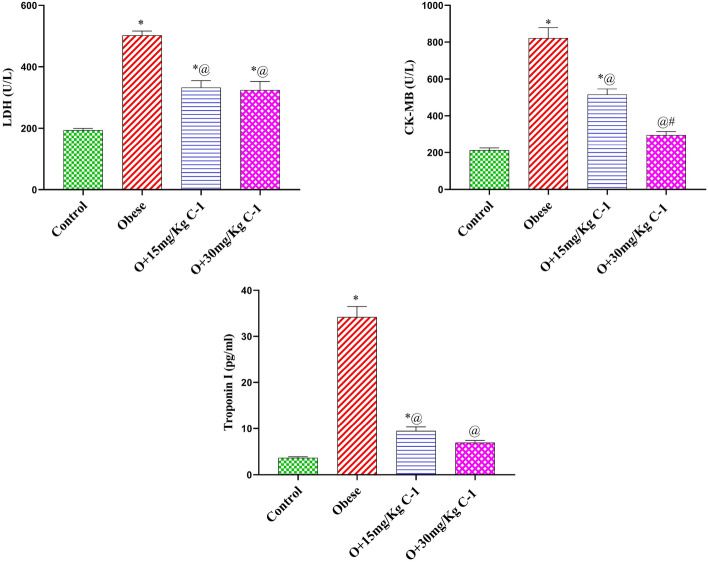
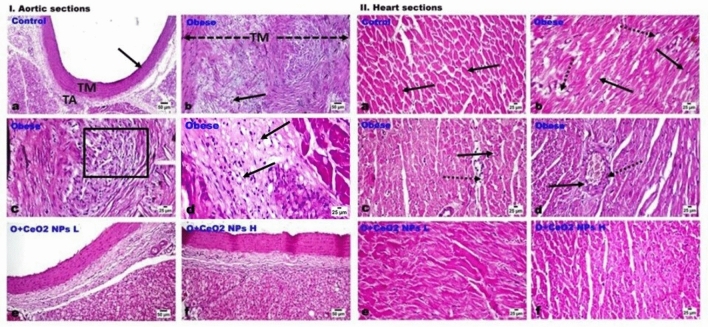
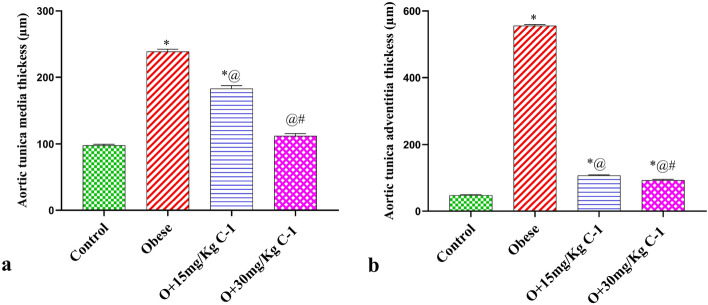
The current study aimed to evaluate the role of cerium oxide nanoparticles (C-1), a potent antioxidant, in the medication of cardiovascular disease in obese animal model. C-1 was prepared using a modified sonication sol-gel method. Thirty-two adult male rats were equally divided into 4 groups (n=8/each). The first (control) and second (obese) groups are not treated while the obese rats in the third and fourth groups were given 15 and 30 mg/kg C-1(IP), respectively, for 8 weeks. Parameters of insulin resistance, adipocyte hormones, inflammatory markers, lipid profile, cardiac enzymes and cardiac iron content (C-Fe) were estimated. Moreover, histological study and immunohistochemical stain for inducible nitric oxide synthase (INOS) for cardiac and aortic tissues were performed. The XRD patterns of C-1 showed narrow symmetric diffraction peaks. The particle diameters were calculated from the TEM histogram (21.09 nm) and the Debye-Scherrer Method (20.74 nm) which were very similar. Using the most intense peak ( ), structural parameters were calculated including nano-crystallite size, Micro-strain, Lorentz factor, Thomson polarization parameter, and Lorentz polarization parameter. BET was used to calculate The total surface area (S ), and specific surface area (S ). The XPS survey spectrum of C-1 showed peaks for C-1s, O-1s and Ce-3d. The treatment of obese rats with C-1 led to a significant decrease in body weight, C-Fe , plasma leptin, tumor necrosis factor-alpha (TNF ), interleukin-6 (IL6), C-reactive protein (CRP), resistin, cholesterol, triglycerides, low-density lipoprotein (LDL), Troponin, Creatinine Kinase-MB (CK-MB), lactate dehydrogenase (LDH), and malondialdehyde (MDA) in cardiac tissue or in plasma. Also, C-1 lowered plasma monocyte chemoattractant protein-1 (MCP-1), Epithelial Neutrophil-Activating Peptide (ENA-78), and insulin and glucose levels in obese rats. Furthermore, C-1 alleviated the increase of cardiac iNOS. Moreover, C-1 mitigated pathological changes of cardiac muscle and aorta observed in obese rats. On the other hand, C-1 enhanced adiponectin, cardiac glutathione (GSH) and superoxide dismutase (SOD) in obese rats. The effect of C-1 is dose-dependent ( 30 mg/kg of C-1 is more evident than 15 mg/kg). The modified synthesis method may lead to a smaller particle size than that reported in our previously reported work. The XRD patterns of C-1 indicate its cubic structure with space group F m -3 m (225) which was matched by code id 4343161 from COD. The Raman spectrum of C-1 indicates the absence of rearrangement oxygen atoms, the presence of oxygen in its fluorite lattice positions, and the oxygen vacancies in C-1 and the Ce vibration model (F2g). The presence of ten peaks in the high-resolution Ce-3d XP spectrum indicates the existence of both Ce3+ and Ce4+. C-1 showed therapeutic efficacy in atherosclerosis and cardiac muscle abnormalities associated with obese rats, probably because of their antioxidant and anti-inflammatory properties, which lead to lowering oxidative stress.
Keywords: Adipokines; Aorta; Cardiac muscle; Cerium oxide nanoparticles; Insulin resistance; Obesity; Oxidative stress.
© 2025. The Author(s).
Conflict of interest statement
Declarations. Ethical approval: Approved By the National Research Center’s Medical Research Ethics Committee. Animal handling was carried out according to recommendations and under Animal Care and Use of National Research Centre regulations in Egypt with ethical approval No.19218. Consent for publication: All authors have read and agreed to the published version of the manuscript. Consent to participate: All authors agree to participate in the published version of the manuscript. Competing interests: The authors declare no competing interests.
Figures





References
MeSH terms
Substances
LinkOut - more resources
Full Text Sources
Research Materials
Miscellaneous
