


Development of a curriculum to educate religious leaders about blood pressure using community-based participatory research and educational theory in Mwanza, Tanzania
- PMID: 39966863
- PMCID: PMC11837377
- DOI: 10.1186/s12909-025-06836-1
Development of a curriculum to educate religious leaders about blood pressure using community-based participatory research and educational theory in Mwanza, Tanzania
Abstract
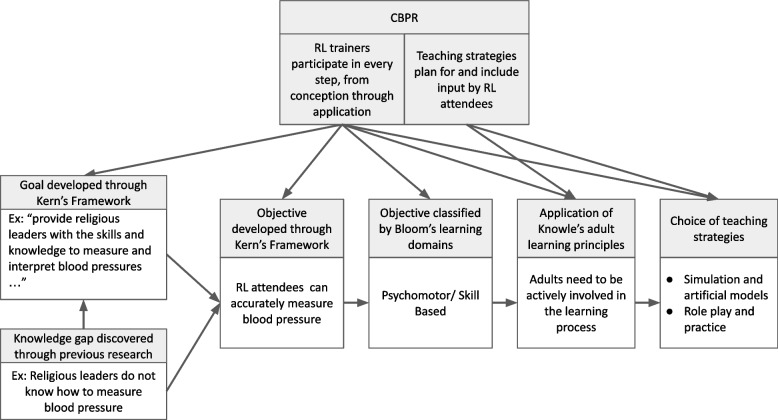
Hypertension is a leading cause of premature mortality in Tanzania, but low trust and awareness of biomedical healthcare and prioritization of spiritual over physical health hinders uptake of care. Religious leaders are highly respected community members and are eager to collaborate with health professionals. Few community health worker training programs utilize evidence-based pedagogical recommendations in combination with theology specific to their students' backgrounds. Our team of health research professionals and religious leaders developed a curriculum to teach local religious leaders to address and screen their communities for hypertension.We use a Community Based Participatory Research framework and evidence-based educational strategies (Kern's framework for medical education, Bloom's learning domains, and Knowles adult learning principles) to build a curriculum optimized to partner with religious leaders. Previously assessed attitudes toward and knowledge of hypertension in the community determined objectives and content, and religious leaders on the team determined appropriate religious aspects to incorporate. Through an evidence-based process, we hope to maximize efficacy of the intervention.Recognizing religious leaders as unique learners, we utilize well-tested educational theory and strategies to create a comprehensive curriculum prioritizing student input. The curriculum aligns with adult learning theories, is culturally tailored to meet the needs of the communities involved and equips religious leaders to promote blood pressure management through screening and lifestyle interventions. The curriculum addresses healthcare through a religious lens, fostering trust between healthcare professionals, patients, and religious leaders through interdisciplinary collaboration.
Keywords: Blood pressure; Community-based participatory research; Education; Hypertension; Religion; Tanzania.
© 2025. The Author(s).
Conflict of interest statement
Declarations. Ethics approval and consent to participate: This curriculum will be tested in a trial that has been approved by ethics committees at Weill Cornell Medicine in New York (#21–06023670) and at the National Institute for Medical Research in Dar es Salaam (NIMR/HQ/R8.a/Vol. IX/3807). Those working with us to create the program were community partners and collaborators on program creation. No data was collected specifically from them and informed consent is not relevant. Competing interests: The authors declare no competing interests.
Figures
References
-
- Bigna JJ, Noubiap JJ. The rising burden of non-communicable diseases in sub-Saharan Africa. Lancet Glob Health. 2019;7:e1295–6. 10.1016/S2214-109X(19)30370-5. - PubMed
-
- Kavishe B, Biraro S, Baisley K, Vanobberghen F, Kapiga S, Munderi P, et al. High prevalence of hypertension and of risk factors for non-communicable diseases (NCDs): A population based cross-sectional survey of NCDS and HIV infection in Northwestern Tanzania and Southern Uganda. BMC Med. 2015;13:1–21. 10.1186/S12916-015-0357-9/TABLES/7. - PMC - PubMed
-
- Mwanza, Tanzania Population 2024. Available: https://worldpopulationreview.com/cities/tanzania/mwanza. Cited 6 Nov 2024.
MeSH terms
Grants and funding
LinkOut - more resources
Full Text Sources
Medical
