


Systemic inflammation response index predicts overall survival in patients undergoing stereotactic radiosurgery for brain metastasis from non-small cell lung cancer
- PMID: 39967449
- PMCID: PMC11932349
- DOI: 10.1093/jrr/rrae099
Systemic inflammation response index predicts overall survival in patients undergoing stereotactic radiosurgery for brain metastasis from non-small cell lung cancer
Abstract
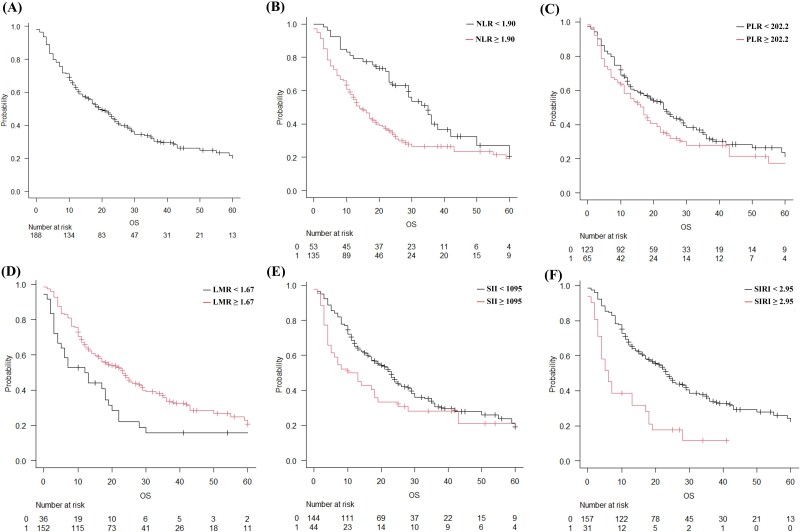
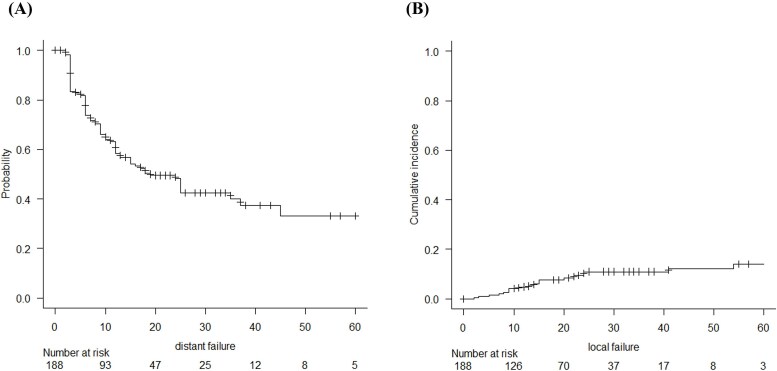
This study aimed to evaluate the prognostic value of pre-treatment blood cell counts in patients with brain metastasis (BM) from non-small cell lung cancer (NSCLC) who were treated using linear accelerator (linac)-based stereotactic radiosurgery (SRS) and fractionated stereotactic radiotherapy (fSRT) with a micro-multileaf collimator. Between January 2011 and November 2022, 271 consecutive patients underwent linac-based SRS/fSRT for BM from NSCLC. Thirty patients with insufficient blood test data during this period were excluded from this analysis. Thirty-five patients with steroid intake at the time point of the blood test and 18 patients with higher C-reactive protein were excluded. Thus, 188 patients were eventually enrolled in this study. The median follow-up period after SRS/fSRT was 21 months (range: 0-121 months), and the median survival time after SRS/fSRT was 19 months. Neutrophil-lymphocyte ratio ≥ 1.90, lymphocyte-monocyte ratio ≤ 1.67 and systemic inflammation response index (SIRI) ≥ 2.95 were unfavorable predictors of prognosis for patients who underwent SRS/fSRT for BM from NSCLC. Cox proportional-hazard multivariate analysis revealed that the SIRI was independent prognostic factors for increased risk of death. Thus, simple, less expensive, and routinely performed pre-treatment blood cell count measurements such as SIRI can predict the overall survival of patients treated with SRS/fSRT for BM from NSCLC.
Keywords: brain metastasis; neutrophil–lymphocyte ratio; non-small cell lung cancer; systemic immune-inflammation index; systemic inflammation response index.
© The Author(s) 2025. Published by Oxford University Press on behalf of The Japanese Radiation Research Society and Japanese Society for Radiation Oncology.
Conflict of interest statement
The authors declare that they have no conflict of interest.
Figures
References
MeSH terms
LinkOut - more resources
Full Text Sources
Medical
Research Materials
