


RTN3 regulates collagen biosynthesis and profibrotic macrophage differentiation to promote pulmonary fibrosis via interacting with CRTH2
- PMID: 39972424
- PMCID: PMC11837708
- DOI: 10.1186/s10020-025-01119-3
RTN3 regulates collagen biosynthesis and profibrotic macrophage differentiation to promote pulmonary fibrosis via interacting with CRTH2
Abstract
Background: As an endoplasmic reticulum (ER) protein, Reticulum 3 (RTN3) has been reported to play a crucial role in neurodegenerative diseases, lipid metabolism, and chronic kidney disease. The involvement of RTN3 in idiopathic pulmonary fibrosis (IPF), a progressive and fatal interstitial lung disease, remains unexplored.
Methods: In this study, we explored the role of RTN3 in pulmonary fibrosis using public datasets, IPF patient samples, and animal models. We investigated its pathogenic mechanisms in lung fibroblasts and alveolar macrophages.
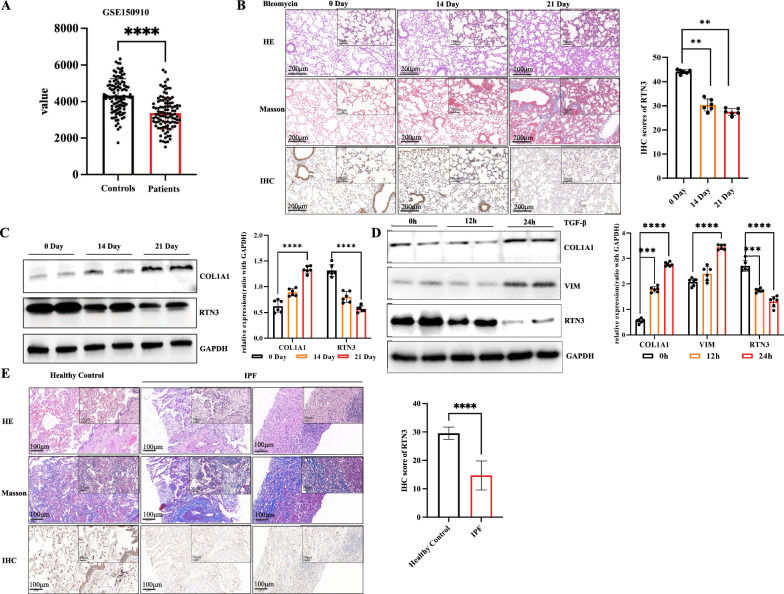
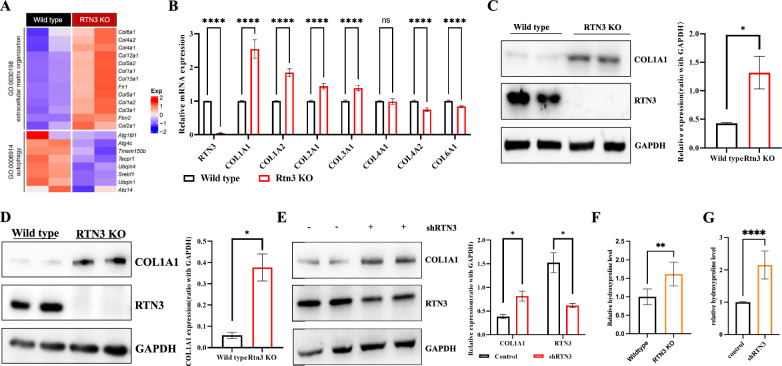
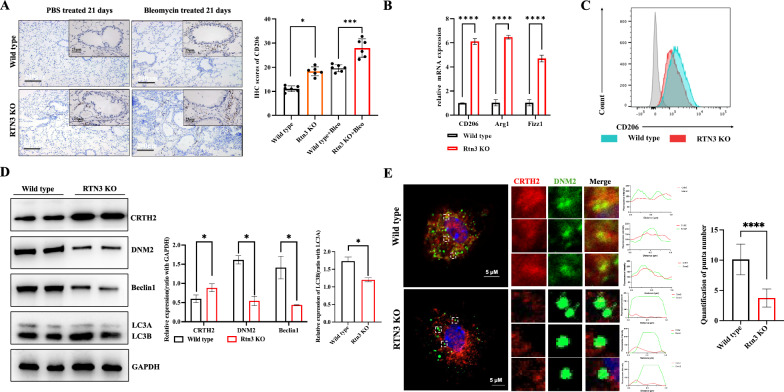
Results: We found decreased levels of RTN3 in IPF patients, bleomycin-induced mice, and TGFβ-treated cell lines. RTN3-null mice exhibited more severe pulmonary fibrosis phenotypes in old age or after bleomycin treatment. Collagen synthesis was significantly increased in RTN3-null mice lung tissues and lung fibroblasts. Mechanistic studies revealed that RTN3 deficiency reduced the ER-anchored CRTH2 in lung fibroblasts, which serves as an antifibrotic molecule via antagonizing collagen biosynthesis. Simultaneously, RTN3 deficiency reduced the autophagy degradation of CRTH2 which acts as an activator of profibrotic macrophage differentiation. Both effects of RTN3 and CRTH2 in lung fibroblasts and alveolar macrophages aggravated age-or bleomycin-induced pulmonary fibrosis. Additionally, we also identified a mutation of RTN3 in patients with ILD.
Conclusions: Our research demonstrated that RTN3 plays a significant role in the lung, and reduction of RTN3 levels may be a risk factor for IPF and related diseases.
Keywords: CRTH2; Collagen biosynthesis; IPF; Idiopathic pulmonary fibrosis; Profibrotic macrophage differentiation; RTN3.
© 2025. The Author(s).
Conflict of interest statement
Declarations. Ethics approval and consent to participate: All procedures followed were in accordance with the ethical standards of the Helsinki Declaration of 1975, as revised in 2000. This study was approved by Ethics Committee of the Second Xiangya Hospital of the Central South University (approval number: 2022-075 for human specimen and animal). All patients provided written informed consent. Consent for publication: Not applicable. Competing interests: The authors declare no competing interests.
Figures




References
-
- Du R, Liu JS, Huang H, Liu YX, Jin JY, Wang CY, Dong Y, Fan LL, Xiang R. RTN3 deficiency exacerbates cisplatin-induced acute kidney injury through the disruption of mitochondrial stability. Mitochondrion. 2024;75:101851. - PubMed
MeSH terms
Substances
Grants and funding
LinkOut - more resources
Full Text Sources
Medical
Research Materials
