


Genomic, Transcriptomic and Suspect/Non-Target Screening Analyses Reveal the Role of CYP450s in the Degradation of Imazalil and Delineate Its Transformation Pathway by Cladosporium herbarum
- PMID: 39972684
- PMCID: PMC11839493
- DOI: 10.1111/1751-7915.70102
Genomic, Transcriptomic and Suspect/Non-Target Screening Analyses Reveal the Role of CYP450s in the Degradation of Imazalil and Delineate Its Transformation Pathway by Cladosporium herbarum
Abstract
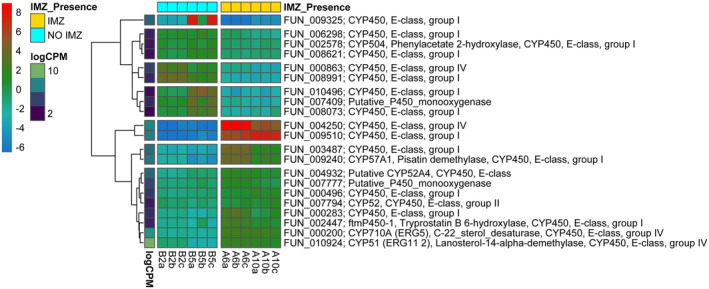
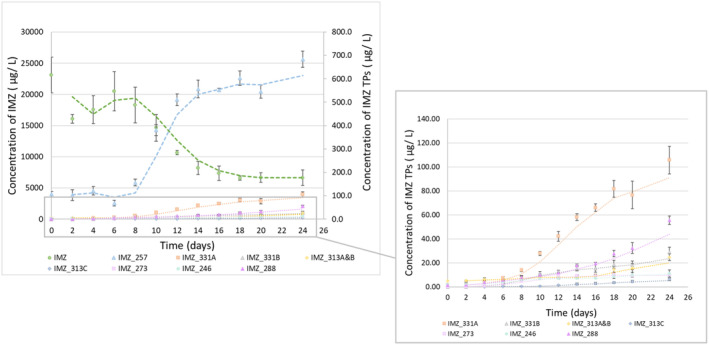
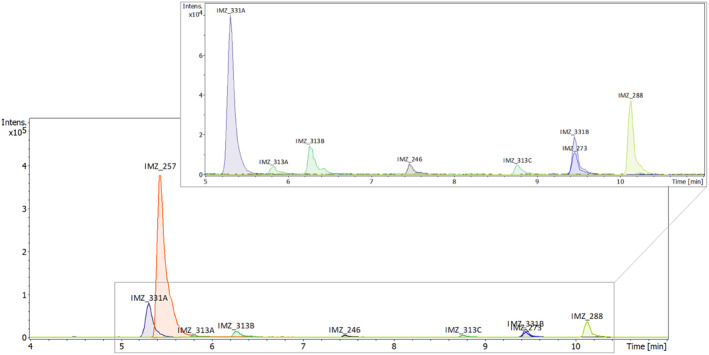
Imazalil (IMZ), a major surface water contaminant characterised by high environmental recalcitrance and toxicity, is used in fruit-packaging plants to control fungal infestations during storage. This leads to the production of wastewaters which should be treated on site before their environmental release. We previously isolated a Cladosporium herbarum strain, the first microorganism that could degrade IMZ. Here we describe the genetic network utilised by the fungus to degrade IMZ and its detailed transformation. Genomic and transcriptomic analysis of C. herbarum pointed to the involvement of strongly upregulated CYP450s in IMZ degradation, as further verified by cessation of its biodegradation by CYP450 inhibitors. LC-QTOF-HRMS analysis and suspect/non-target screening identified nine transformation products (TPs) of IMZ. IMZ biotransformation mainly proceeded through O-dealkylation, while other less important paths, most probably controlled by upregulated oxidases, were operative involving successive hydroxylation reactions. These lead to the formation of TPs like IMZ_313 and IMZ_331, with the former being further transformed through imidazole ring scission to IMZ_288, a TP reported for the first time. We provide first evidence for the transformation mechanism of IMZ by C. herbarum and the potential genes/enzymes involved, paving the way for the use of C. herbarum in the biodepuration of agro-industrial effluents.
Keywords: Cladosporium herbarum; CYP450 monoxygenases; Imazalil; O‐dealkylation; transformation products.
© 2025 The Author(s). Microbial Biotechnology published by John Wiley & Sons Ltd.
Conflict of interest statement
The authors declare no conflicts of interest.
Figures



References
-
- Bruneau, J.‐M. , Magnin T., Tagat E., et al. 2001. “Proteome Analysis of Identifies Glycosylphosphatidylinositol‐Anchored Proteins Associated to the Cell Wall Biosynthesis.” Electrophoresis 22: 2812–2823. - PubMed
MeSH terms
Substances
Grants and funding
LinkOut - more resources
Full Text Sources
