


Low transthyretin is associated with the poor prognosis of colorectal cancer
- PMID: 39975596
- PMCID: PMC11835676
- DOI: 10.3389/fonc.2025.1397019
Low transthyretin is associated with the poor prognosis of colorectal cancer
Abstract
Objective: To determine whether transthyretin (TTR) influences the prognosis of patients with colorectal cancers and establish a predictive model based on TTR.
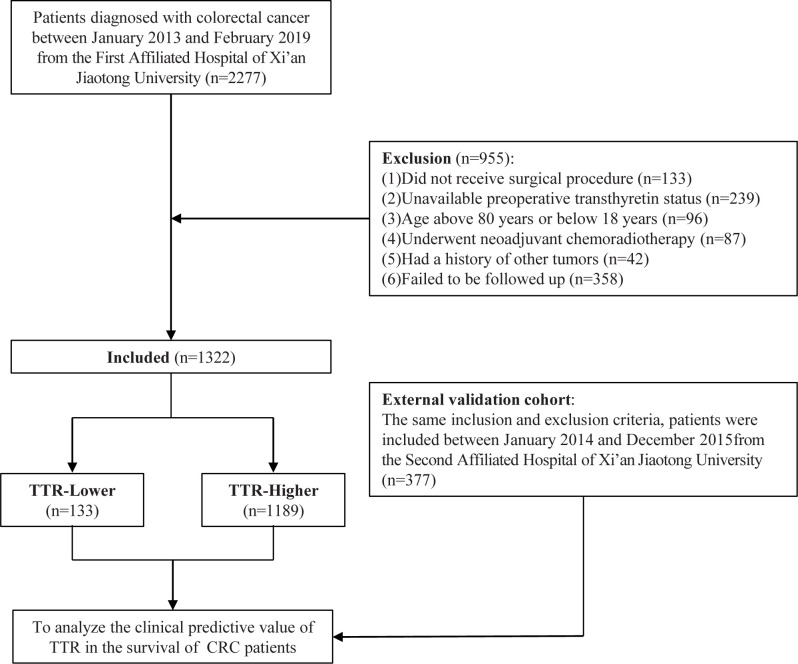
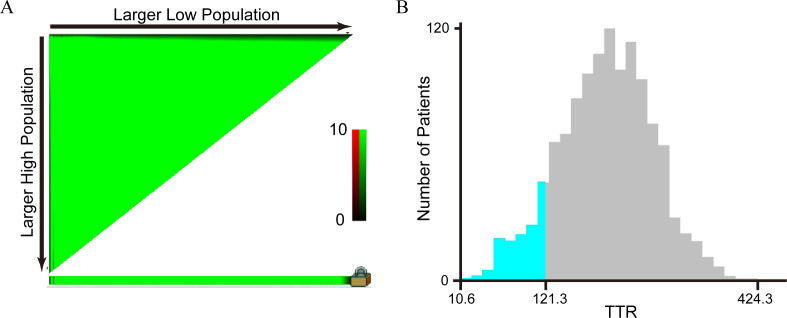
Methods: Between January 2013 and February 2019, the clinical data of 1322 CRC patients aged from 18 years to 80 years who underwent surgical treatment were retrospectively analyzed. The preoperative TTR level, clinicopathological data, and follow-up data were recorded. The X-tile program was used to determine the optimal cut-off value. Cox proportional hazard regression analysis was conducted to evaluate the correlation between the TTR and the cumulative incidence of cancer-specific survival (CSS). Nomograms were then developed to predict CSS. Furthermore, an additional cohort of 377 CRC patients enrolled between January 2014 and December 2015 was included as an external validation.
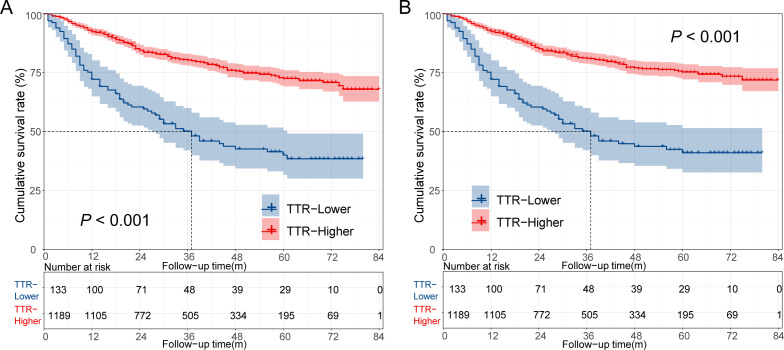
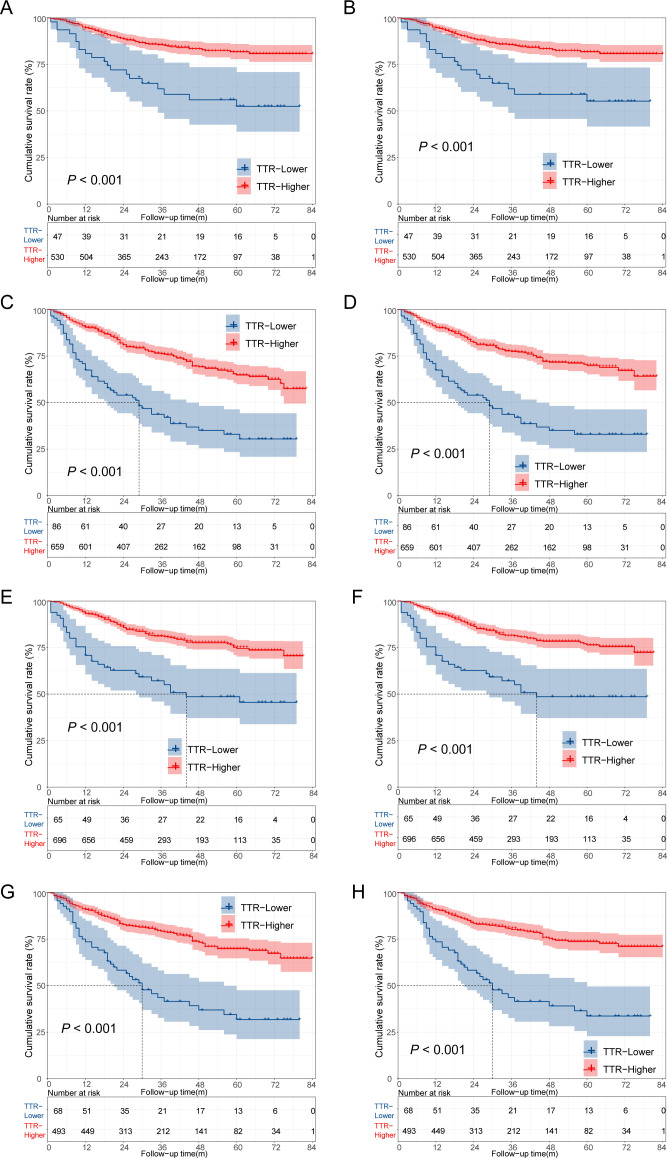
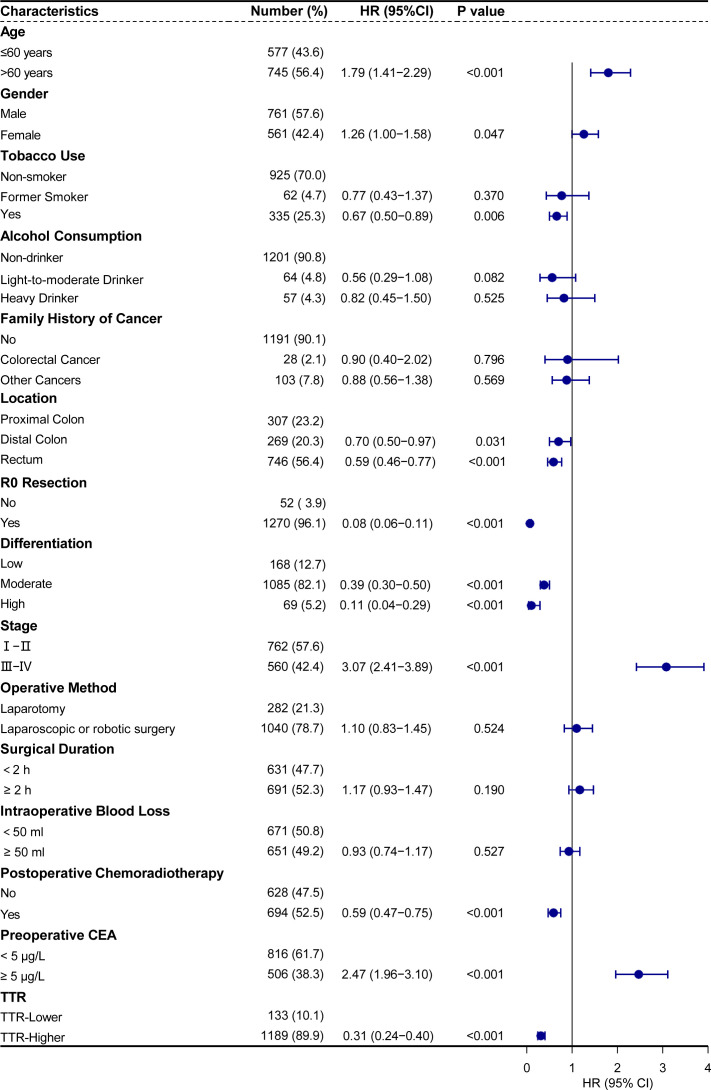
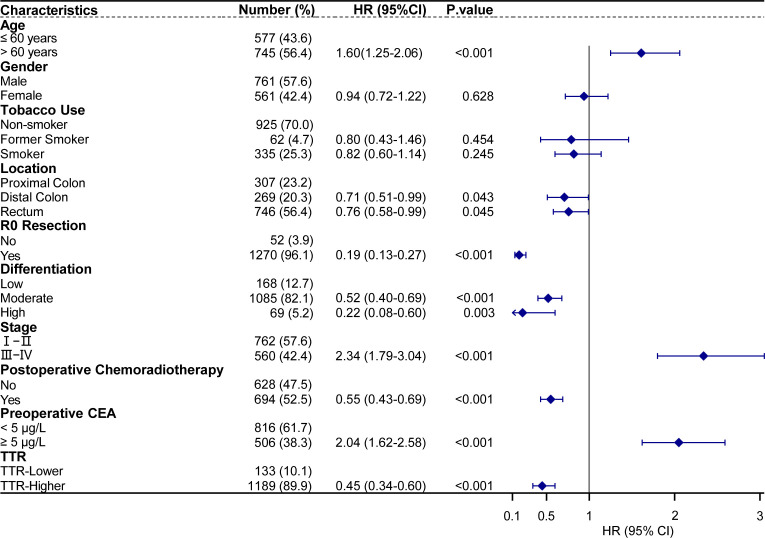
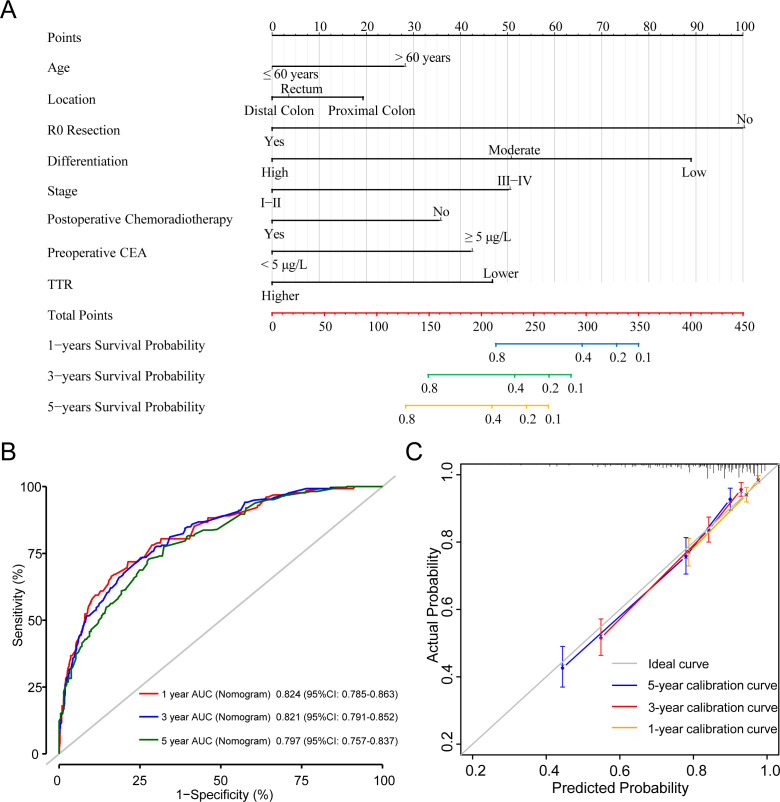
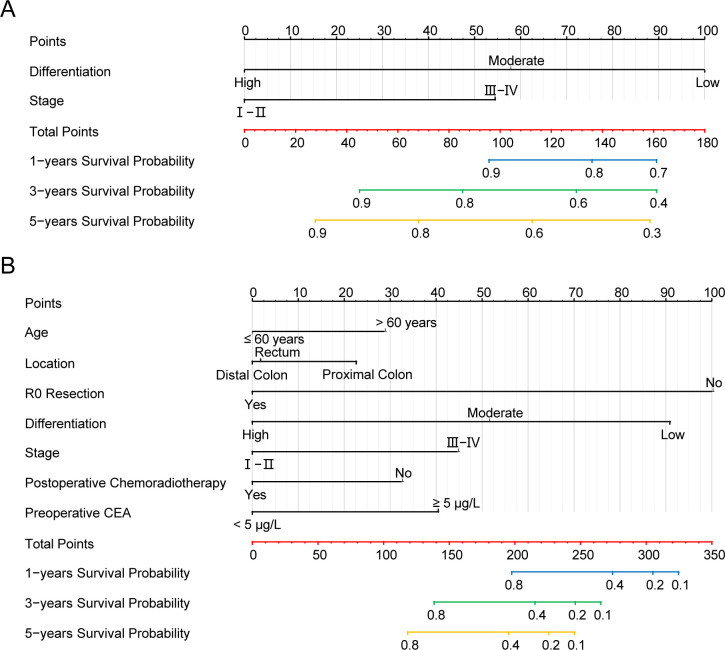
Results: Based on the optimal cut-off value of 121.3 mg/L, we divided the patients into the TTR-lower group (<121.3 mg/L) and the TTR-higher group (≥121.3 mg/L). Comparative analysis revealed that the TTR-higher group exhibited a younger demographic, a higher prevalence of low colorectal cancers, an elevated R0 resection rate, superior differentiation, earlier stage and lower levels of carcinoembryonic antigen (CEA) in contrast to the TTR-lower group. The Cox multivariable analysis underscored the significance of TTR and various clinicopathological factors, encompassing age, tumor location, R0 resection status, differentiation grade, disease stage, postoperative chemoradiotherapy, and preoperative CEA levels, as substantial prognostic indicators. The postoperative survival nomogram, when internally and externally assessed, demonstrated commendable performance across multiple metrics, including the area under the receiver operating characteristic curve (AUC), calibration plots, and decision curve analysis (DCA). Compared with other models, the proportional hazards model combined with TTR demonstrates superior performance in terms of C-index, AUC, calibration chart, and DCA within the prognostic column chart.
Conclusions: The preoperative TTR was identified as a prognostic factor for predicting the long-term prognosis of CRC patients who underwent surgical treatment, supporting its role as a prognostic biomarker in clinical practice.
Keywords: cancer-specific survival; clinicopathologic feature; colorectal cancer; nomogram; prognosis; transthyretin.
Copyright © 2025 Zhang, Hu, Shi, Zhang, Wang, Zhang, Zhang and She.
Conflict of interest statement
The authors declare that the research was conducted in the absence of any commercial or financial relationships that could be construed as a potential conflict of interest.
Figures
References
-
- Collaborators GBDCC . The global, regional, and national burden of colorectal cancer and its attributable risk factors in 195 countries and territories, 1990-2017: a systematic analysis for the Global Burden of Disease Study 2017. Lancet Gastroenterol Hepatol. (2019) 4:913–33. doi: 10.1016/S2468-1253(19)30345-0 - DOI - PMC - PubMed
-
- Bohlok A, Inchiostro L, Lucidi V, Vankerckhove S, Hendlisz A, Van Laethem J, et al. . Tumor biology reflected by histological growth pattern is more important than surgical margin for the prognosis of patients undergoing resection of colorectal liver metastases. Eur J Surg Oncol. (2023) 49:217–24. doi: 10.1016/j.ejso.2022.08.006 - DOI - PubMed
LinkOut - more resources
Full Text Sources
Research Materials
Miscellaneous
