Practice Guideline
. 2025 Mar 18;85(10):1059-1108.
doi: 10.1016/j.jacc.2024.12.025. Epub 2025 Feb 20.

Clinical Considerations for Competitive Sports Participation for Athletes With Cardiovascular Abnormalities: A Scientific Statement From the American Heart Association and American College of Cardiology

Practice Guideline

Clinical Considerations for Competitive Sports Participation for Athletes With Cardiovascular Abnormalities: A Scientific Statement From the American Heart Association and American College of Cardiology

Jonathan H Kim et al. J Am Coll Cardiol. .

Abstract

This American Heart Association/American College of Cardiology scientific statement on clinical considerations for competitive sports participation for athletes with cardiovascular abnormalities or diseases is organized into 11 distinct sections focused on sports-specific topics or disease processes that are relevant when considering the potential risks of adverse cardiovascular events, including sudden cardiac arrest, during competitive sports participation. Task forces comprising international experts in sports cardiology and the respective topics covered were assigned to each section and prepared specific clinical considerations tables for practitioners to reference. Comprehensive literature review and an emphasis on shared decision-making were integral in the writing of all clinical considerations presented.

Keywords: AHA/ACC Scientific Statements; athletes; cardiovascular abnormalities; sports.


Conflict of interest statement

The American Heart Association and the American College of Cardiology make every effort to avoid any actual or potential conflicts of interest that may arise as a result of an outside relationship or a personal, professional, or business interest of a member of the writing panel. Specifically, all members of the writing group are required to complete and submit a Disclosure Questionnaire showing all such relationships that might be perceived as real or potential conflicts of interest.

Figures

FIGURE 1
FIGURE 1. Updated Competitive Sports Participation Classification Schema Presented as a Continuum of Competitive Sports Participation Based on Relative Strength and Endurance Intensities
Sports are presented on arcs that signify the relative contributions of static and dynamic hemodynamic stress that accompany participation in the respective sport. These are not fixed exposures or classifications, and exercise intensities may vary on the basis of numerous factors, including playing position in certain team sports, event in certain individual sports, varying training intensities dependent on level of competition and individual athlete preference, time of season or year, and environmental stressors. Adapted from Mitchell et al, and Levine et al with permission and modified. Copyright © 1985, 1994, 2005, American College of Cardiology Foundation, and 2015, American Heart Association, Inc. and American College of Cardiology Foundation.
FIGURE 2
FIGURE 2. A Stepwise Approach to the Implementation of Shared Decision-Making Regarding Participation in Competitive Sports Among Athletes with Cardiovascular Disease
FIGURE 3
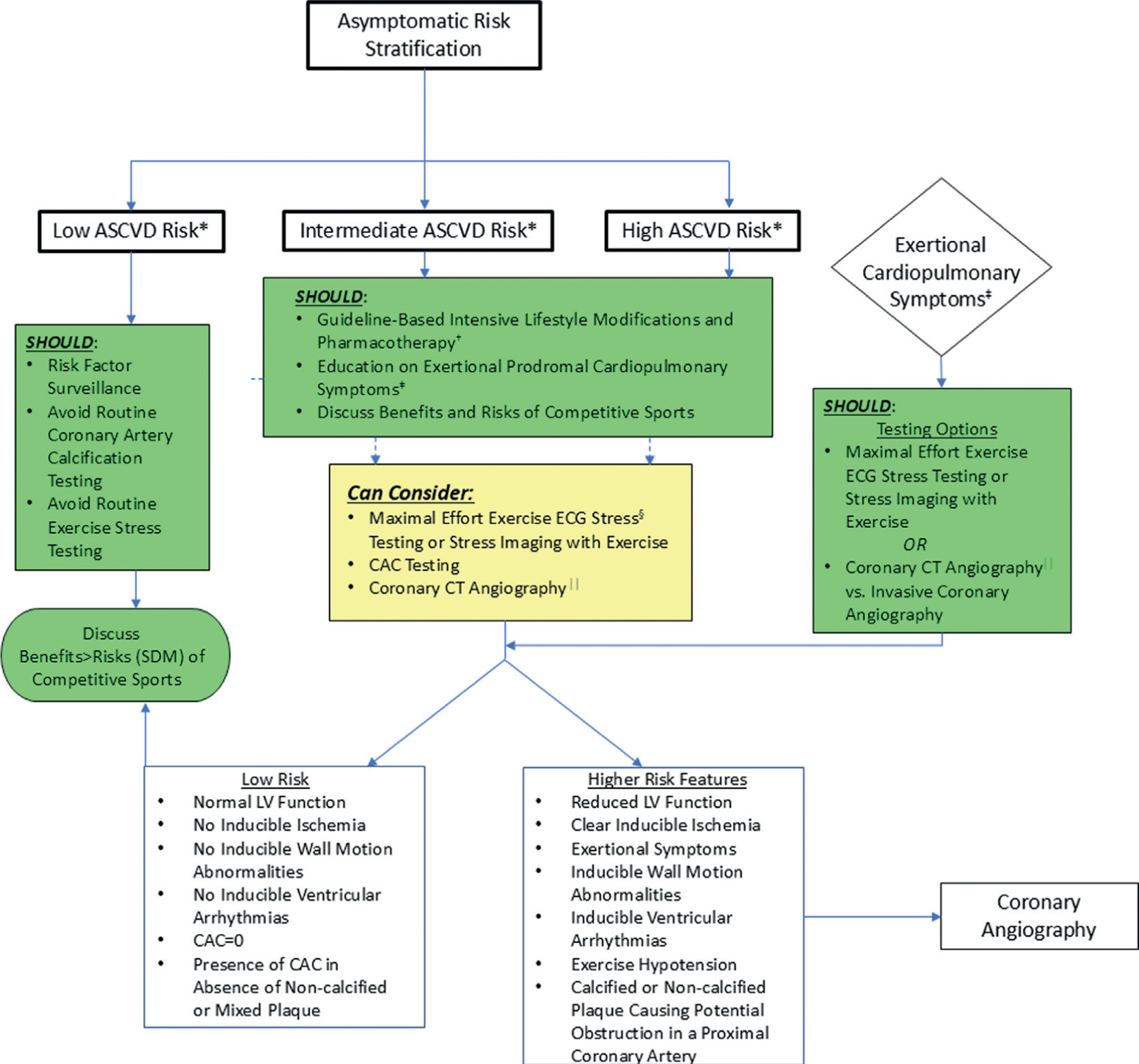
FIGURE 3. Cardiac Risk Stratification Considerations for Masters Athletes
*Cardiovascular disease (CVD) risk scores (% risk per decade) have not been validated in masters athlete populations, where high cardiorespiratory fitness is protective of CVD development. In the general population, CVD risk scores include the following: low risk, <5% atherosclerotic CVD (ASCVD) risk score pooled cohort or Astro-CHARM (Astronaut Cardiovascular Health and Risk Modification), <2.5% SCORE2 (Systematic Coronary Risk Evaluation 2); intermediate risk, 7.5% to 20% ASCVD risk score, 5% to <7.5% Astro-CHARM, 2.5% to <7.5% (high) SCORE2; high risk, >20% ASCVD, ≥7.5% Astro-CHARM or very high SCORE2. Family history of early coronary artery disease should be considered a high-risk feature. †Includes dietary modifications, smoking cessation, aggressive blood pressure control, and guideline-directed lipid- lowering pharmacotherapy. ‡Cardiopulmonary symptoms, defined as exertional chest pain or tightness, dyspnea, palpitations, lightheadedness, syncope, or exercise intolerance. §Maximal-effort exercise stress testing should be sport-specific and is generally defined as exercise to volitional exhaustion despite vigorous encouragement (unless cardiac symptoms limit performance). ||With borderline or obstructive lesions detected by computed tomography (CT) coronary angiography, assessment of functional significance is required by either functional stress testing with exercise or maximum-effort exercise ECG stress testing. CAC indicates coronary artery calcification; LV, left ventricular; and SDM, shared decision-making.
FIGURE 4
FIGURE 4. Management and Competitive Sports Participation Considerations for Masters Athletes Diagnosed with Clinical Coronary Artery Disease
*Stable coronary artery disease, defined per 2023 AHA/ACC/ACCP/ASPC/NLA/PCNA Guideline for the Management of Chronic Coronary Disease as follows: (1) after hospital discharge of stable acute coronary syndrome or revascularization of stable disease, (2) established ischemic cardiomyopathy, (3) stable anginal symptoms on medical management, (4) coronary vasospasm or endothelial dysfunction, or (5) abnormal cardiovascular screening test results. †Includes dietary modifications, smoking cessation, aggressive blood pressure control, and guideline-directed lipid-lowering pharmacotherapy. ‡Obstructive coronary disease, defined as vessel stenoses at least >50% and associated with ischemia. Caution is advised in the interpretation of borderline instantaneous wave-free ratio or fractional flow reserve measurements, as these measures may not be equivalent to the physiologic stress of maximal-effort exercise. LV indicates left ventricular; OMT, optimal medical therapy; and SDM, shared decision-making.

References

    1. Brock DW, Wartman SA. When competent patients make irrational choices. N Engl J Med 1990;322:1595–1599. 10.1056/NEJM199005313222209 - DOI - PubMed
    1. Sandman L, Munthe C. Shared decision-making, paternalism and patient choice. Health Care Anal 2010;18:60–84. 10.1007/s10728-008-0108-6 - DOI - PubMed
    1. Mitchell JH, Maron BJ, Epstein SE. 16th Bethesda Conference: Cardiovascular abnormalities in the athlete: recommendations regarding eligibility for competition: October 3–5, 1984. J Am Coll Cardiol 1985;6:1186–1232. 10.1016/s0735-1097(85)80200-x - DOI - PubMed
    1. Maron BJ, Mitchell JH. Revised eligibility recommendations for competitive athletes with cardiovascular abnormalities. J Am Coll Cardiol 1994;24:848–850. 10.1016/0735-1097(94)90837-0 - DOI - PubMed
    1. Maron BJ, Zipes DP. Introduction: eligibility recommendations for competitive athletes with cardiovascular abnormalities: general considerations. J Am Coll Cardiol 2005;45:1318–1321. 10.1016/j.jacc.2005.02.006 - DOI - PubMed

Publication types

MeSH terms