


Anodized CuO Nanoflakes for the Antibacterial and Antifungal Applications
- PMID: 39981373
- PMCID: PMC11840185
- DOI: 10.1016/j.heliyon.2025.e42304
Anodized CuO Nanoflakes for the Antibacterial and Antifungal Applications
Abstract
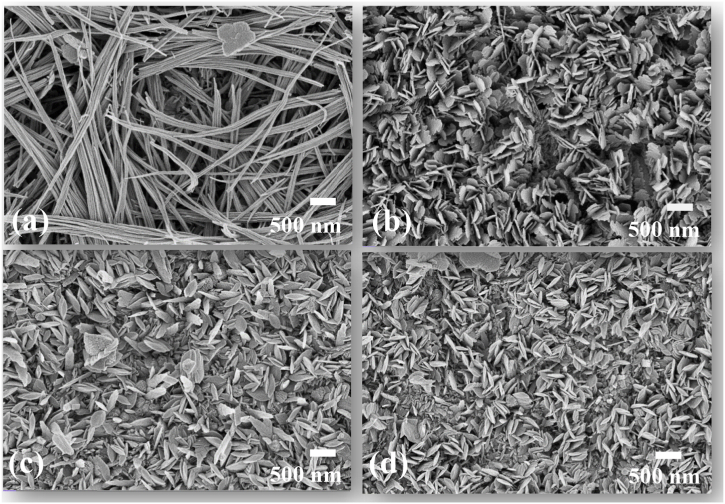
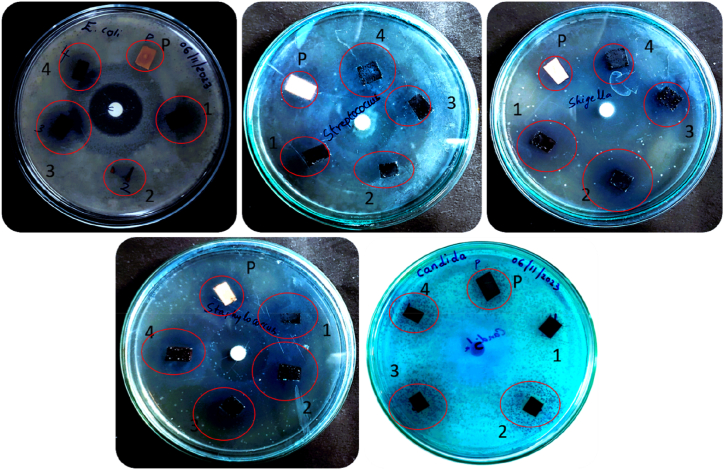
The remarkable properties of CuO ("Copper Oxide") nanostructures have attracted much interest recently in investigating the potential for use in many sectors, including antibacterial applications. While much of the work has been on nanoparticles, the studies on film-based CuO are still very few. In this work, we emphasize the effective approach to inhibit the bacterial and fungal growth by synthesizing CuO film-based nanostructures mainly with the investigation of the effect of morphology on the antibacterial properties of CuO prepared via electrochemical anodization method. The tenorite phase and monoclinic structure were validated through XRD analysis with the average crystallite size in the range of 15.3 nm, whereas FESEM recorded nanowire and nanoflake morphologies which showed variable activities against bacteria. UV-Vis spectroscopy obtained a bandgap ranging between 1.42 and 1.44 eV. The agar diffusion method was used for assessing the antibacterial and antifungal properties. The generation of Cu2+ ions for ROS production was confirmed by the XPS spectra. The nanoflakes of CuO displayed excellent inhibitory activity towards the gram-positive bacteria Streptococcus pneumoniae, Staphylococcus aureus and gram-negative bacteria including E. coli, Shigella dysenteriae, and fungus Candida albicans.
Keywords: Antibacterial; Antifungal; CuO nanoflakes; Electrochemical anodization; Nanowires; Zone of inhibition.
© 2025 The Authors.
Conflict of interest statement
The authors declare that they have no known competing financial interests or personal relationships that could have appeared to influence the work reported in this paper.
Figures





References
-
- The Effects on Human Health of Subtherapeutic Use of Antimicrobials in Animal Feeds. National Academy of Sciences; Washington, D.C: 1980. - PubMed
LinkOut - more resources
Full Text Sources
