


Social buffering during fear extinction rescues long-term trauma-induced memory and emotional behavioral alterations in rats
- PMID: 39984453
- PMCID: PMC11845759
- DOI: 10.1038/s41398-025-03285-8
Social buffering during fear extinction rescues long-term trauma-induced memory and emotional behavioral alterations in rats
Abstract
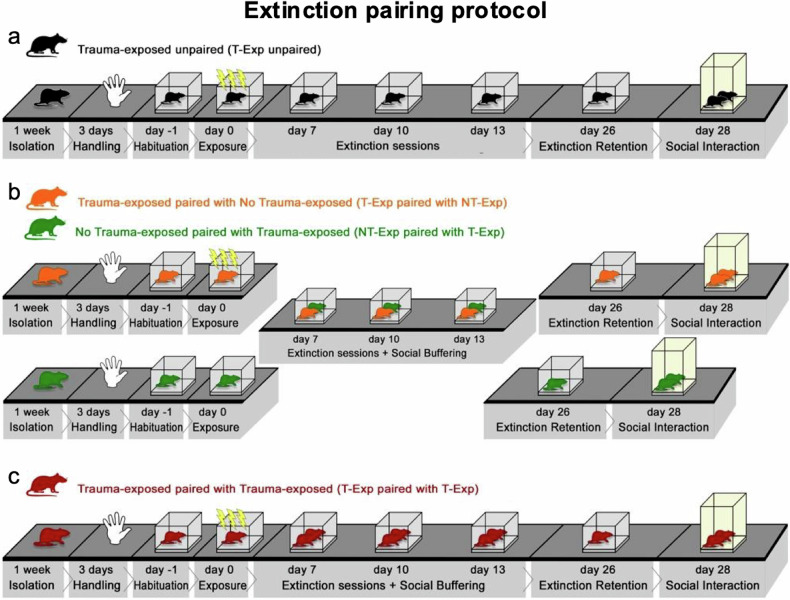
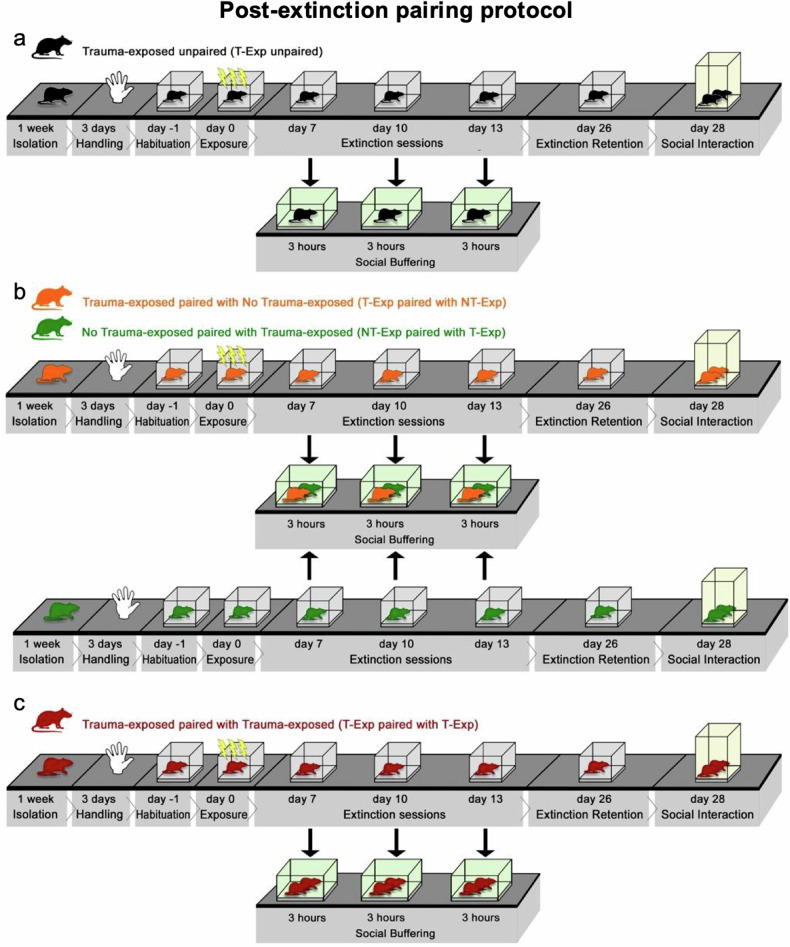
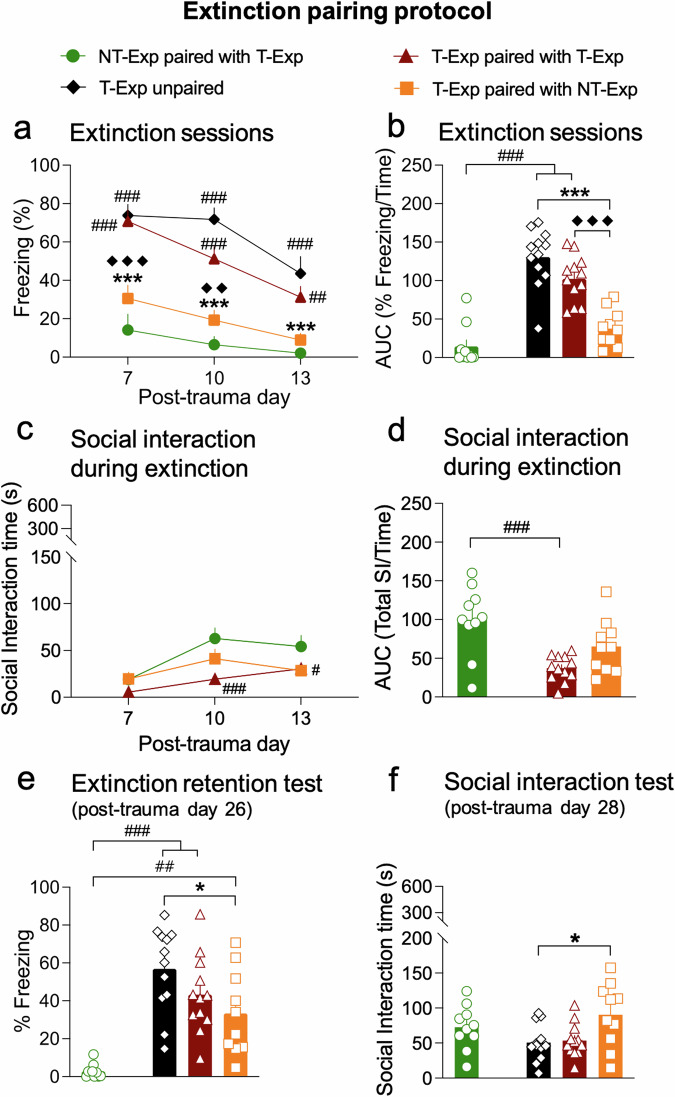
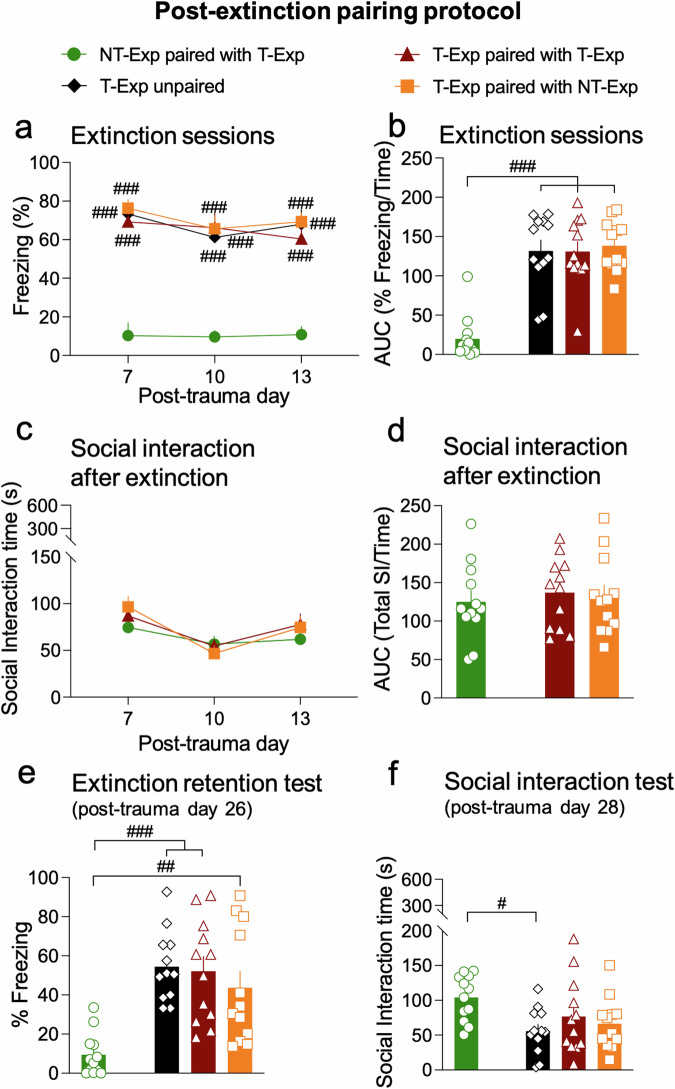
Post-Traumatic Stress Disorder (PTSD) is a psychiatric disease that may develop after experiencing a traumatic event and it is characterized by resistance to extinction of the traumatic memory. Psychotherapy, which mainly focuses on favoring fear memory extinction, represents the first-line treatment for PTSD. However, this approach is not always successful. Emerging evidence suggests the importance of a social support in alleviating PTSD symptomatology; however, the efficacy of group therapy for PTSD remains controversial. Here, we evaluated the impact of social support on the efficacy of fear extinction sessions in a chronic PTSD-like rat model. We tested the hypothesis that the presence of a social partner during temporally spaced extinction sessions (to mimic the presence of a social support during therapy) or after the extinction sessions in a neutral environment (to mimic the presence of a social support outside of the therapy setting) would ameliorate long-term PTSD-like symptomatology. Extinction sessions were carried out under different conditions: (i) alone; (ii) with a social partner never exposed to the trauma; (iii) with a trauma-exposed partner. In a separate set of experiments, rats were exposed to the extinction sessions alone and, immediately thereafter, paired with a social partner, as indicated above, in a different context. Extinction sessions carried out in the presence of a social partner never exposed to the traumatic experience rescued long-term trauma-induced PTSD-like symptomatology. We provide evidence of beneficial effects of a "healthy" social support during extinction sessions in ameliorating both immediate and persistent over time cognitive and emotional PTSD-like symptoms.
© 2025. The Author(s).
Conflict of interest statement
Competing interests: The authors declare no competing interests. Ethics approval and consent to participate: All procedures involving animal care were performed in compliance with the ARRIVE guidelines, the Directive 2010/63/EU of the European Parliament, and the D.L. 26/2014 of the Italian Ministry of Health. Animal experiments were approved by the Italian Ministry of Health (ref. no. D6507.17).
Figures
References
-
- Yehuda R, Hoge CW, Mcfarlane AC, Vermetten E, Lanius RA, Nievergelt CM, et al. Post-traumatic stress disorder. Nat Rev Dis Prim. 2015;1:15057. - PubMed
-
- Desmedt A, Marighetto A, Piazza PV. Abnormal Fear memory as a model for posttraumatic stress disorder. Biol Psychiatry. 2015;78:290–7. - PubMed
-
- American Psychiatric Association. Diagnostic and statistical manual of mental disorders. 5th ed. Arlington (VA), 2013.
MeSH terms
Grants and funding
LinkOut - more resources
Full Text Sources
Medical
