


Phase one of a hybrid effectiveness-implementation study to assess the feasibility, acceptability and effectiveness of implementing seasonal malaria chemoprevention in Nampula Province, Mozambique
- PMID: 39985013
- PMCID: PMC11846204
- DOI: 10.1186/s12936-024-05229-x
Phase one of a hybrid effectiveness-implementation study to assess the feasibility, acceptability and effectiveness of implementing seasonal malaria chemoprevention in Nampula Province, Mozambique
Abstract
Background: Seasonal malaria chemoprevention (SMC) is a highly effective intervention for malaria prevention in high burden areas with seasonal transmission, historically implemented in the Sahel. Mozambique contributes to 4% of global malaria cases. Malaria Consortium, in partnership with the National Malaria Control Programme, conducted a two-year phased SMC study in Nampula province using sulfadoxine-pyrimethamine (SP) plus amodiaquine (AQ), or SPAQ, in children under five. Phase one results presented here highlight acceptability, feasibility, and protective effect of SMC.
Methods: A pragmatic type II hybrid effectiveness-implementation study design was adopted, using mixed methods. The study was conducted in three districts, utilizing: (1) non-randomized controlled trial reporting on malaria incidence; (2) drug resistance molecular marker study reporting on resistance marker changes over time; (3) coverage and quality assessment on the SMC distribution; and (4) a qualitative acceptability and feasibility assessment with stakeholders.
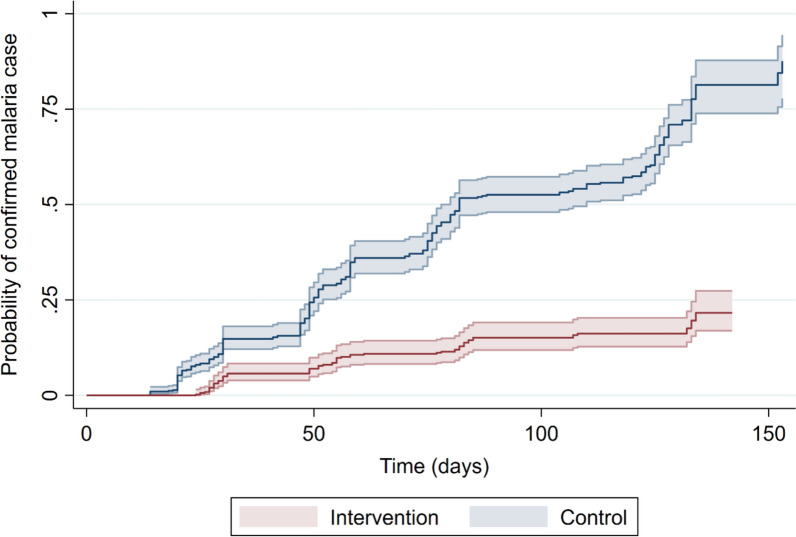
Results: Children who received SMC had 86% (hazard ratio 0.14, 95% CI 0.09-0.24) lower hazards of developing clinical malaria during the peak transmission season compared with children in the comparison district. Prevalence of SP molecular markers associated with resistance was high at baseline (K540E 66.1%). SMC achieved high coverage of eligible children over four cycles (87.7%, 95% CI 83.9-90.8%). Qualitative results indicate SMC was positively accepted by the targeted community.
Conclusions: Results suggest that SMC was effective at preventing clinical malaria, did not significantly impact resistance profile, and was feasible and acceptable in the context. Phase two will assess SMC impact in reducing malaria incidence and if chemoprevention efficacy of SPAQ is impacted by drug resistance and drug concentrations.
Keywords: Seasonal malaria chemoprevention Mozambique children.
© 2025. The Author(s).
Conflict of interest statement
Declarations. Competing interests: The authors declare no competing interests.
Figures
References
-
- WHO. Guidelines for malaria, 14 March 2023. Geneva: World Health Organization, Global Malaria Programme; 2023. Report No.: WHO/UCN/GMP/2023.01, https://apps.who.int/iris/handle/10665/366432. Accessed 12 Sep 2023.
-
- WHO. Policy recommendation: seasonal malaria chemoprevention (SMC) for Plasmodium falciparum malaria control in highly seasonal transmission areas of the Sahel sub-region in Africa. Geneva: World Health Organization; 2012.
MeSH terms
Substances
LinkOut - more resources
Full Text Sources
Medical
