Application of decision analytic modelling to cardiovascular disease prevention in Sub-Saharan Africa: a systematic review
- PMID: 39987359
- PMCID: PMC11847006
- DOI: 10.1038/s43856-025-00772-3
Application of decision analytic modelling to cardiovascular disease prevention in Sub-Saharan Africa: a systematic review
Abstract
Background: This systematic review sought to examine the application of decision analytic models (DAMs) to evaluate cardiovascular disease (CVD) prevention interventions in sub-Saharan Africa (SSA), a region that has experienced an increasing CVD burden in the last two decades.
Methods: We searched seven databases and identified model-based economic evaluations of interventions targeting CVD prevention among adult populations in SSA. All articles were screened by two reviewers, data was extracted, and narrative synthesis was performed. Quality assessment was performed using the Philips checklist.
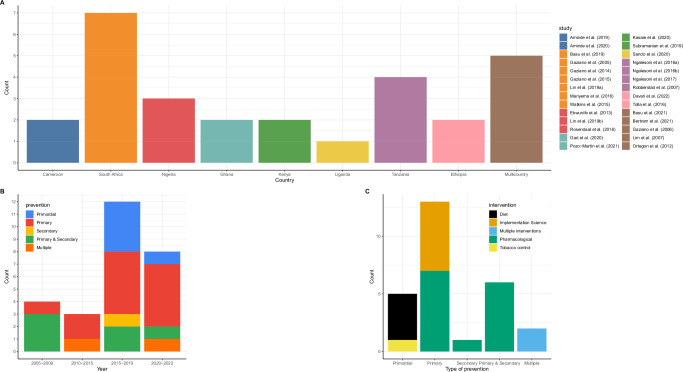
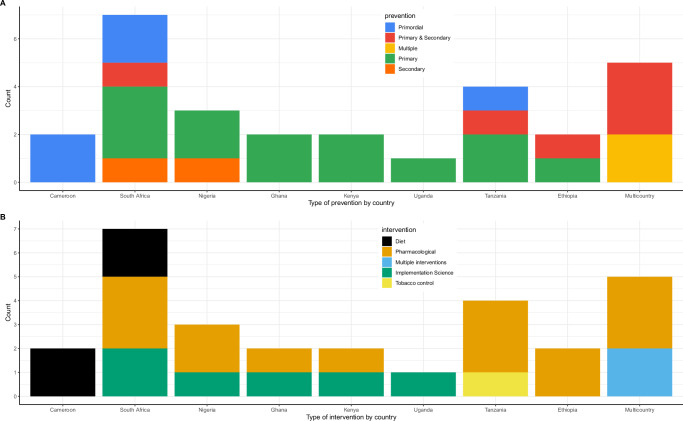
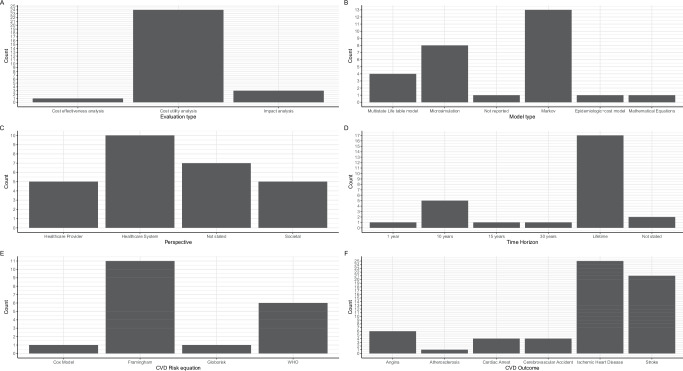
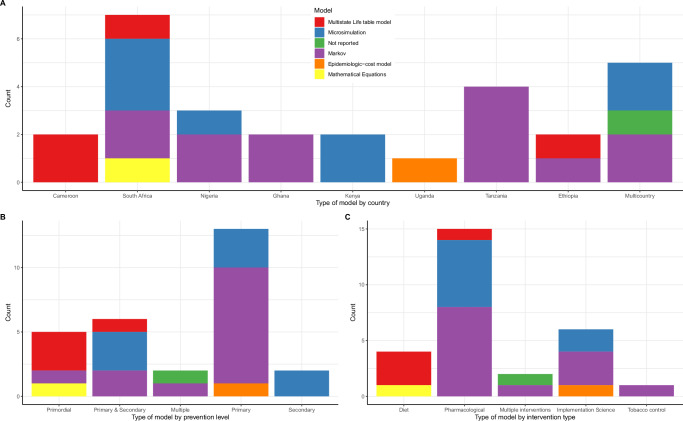
Results: The review included 27 articles from eight SSA countries. The majority of the studies evaluated interventions for primary CVD prevention, with primordial prevention interventions being the least evaluated. Markov models were the most commonly used modelling method. Seven studies incorporated equity dimensions in the modelling, which were assessed mainly through subgroup analysis. The mean quality score of the papers was 68.9% and most studies reported data challenges while only three studies conducted model validation.
Conclusions: The review finds few studies modelling the impact of interventions targeting primordial prevention and those evaluating equitable strategies for improving access to CVD prevention. There is a need for increased transparency in model building, validation and documentation.
Plain language summary
Cardiovascular Disease (heart disease) is an increasing problem in countries in sub-Saharan Africa. There are strategies in place to prevent disease and this review examined how mathematical tools for decision making are used to calculate how well prevention strategies are working. We performed a review of the literature on this topic and included 27 studies from eight SSA countries. We found common decision models used in many of the studies and very few studies with equity considerations (fairness to all). Challenges with data quality and limited real-world testing to show how well these tools work in practice were also found. These findings highlight the need for better mathematical tools and a greater focus on preventive strategies that are fair to all to help reduce heart disease in this region and improve public health.
© 2025. The Author(s).
Conflict of interest statement
Competing interests: The authors declare no competing interests.
Figures

References
-
- World Health Organization. Non communicable diseases. https://www.who.int/news-room/fact-sheets/detail/noncommunicable-diseases (2022).
-
- GBD (2021) Diseases and Injuries Collaborators. Global incidence, prevalence, years lived with disability (YLDs), disability-adjusted life-years (DALYs), and healthy life expectancy (HALE) for 371 diseases and injuries in 204 countries and territories and 811 subnational locations, 1990–2021: a systematic analysis for the Global Burden of Disease Study 2021. Lancet403, 2133–2161 (2024). - PMC - PubMed
Grants and funding
LinkOut - more resources
Full Text Sources
Research Materials