


"A one-stop shop": Real-world use and app-users' experiences of a psychoeducational smartphone app for adults with ADHD
- PMID: 39996148
- PMCID: PMC11847728
- DOI: 10.1016/j.invent.2025.100807
"A one-stop shop": Real-world use and app-users' experiences of a psychoeducational smartphone app for adults with ADHD
Abstract
Objective: Smartphone apps have the potential to be accessible tools to provide psychoeducation for adults with Attention-Deficit/Hyperactivity Disorder (ADHD). The Adult ADHD App aims to provide psychoeducation about ADHD and supports available in Ireland. The present study aimed to investigate acceptability and user engagement of the Adult ADHD App by auditing real-world use data and gaining qualitative feedback from app users.
Methods: App analytical data was audited from the Google Analytics platform. Fourteen app-users, nine of whom identified as women and five as men, with an age range of 26-65 (M = 40.29, SD = 11.14), participated in semi-structured interviews. Reflexive thematic analysis was employed to develop themes on app-users' experiences.
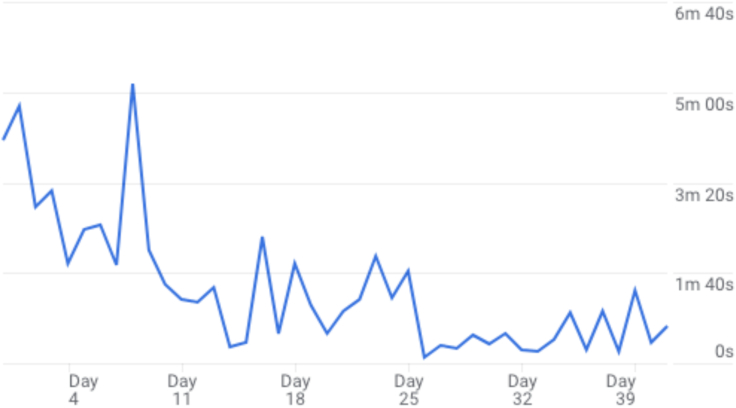
Results: The audit of app analytics indicated that over a period of one year, 12,000 people actively used the app and 6400 users returned after their initial use. We developed four themes from the interviews: 'An evidence-based tool for understanding adult ADHD' highlighted that the Adult ADHD App provides trustworthy psychoeducation on ADHD. 'Recommendations for ADHD-friendly adaptations' identified modifications to improve usability of the app. 'Meeting the needs of different stages in the ADHD journey' showed that while the app significantly benefitted adults new to their ADHD, adults who were familiar with their ADHD sought an app that would help them in moments of challenge. 'Perception of public services impacts app experience' suggested that people's attitudes and experiences of the public health system in Ireland affected their views of app content.
Conclusion: The Adult ADHD App appears to meet its aims of providing psychoeducation on adult ADHD. Elements can be modified to improve usability. Digital health tools created by public health organisations should consider how people's previous experiences with healthcare services can impact how they perceive the information in the tools.
Keywords: ADHD; Adult ADHD; Digital mental health intervention; Psychoeducation; Real-world use.
© 2025 The Authors.
Conflict of interest statement
The authors declare that they have no known competing financial interests or personal relationships that could have appeared to influence the work reported in this paper.
Figures


References
-
- American Psychiatric Association . 5th ed. American Psychiatric Publishing, Inc.; Arlington, VA, US: 2013. Diagnostic and Statistical Manual of Mental Disorders: DSM-5™. - DOI
-
- Annink A. Using the research journal during qualitative data collection in a cross-cultural context. Entrep. Res. J. 2017:7. doi: 10.1515/erj-2015-0063. - DOI
LinkOut - more resources
Full Text Sources
