


Antimicrobial use and prescribing practices by equine veterinarians in Australia: Insights into reproduction, dentistry, compounding and use for nonbactericidal effects
- PMID: 40000246
- PMCID: PMC12134839
- DOI: 10.1111/avj.13428
Antimicrobial use and prescribing practices by equine veterinarians in Australia: Insights into reproduction, dentistry, compounding and use for nonbactericidal effects
Abstract
Background: Antimicrobial resistance (AMR) is a problem for equine practitioners in Australia, but antimicrobial use in practice has been largely understudied. We aimed to evaluate equine veterinarians' intentions of prescribing antimicrobials in areas where we perceived there to be wide ranges of practice - dentistry, reproduction and for nonbactericidal effects.
Method: An online cross-sectional survey of veterinarians working in equine practice was conducted over 4 months in 2023 and 2024. Antimicrobial use, including compounding practices, for reproductive and dental disorders, and nonbactericidal effects were investigated.
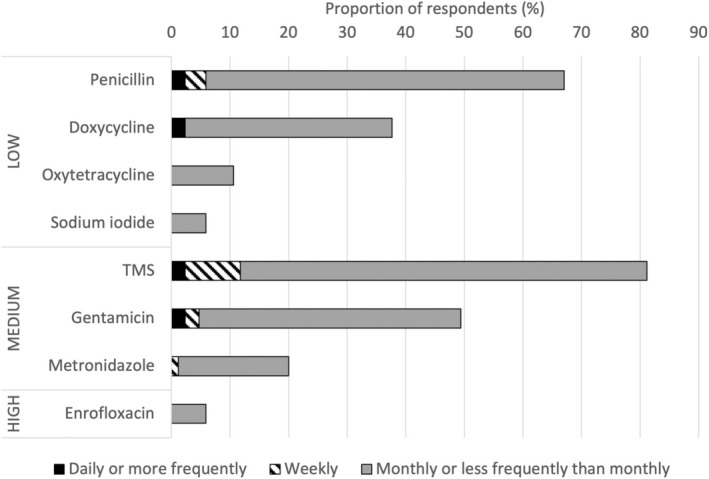
Results: Responses were received from 134 equine practitioners in Australia. Most respondents reported using common equine antimicrobials (trimethoprim sulphonamide (TMS), penicillin and gentamicin). Low- and medium-importance-rated antimicrobials predominated for dental and reproductive disorders although there were some reported uses of high-importance agents, including some not registered for use in horses. Prescribing compounded antimicrobials was common (70% of respondents). Antimicrobials were also reported to be used for contracted tendons, matrix metalloprotease inhibition, anti-inflammatory and antiendotoxic and other nonbacteriocidal effects.
Conclusion: Although antimicrobial prescribing patterns varied, most respondents reported using common equine antimicrobials. Antimicrobial guidelines may assist in aligning practice and reducing inappropriate antimicrobial use in horses.
Keywords: antibiotic; antimicrobial resistance; compounding; horse.
© 2025 The Author(s). Australian Veterinary Journal published by John Wiley & Sons Australia, Ltd on behalf of Australian Veterinary Association.
Conflict of interest statement
The authors have no conflicts to declare.
Figures




References
-
- Kawarizadeh A, Gilkerson J, Mitchell K et al. Prevalence and antimicrobial resistance patterns of Klebsiella pneumoniae reproductive isolates from mares. Australian veterinary antimicrobial stewardship conference; Gold Coast, QLD. 2023.
-
- Flood JA, Carrick JB, Collins NM et al. Blood culture isolates and antimicrobial sensitivities from 1621 critically ill neonatal foals (2005‐2022). Bain Fallon memorial lectures; Tweed Heads, QLD, Australia: Equine Veterinarians Australia. 2023. - PubMed
-
- Johns IC, Adams EL. Trends in antimicrobial resistance in equine bacterial isolates: 1999‐2012. Vet Rec 2015;176(13):334. - PubMed
-
- Hardefeldt LY, Browning GF, Thursky K et al. Antimicrobials used for surgical prophylaxis by equine veterinary practitioners in Australia. Equine Vet J 2017;50(1):65–72. - PubMed
-
- Allen SE, Verheyen KLP, O'Neill DG et al. Use of antimicrobials licensed for systemic administration in UK equine practice. Equine Vet J 2023;55(5):808–819. - PubMed
MeSH terms
Substances
Grants and funding
LinkOut - more resources
Full Text Sources
Medical
