


Risk-benefits assessment of tamoxifen or raloxifene as chemoprevention for risk reduction of breast cancer among BRCA1 and BRCA2 carriers: a meta-analysis
- PMID: 40000769
- PMCID: PMC11861701
- DOI: 10.1038/s41598-025-89915-z
Risk-benefits assessment of tamoxifen or raloxifene as chemoprevention for risk reduction of breast cancer among BRCA1 and BRCA2 carriers: a meta-analysis
Abstract
Background: Breast cancer is a major global health burden, with hereditary factors such as BRCA1/2 mutations significantly increasing the lifetime risk. This meta-analysis aimed to evaluate the outcomes of selective estrogen receptor modulators (SERMs), tamoxifen, and raloxifene as chemopreventive agents for breast cancer risk reduction in BRCA1/2 mutation carriers.
Methods: A meta-analysis was conducted according to the PRISMA guidelines. PubMed, Cochrane Library, and MEDLINE databases were searched for relevant studies published between 2000 and 2024. Case-control studies and observational cohort studies examining the use of tamoxifen/raloxifene in BRCA1/2 carriers were included. Data on the incidence and risk ratios of breast cancer were also extracted. Quality was assessed using the Newcastle-Ottawa Scale (NOS). A random-effects meta-analysis was performed using Review Manager (version 5.4.0).
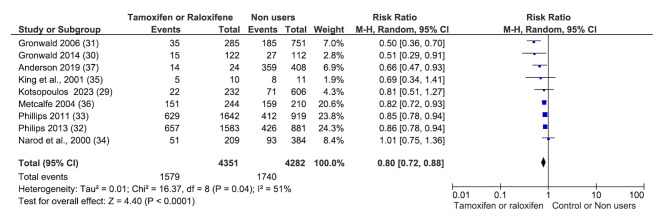
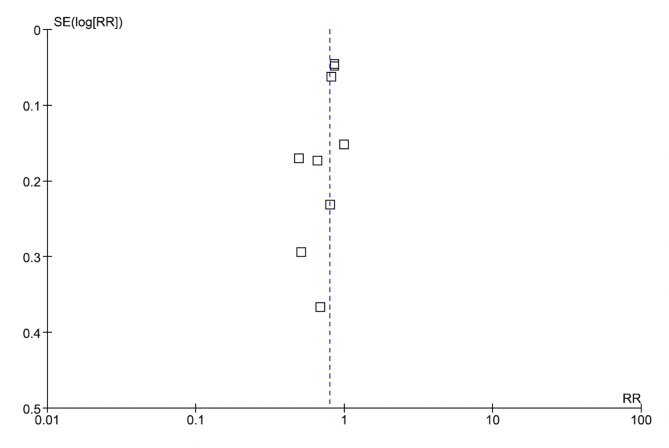
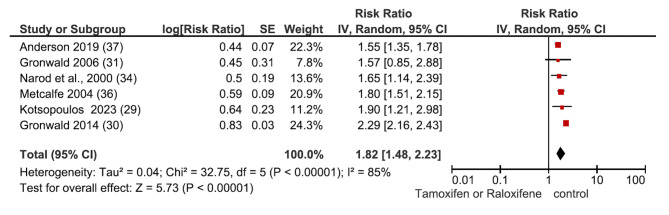
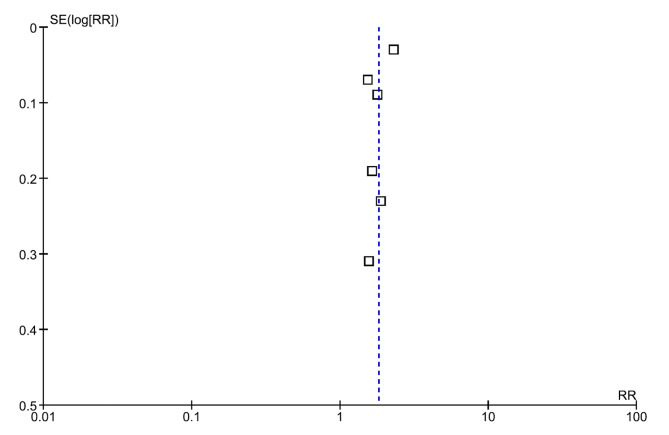
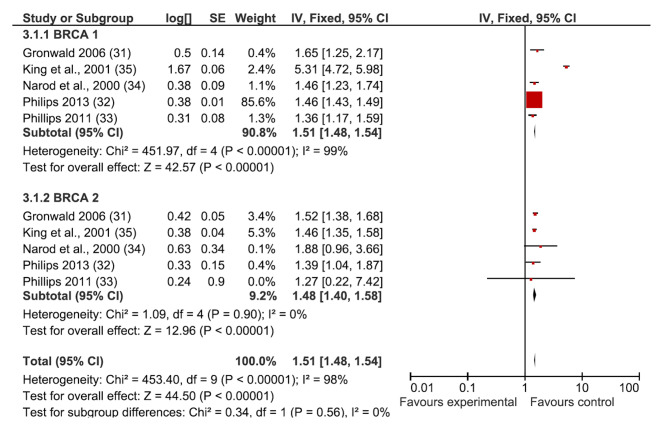
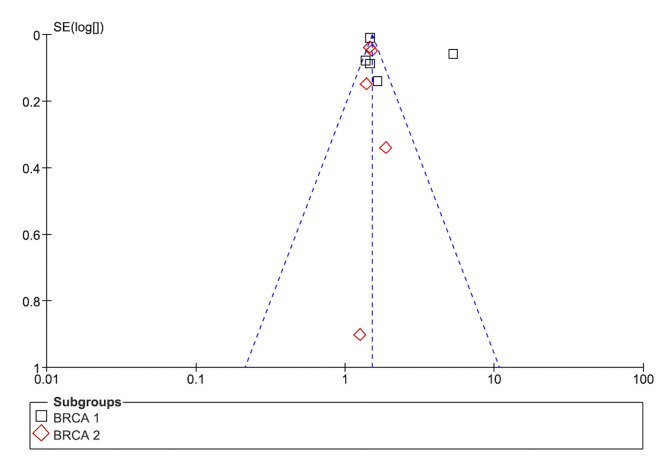
Results: Nine studies (13,676 women) were included. Two studies had low risk, and the remaining seven studies had moderate risk, as assessed by the NOS checklist. Pooled analysis showed tamoxifen/raloxifene decreased breast cancer risk compared to controls (RR 0.80, 95% CI 0.72-0.88, p = 0.04). The risk ratio of breast cancer incidence among BRCA1/2 carriers was reduced after tamoxifen use (RR 1.82, 95% CI 1.48-2.23, p < 0.00001). Subgroup analysis revealed reduced breast cancer risk with SERM use in both BRCA1 (RR 1.51, 95% CI 1.48-1.51) and BRCA2 carriers (RR 1.48, 95% CI 1.40-1.58). The heterogeneity ranged from 51 to 85%, representing high significance and variation in true effect sizes underlying the different included studies. Whereas the heterogeneity among subgroups BRCA1 and BRCA2 was 98%, and the difference was 0%, showing no difference in response to SERM for risk reduction of breast cancer.
Conclusion: This meta-analysis provides evidence that tamoxifen and raloxifene significantly reduce the breast cancer risk in women with BRCA1/2 mutations. Chemoprevention efficacy was similar for both BRCA1 and BRCA2 carriers. Further research is needed to validate these findings and to optimize their use in high-risk populations.
Keywords: BRCA1/2; Breast cancer; Chemoprevention; Raloxifene; Selective estrogen receptor modulators; Tamoxifen.
© 2025. The Author(s).
Conflict of interest statement
Declarations. Competing interests: The authors declare no competing interests.
Figures

References
-
- Sung, H. et al. Global cancer statistics 2020: GLOBOCAN estimates of incidence and mortality worldwide for 36 cancers in 185 countries. Cancer J. Clin.71 (3), 209–249 (2021). - PubMed
-
- Behl, T. et al. Understanding the mechanistic pathways and clinical aspects associated with protein and gene-based biomarkers in breast cancer. Int. J. Biol. Macromol.245, 126595 (2023). - PubMed
-
- Pourmasoumi, P., Moradi, A. & Bayat, M. BRCA1/2 mutations and breast/ovarian cancer risk: A new insights review. Reprod. Sci. 1–11 (2024). - PubMed
Publication types
MeSH terms
Substances
LinkOut - more resources
Full Text Sources
Medical
Miscellaneous
