


Impact of Altitude Training on Athletes' Aerobic Capacity: A Systematic Review and Meta-Analysis
- PMID: 40003714
- PMCID: PMC11857729
- DOI: 10.3390/life15020305
Impact of Altitude Training on Athletes' Aerobic Capacity: A Systematic Review and Meta-Analysis
Abstract
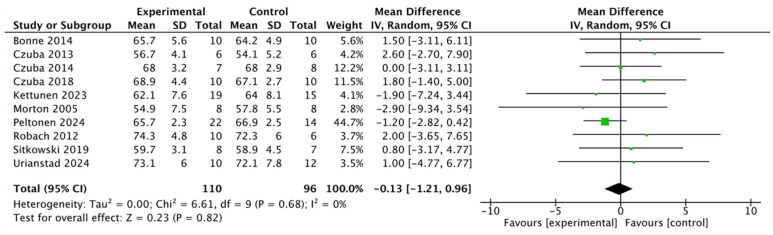
Purpose: This study systematically evaluated the effects of altitude training on athletes' aerobic capacity, focusing on optimal training modalities and intervention durations. Methods: Eight databases (CNKI, CSPD, PubMed, Ovid Medline, ProQuest, Cochrane Library, Embase, and Scopus) were searched for randomized controlled trials on altitude training and aerobic capacity following PRISMA guidelines, covering publications up to 15 October 2024. The risk of bias was assessed using Cochrane tools, and a meta-analysis was conducted using Review Manager 5.4 with a random-effects model. Sensitivity and subgroup analyses were performed to identify heterogeneity and influencing factors. Results: Thirteen studies involving 276 participants (aged 18-35) were included. Meta-analysis revealed that compared to low-altitude training, altitude training significantly increased hemoglobin (SMD = 0.7, 95% CI: 0.27-1.13, p = 0.03) and hemoglobin mass (SMD = 0.49, 95% CI: 0.1-0.89, p = 0.16) but had no significant effect on maximal oxygen uptake (SMD = -0.13, 95% CI: -1.21-0.96, p = 0.68). Altitude training also improved performance in trial tests (SMD = -28.73, 95% CI: -58.69-1.23, p = 0.002). Sensitivity analysis confirmed the robustness of hemoglobin and trial test results. Subgroup analysis showed that the "live high, train high" (LHTH) approach and interventions lasting longer than three weeks were most effective in enhancing aerobic capacity. Conclusions: Altitude training improves athletes' aerobic capacity by enhancing hematological indicators and trial test performance, though its impact on maximal oxygen uptake is minimal. LHTH and interventions exceeding three weeks yield superior outcomes. However, the findings are limited by the number and quality of the available studies.
Keywords: aerobic capacity; altitude training; hemoglobin; maximal oxygen uptake; meta-analysis.
Conflict of interest statement
No conflicts of interest are declared, ensuring that the research was unbiased and independent.
Figures







References
-
- Sinex J.A., Chapman R.F. Hypoxic Training Methods for Improving Endurance Exercise Performance. J. Sport Health Sci. 2015;4:325–332. doi: 10.1016/j.jshs.2015.07.005. - DOI
-
- Jackson R., Balke B. Training at Altitude for Performance at Sea Level. Schweiz. Z. Fur Sportmed. 1971;((Suppl. S19–S27)) - PubMed
Publication types
Grants and funding
LinkOut - more resources
Full Text Sources
