


Beneath the Surface: The Emerging Role of Ultra-Processed Foods in Obesity-Related Cancer
- PMID: 40014232
- PMCID: PMC11976848
- DOI: 10.1007/s11912-025-01654-6
Beneath the Surface: The Emerging Role of Ultra-Processed Foods in Obesity-Related Cancer
Abstract
Purposeof review: Ultra-processed foods (UPFs) are becoming more and more important in daily diets around the world; in some cases, they can account for as much as 60% of daily energy intake. Epidemiological evidence suggests that this shift toward high levels of food processing may be partially responsible for the global obesity epidemic and the rise in the prevalence of chronic diseases.
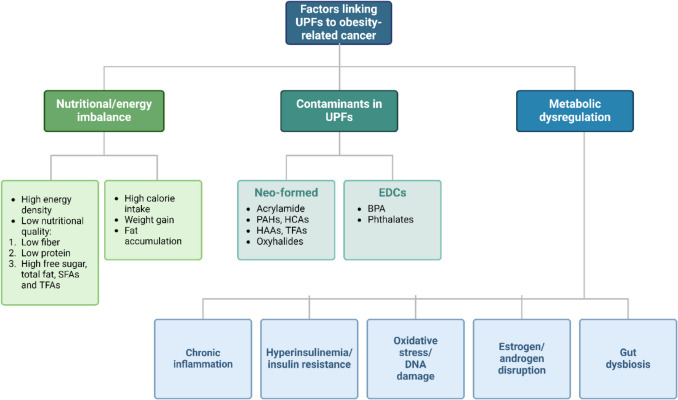
Recent findings: Few prospective studies have examined the relationship between UPF consumption and cancer outcomes. According to currently available information, UPFs may increase the risk of cancer due to their obesogenic properties and exposure to substances that can cause cancer, such as certain food additives and pollution from product processing. The complex relationship between obesity and cancer involves factors such as immune dysregulation, altered adipokine and sex hormone levels, abnormal fatty acid metabolism, extracellular matrix remodeling, and chronic inflammation. Addressing cancer risk associated with UPF consumption could involve a multifaceted approach, including consumer behavior modification programs and robust public health regulations aimed at enhancing food environments. Improved knowledge of the potential dual negative impacts of UPFs on the environment and cancer risk is one of the priority areas we identify for future research and policy implications. Various approaches could be used to prevent cancers associated with UPF consumption, such as consumer behavior change programs and stricter public health regulations needed to improve the food environment. This review examines for the first time the potential role of UPFs in cancer risk associated with obesity, exploring underlying biological mechanisms and identifying key areas for future research and policy action, including the dual environmental and health impact of UPFs.
Keywords: Cancer; Chronic low-grade inflammation; Gut microbiome; Obesity; Ultra-processed foods.
© 2025. The Author(s).
Conflict of interest statement
Declarations. Conflict of Interest: The authors declare no competing interests. Animal and Human Rights and Informed Consent: This article does not contain any studies with human or animal subjects performed by any of the authors.
Figures


References
-
- Floros JD, Newsome R, Fisher W, et al. Feeding the World Today and Tomorrow: The Importance of Food Science and Technology: An IFT Scientific Review. Compr Rev Food Sci Food Saf. 2010;9(5):572–99. 10.1111/j.1541-4337.2010.00127.x. - PubMed
-
- Monteiro CA. Nutrition and health. The issue is not food, nor nutrients, so much as processing. Public Health Nutr. 2009;12(5):729–31. 10.1017/S1368980009005291. - PubMed
-
- Soares Guimarães J, Mais LA, Marrocos Leite FH, et al. Ultra-processed food and beverage advertising on Brazilian television by International Network for Food and Obesity/Non-Communicable Diseases Research, Monitoring and Action Support benchmark. Public Health Nutr. 2020;23(15):2657–62. 10.1017/S1368980020000518. - PMC - PubMed
Publication types
MeSH terms
LinkOut - more resources
Full Text Sources
Medical
