


Enhancing oxygen utilization and mitigating oxidative stress in Tibetan chickens for adaptation to high-altitude hypoxia
- PMID: 40014967
- PMCID: PMC11910141
- DOI: 10.1016/j.psj.2025.104893
Enhancing oxygen utilization and mitigating oxidative stress in Tibetan chickens for adaptation to high-altitude hypoxia
Abstract
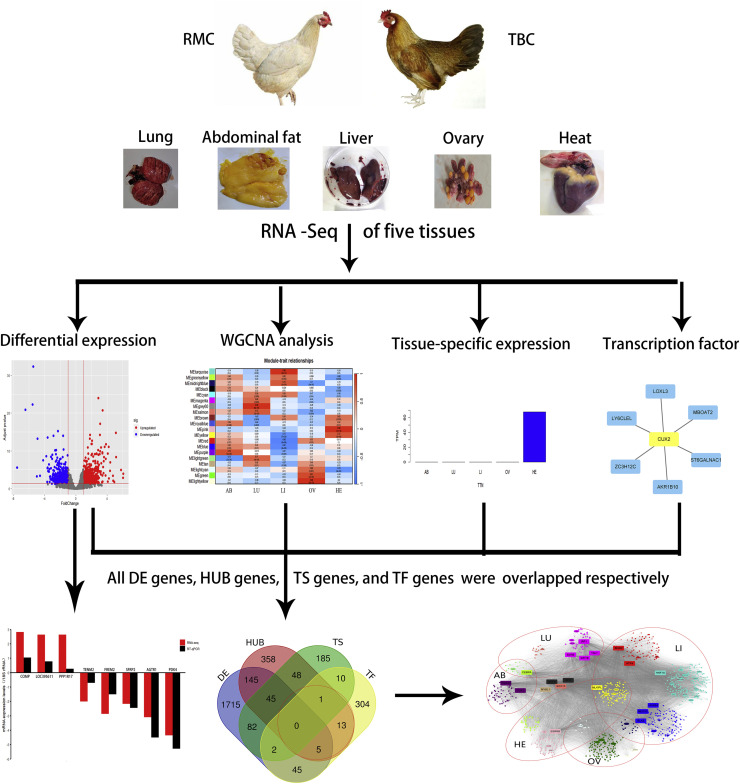
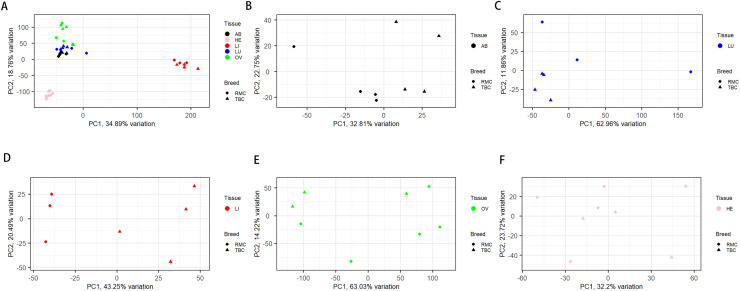
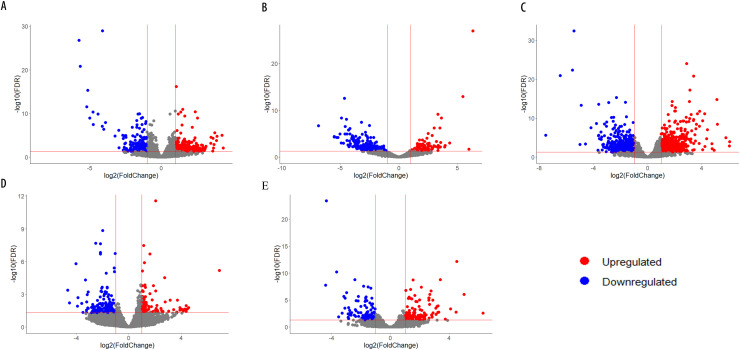
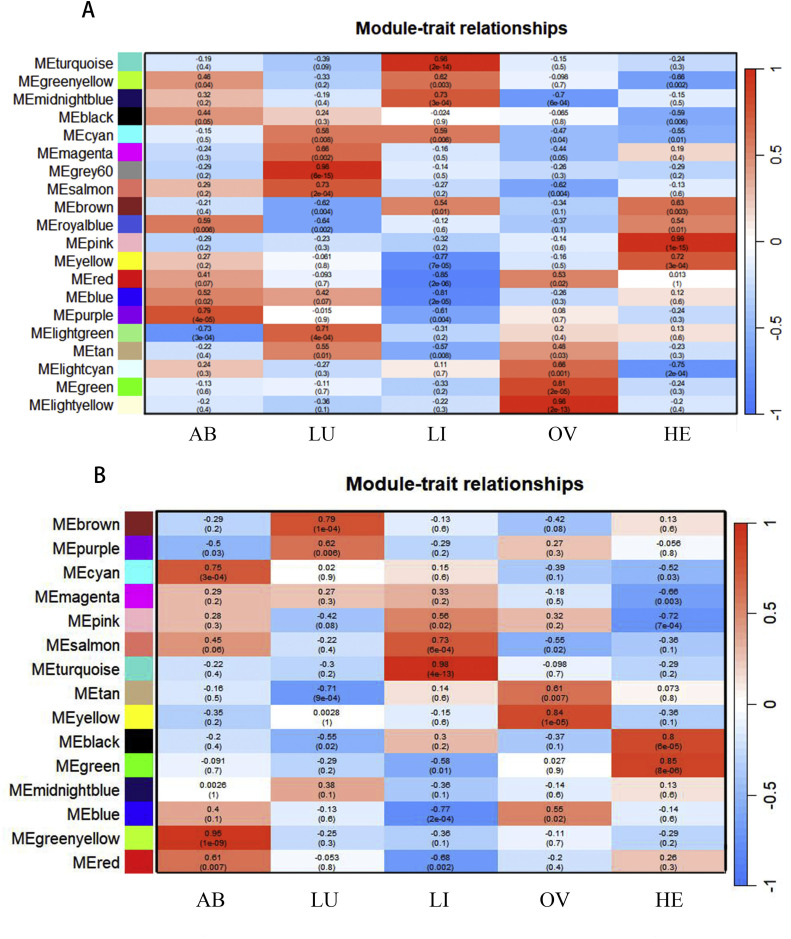
Tibetan chicken (TBC) is one of the native poultry species that is well adapted to the high-altitude environment of the Qinghai-Tibet Plateau. To elucidate the genetic mechanisms underlying adaptation, the transcriptomes of five tissues (heart (HE), lung (LU), liver (LI), ovary (OV), and abdominal fat (AB)) were compared between TBCs and Roman chickens (RMCs) inhabiting the plateau for one year. Moreover, weighted gene co-expression network analysis (WGCNA) was applied to detect tissue-associated modules and hub genes. A total of 1105, 239, 400, 483, and 275 differentially expressed genes (DEGs) were identified in the LI, HE, LU, AB, and OV tissues, respectively. Fifteen tissue-specific modules were identified in TBC and thirteen in RMC. Analysis of transcription factor (TF) binding sites revealed nineteen hub TFs in TBC and twenty in RMC across the pool of hub genes in these two breeds. Functional enrichment analyses demonstrated that TBC exhibited robust capacity for oxygen transport, heme binding, oxidative phosphorylation, and antioxidant responses in high-altitude regions. Further investigation of the function of hub TFs indicated the involvement of ATF4, CEBPA, TCF7L1, and GFI1B in improving oxygen transport in TBCs. These hub TFs were associated with angiogenesis or hematopoiesis and likely linked to various regulatory functions and facilitate communication across multiple tissues. In conclusion, TBCs have developed a systemic adaptive mechanism to cope with high altitudes, involving the coordinated transcriptional regulation in multi-tissues to enhance oxygen transport and utilization, along with amelioration of oxidative stress.
Keywords: High-altitude adaptation; Hypoxia; Multi-tissues; Tibetan chicken; Transcriptome.
Copyright © 2025. Published by Elsevier Inc.
Conflict of interest statement
Disclosures The authors declare that they have no known competing financial interests or personal relationships that could have appeared to influence the work reported in this paper.
Figures
References
-
- Blighe, K., M. Lewis, A. Lun, and M. K. J. R. o. Blighe. 2019. Package ‘PCAtools.’.
-
- Cánovas A., Reverter A., DeAtley K.L., Ashley R.L., Colgrave M.L., Fortes M.R., Islas-Trejo A., Lehnert S., Porto-Neto L., Rincón G., Silver G.A., Snelling W.M., Medrano J.F., Thomas M.G. Multi-tissue omics analyses reveal molecular regulatory networks for puberty in composite beef cattle. PLoS One. 2014;9 doi: 10.1371/journal.pone.0102551. - DOI - PMC - PubMed
MeSH terms
Substances
LinkOut - more resources
Full Text Sources
Miscellaneous
