


A snapshot of country-specific dietary habits and obesity in European children: the Feel4Diabetes study
- PMID: 40016587
- PMCID: PMC11868321
- DOI: 10.1007/s00431-025-06037-4
A snapshot of country-specific dietary habits and obesity in European children: the Feel4Diabetes study
Abstract
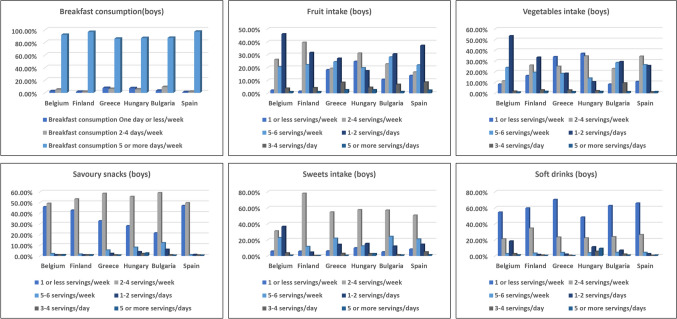
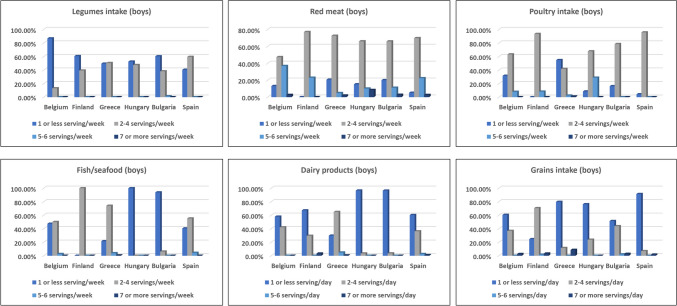
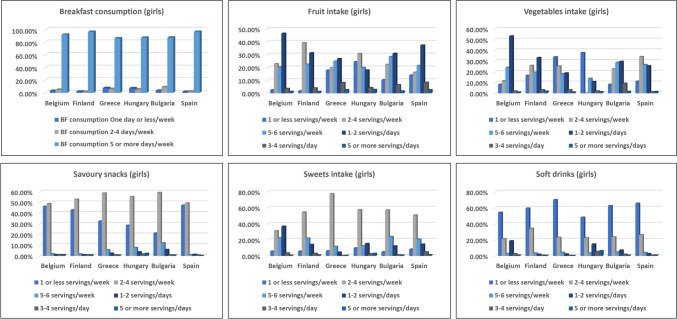
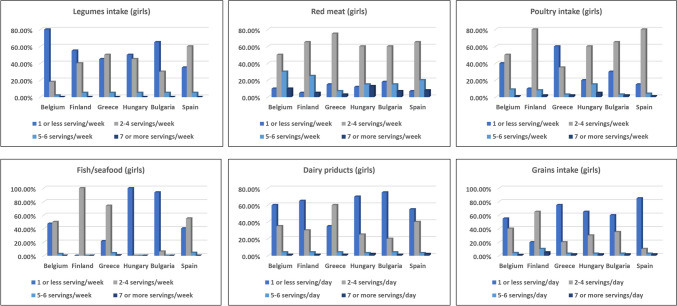
This study assessed the dietary intake of European children by country, gender, and obesity degree across six European countries participating in the Feel4Diabetes study. It also compared food group intakes with European food-based dietary guidelines. The Feel4Diabetes study included 9,847 children (50.4% girls) from six European countries. Families provided baseline data on energy balance-related behaviors and socioeconomic factors via questionnaires. Children's dietary intake and breakfast consumption were assessed using semi-quantitative food frequency questionnaires, and anthropometric measurements were taken. Intake from 11 food groups was analyzed by country, gender, and obesity degree. Chi-square analyses compared food intake with dietary guidelines. "Nutrient-dense " foods (e.g., fruits, vegetables, whole grains) and "energy-dense, low-nutrient" foods (e.g., high in added sugars, saturated fats) were categorized based on the European food-based guideline. Over 85% of children consumed breakfast 5-7 days a week, with no significant differences by Body Mass Index (BMI) or country. Mean intakes of nutrient-dense food groups fell below recommendations, while the intake of energy-dense, low-nutrient foods exceeded limits, particularly in children with overweight/obesity (p = 0.048). No significant gender differences were observed in most food groups.
Conclusions: Dietary intake varied by country and obesity degree among European children. Across the six countries, children's diets did not align with food-based dietary guidelines. These findings underscore the need for interventions promoting healthier eating habits among European children.
Trial registration: The Feel4Diabetes-study is registered with the clinical trials registry (NCT02393872), http://clinicaltrials.gov What is Known: • Childhood obesity is a growing concern across Europe, with some variations in food consumption observed between European countries • Previous studies have highlighted the role of diet in childhood obesity, but few have examined cross-country comparisons while accounting for gender and BMI status.
What is new: • This study provides a comprehensive cross-country analysis of children's dietary intake, considering gender, BMI status, and adherence to European dietary guidelines. • New insights into gender differences in sweets consumption and the positive association between BMI and food intake (such as soft drinks and sweets) are presented, which can inform targeted dietary interventions.
Keywords: Children; Dietary intake; Europe; Food frequency; Obesity.
© 2025. The Author(s).
Conflict of interest statement
Declarations. Ethics approval: The study followed the Declaration of Helsinki guidelines. Ethical approval was obtained from the Ethical Committees of Spain (code: CP03/2016), Greece (code: 46/3–4-2015), Finland (code: 174/1801/2015), Belgium (code: B670201524237), Bulgaria (code: 52/10–3-201r), and Hungary (code: 20095/2016/EKU). Consent to participate: Informed consent was obtained from all participants. Consent for publication: Not applicable. Competing interests: The authors declare no competing interests.
Figures
References
-
- WHO European Childhood Obesity Surveillance Initiative (COSI) (2018–2020) Report on the fifth round of data collection. Available from https://www.who.int/europe/publications/i/item/WHO-EURO-2022-6594-46360-.... Accessed 23 June 2024
-
- Lister NB, Baur LA, Felix JF, Hill AJ, Marcus C, Reinehr T, Summerbell C, Wabitsch M (2023) Child and adolescent obesity. Nat Rev Dis Primers 9(1):24 - PubMed
Publication types
MeSH terms
Associated data
LinkOut - more resources
Full Text Sources
Medical
