


Predicting outcomes of expectant and medical management in early pregnancy miscarriage using machine learning to develop and validate multivariable clinical prediction models
- PMID: 40021998
- PMCID: PMC11869538
- DOI: 10.1186/s12884-025-07283-y
Predicting outcomes of expectant and medical management in early pregnancy miscarriage using machine learning to develop and validate multivariable clinical prediction models
Abstract
Objective: To determine whether readily available patient, ultrasound and treatment outcome data can be used to develop, validate and externally test two machine learning (ML) models for predicting the success of expectant and medical management of miscarriage respectively.
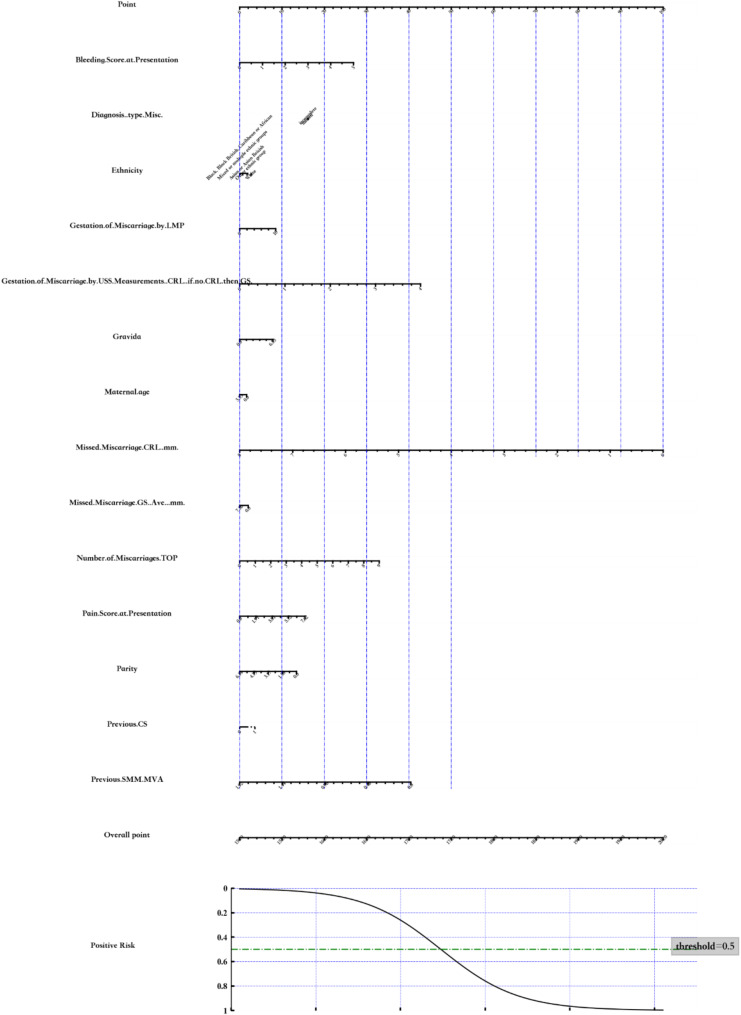
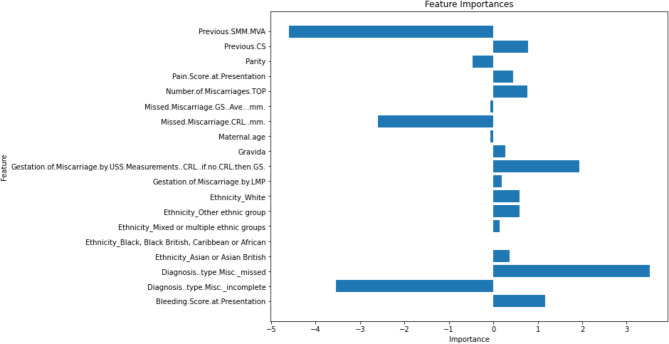
Methods: A retrospective, multi-site study of patients opting for expectant or medical management of miscarriage was undertaken. A total of 1075 patients across two hospital early pregnancy units were eligible for inclusion. Data pre-processing derived 14 features for predictive modelling. A combination of eight linear, Bayesian, neural-net and tree-based machine learning algorithms were applied to ten different feature sets. The area under the receiver operating characteristic curve (AUC) scores were the metrics used to demonstrate the performance of the best performing model and feature selection combination for the training, validation and external data set for expectant and medical management separately.
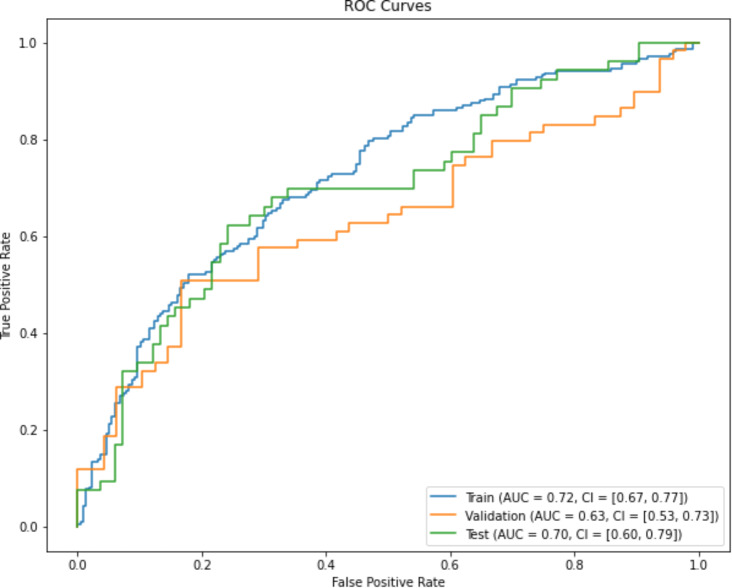
Results: Parameters were in the majority well matched across training, validation and external test sets. The respective optimum training, validation and external test set AUC scores were as follows in the expectant management cohort: 0.72 (95% CI 0.67,0.77), 0.63 (95% CI 0.53,0.73) and 0.70 (95% CI 0.60,0.79) (Logistic Regression in combination with Least Absolute Shrinkage and Selection Operator (LASSO)). The AUC scores in the medical management cohort were 0.64 (95% CI 0.56,0.72), 0.62 (95% CI 0.45,0.77) and 0.71 (95% CI 0.58,0.83) (Logistic Regression in combination with Recursive Feature Elimination (RFE)).
Conclusions: Performance of our expectant and medical miscarriage management ML models demonstrate consistency across validation and external test sets. These ML methods, validated and externally tested, have the potential to offer personalised prediction outcome of expectant and medical management of miscarriage.
Keywords: Expectant management; Machine learning; Medical management; Miscarriage.
© 2025. The Author(s).
Conflict of interest statement
Declarations. Ethics approval and consent to participate: This study was submitted to and approved by the Imperial College London Research Governance and Integrity Team (ICL RGIT), and the Health Research Authority and Health and Care Research Wales NHS, Approval Reference: 23/PR/0297. The need for consent to participate was waived by ICL RGIT due to the retrospective nature of the study. The research is in compliance with the Helsinki Declaration. Consent for publication: Not applicable. Competing interests: The authors declare no competing interests.
Figures




References
-
- Quenby S, Gallos ID, Dhillon-Smith RK, et al. Miscarriage matters: the epidemiological, physical, psychological, and economic costs of early pregnancy loss. Lancet. 2021;397(10285):1658–67. - PubMed
-
- Farren J, Jalmbrant M, Falconieri N, et al. Posttraumatic stress, anxiety and depression following miscarriage and ectopic pregnancy: a multicenter, prospective, cohort study. Am J Obstet Gynecol. 2020;222(4):e3671–22. - PubMed
-
- Farren J, Jalmbrant M, Falconieri N, et al. Differences in post-traumatic stress, anxiety and depression following miscarriage or ectopic pregnancy between women and their partners: multicenter prospective cohort study. Ultrasound Obstet Gynecol. 2021;57(1):141–8. - PubMed
-
- Nielsen S, Hahlin M, Platz-Christensen J. Randomised trial comparing expectant with medical management for first trimester miscarriages. Br J Obstet Gynaecol. 1999;106(8):804–7. - PubMed
-
- Jurkovic D, Ross JA, Nicolaides KH. Expectant management of missed miscarriage. Br J Obstet Gynaecol. 1998;105(6):670–1. - PubMed
Publication types
MeSH terms
Grants and funding
LinkOut - more resources
Full Text Sources
Medical
