


Pre-analytical pitfalls: How blood collection tubes influence exercise-induced cell-free DNA concentrations
- PMID: 40033650
- PMCID: PMC12314642
- DOI: 10.1113/EP092284
Pre-analytical pitfalls: How blood collection tubes influence exercise-induced cell-free DNA concentrations
Abstract
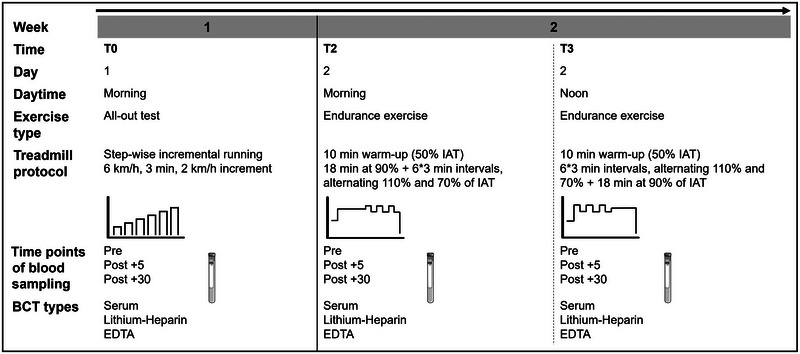
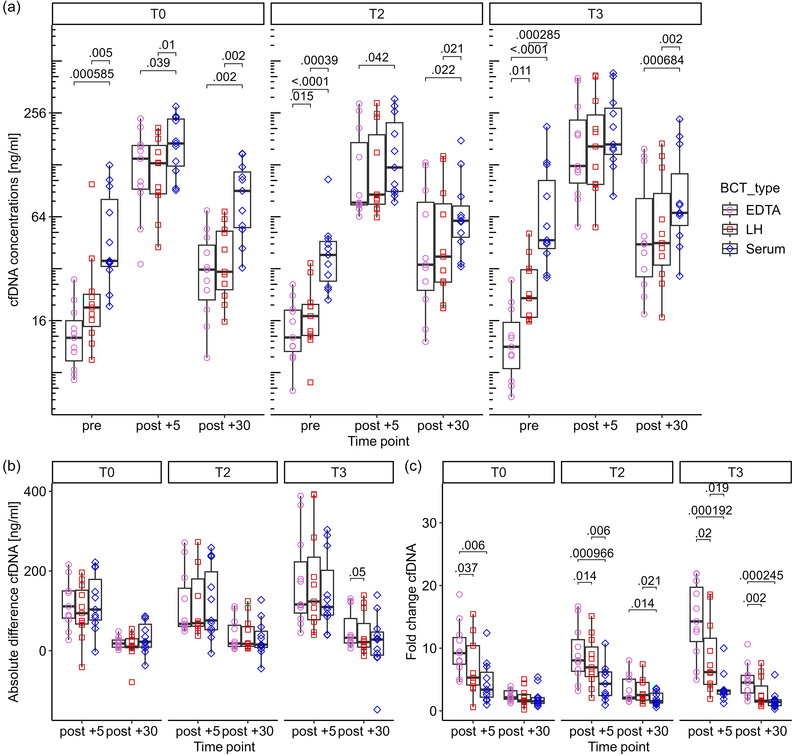
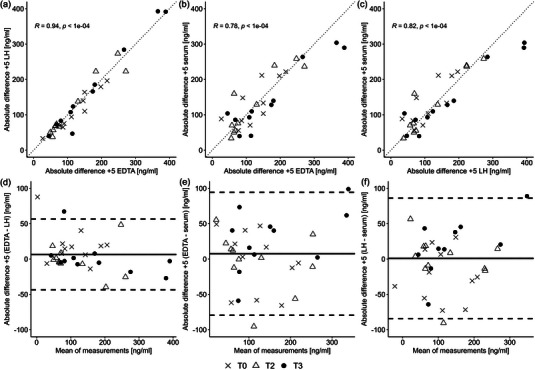
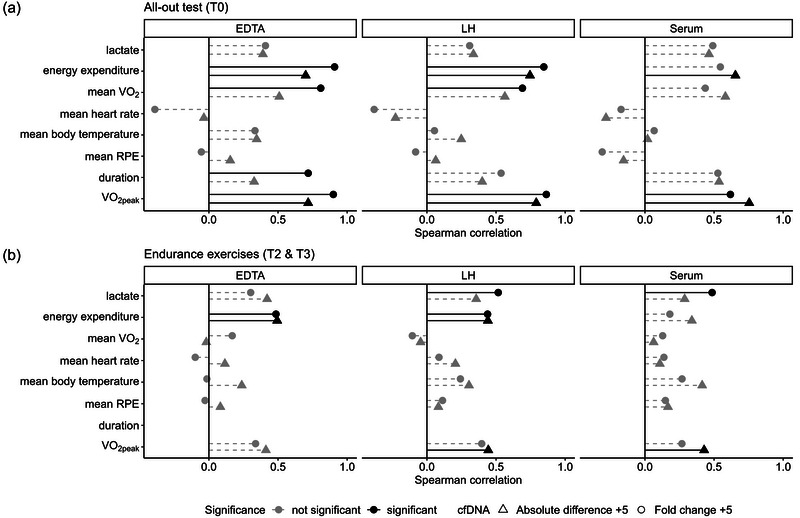
Circulating cell-free DNA (cfDNA) is a promising biomarker for physiological stress, including exercise-induced responses. However, the lack of standardization in blood collection tubes (BCTs) for quantification of cfDNA hampers inter-study comparisons. In this study, we assessed the impact of different BCTs on exercise-induced cfDNA dynamics. Eleven participants [25 (SD 2.3) years of age] performed three different treadmill exercise protocols, including an all-out test and combinations of constant and interval load. Blood samples were collected before, 5 min and 30 min post-exercise using EDTA, lithium-heparin (LH) and serum BCTs. Concentrations of cfDNA were quantified using quantitative PCR. The cfDNA increased significantly across all protocols and BCTs. A significant effect of BCT on cfDNA concentrations (P = 0.034) was found, with serum showing higher concentrations than EDTA and LH. Although absolute differences from pre- to post-exercise were comparable across BCTs (P = 0.476), fold changes differed significantly (P = 0.012), with the highest observed in EDTA and the lowest in serum. Bland-Altman analyses demonstrated better agreement between EDTA and LH compared with serum. Significant correlations of cfDNA with energy expenditure and peak oxygen uptake were found. These correlations were stronger in EDTA and LH than in serum. Our findings highlight the crucial influence of BCT choice on cfDNA measurements in exercise settings. Given that EDTA and LH reflected exercise load better, they could be preferred for exercise physiology research. This work underscores the need to account for the choice of BCT to improve data comparability across studies. Additionally, these findings might have broader implications for clinical settings where cfDNA is used as a biomarker.
Keywords: blood biomarker; blood collection tubes; cell‐free DNA; circulating DNA; exercise; pre‐analytical factors; running.
© 2025 The Author(s). Experimental Physiology published by John Wiley & Sons Ltd on behalf of The Physiological Society.
Conflict of interest statement
None declared
Figures
References
-
- Ammerlaan, W. , & Betsou, F. (2019). Biospecimen science of blood for cfDNA genetic analyses. Current Pathobiology Reports, 7(2), 9–15.
-
- Andreatta, M. V. , Curty, V. M. , Coutinho, J. V. S. , Santos, M. Â. A. , Vassallo, P. F. , de Sousa, N. F. , & Barauna, V. G. (2018). Cell‐free DNA as an earlier predictor of exercise‐induced performance decrement related to muscle damage. International Journal of Sports Physiology and Performance, 13(7), 953–956. - PubMed
-
- Arndt, T. (2019). EDTA. In Gressner A. M., & Arndt T., (Eds.), Lexikon der Medizinischen Laboratoriumsdiagnostik (p. 746). Springer.
-
- Atamaniuk, J. , Stuhlmeier, K. M. , Vidotto, C. , Tschan, H. , Dossenbach‐Glaninger, A. , & Mueller, M. M. (2008). Effects of ultra‐marathon on circulating DNA and mRNA expression of pro‐ and anti‐apoptotic genes in mononuclear cells. European Journal of Applied Physiology, 104(4), 711–717. - PubMed
-
- Atamaniuk, J. , Vidotto, C. , Kinzlbauer, M. , Bachl, N. , Tiran, B. , & Tschan, H. (2010). Cell‐free plasma DNA and purine nucleotide degradation markers following weightlifting exercise. European Journal of Applied Physiology, 110(4), 695–701. - PubMed
MeSH terms
Substances
Grants and funding
LinkOut - more resources
Full Text Sources
Medical
Miscellaneous
