


Targeted proteomics in extracellular vesicles identifies biomarkers predictive for therapeutic response in sarcoidosis
- PMID: 40040892
- PMCID: PMC11874217
- DOI: 10.1183/23120541.00672-2024
Targeted proteomics in extracellular vesicles identifies biomarkers predictive for therapeutic response in sarcoidosis
Abstract
Background: ∼30% of patients with sarcoidosis, a systemic granulomatous disease of unknown cause, need treatment to alleviate symptoms or prevent organ damage. Prednisone and methotrexate (MTX) are the most commonly used drugs; however, success of treatment varies from patient to patient. In this study, we search for biomarkers and pathways that predict response to treatment with prednisone or MTX in extracellular vesicles (EVs).
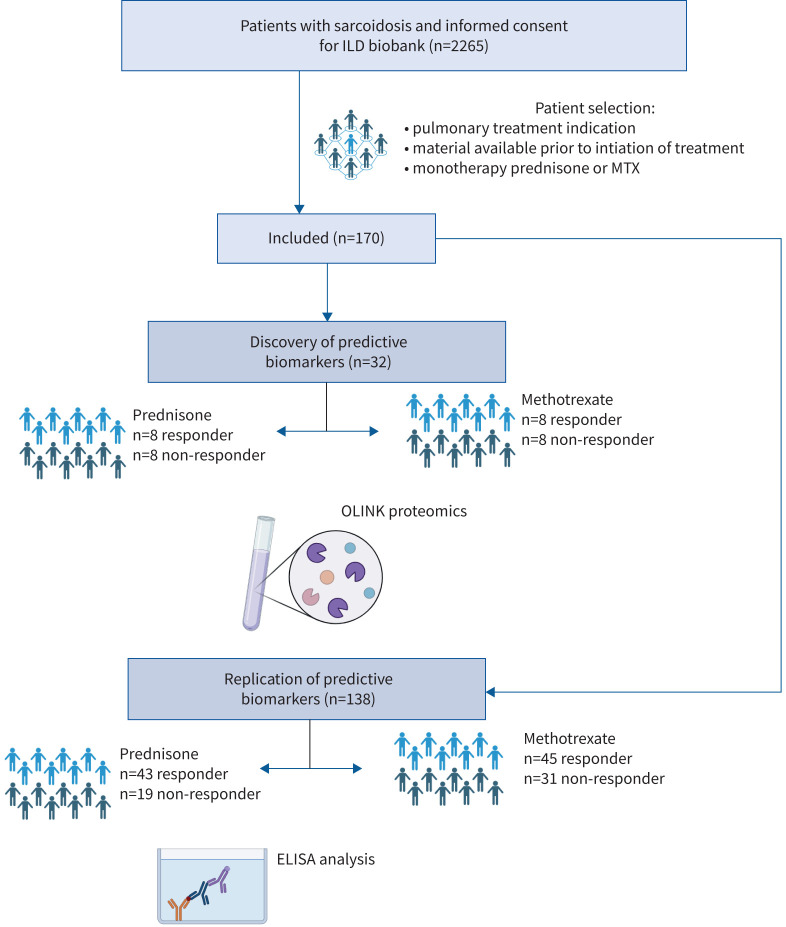
Methods: A targeted proteomics approach (OLINK Bioscience) was used in which 92 proteins were measured in two baseline EV fractions in 32 patients treated for pulmonary sarcoidosis (eight responders and eight non-responders each for prednisone and MTX). The top three proteins were replicated in 62 prednisone- and 76 MTX-treated patients.
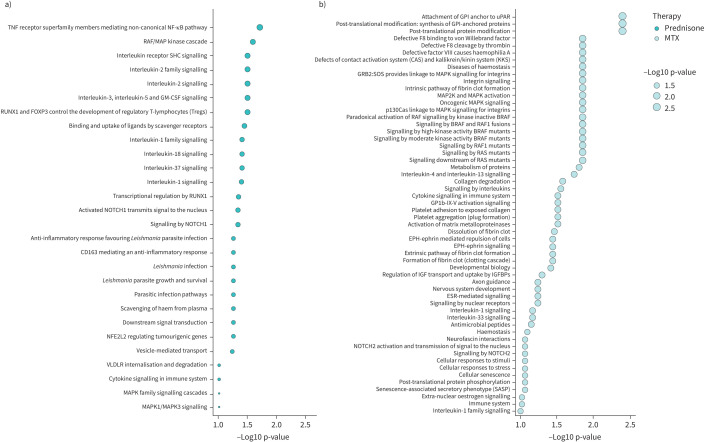
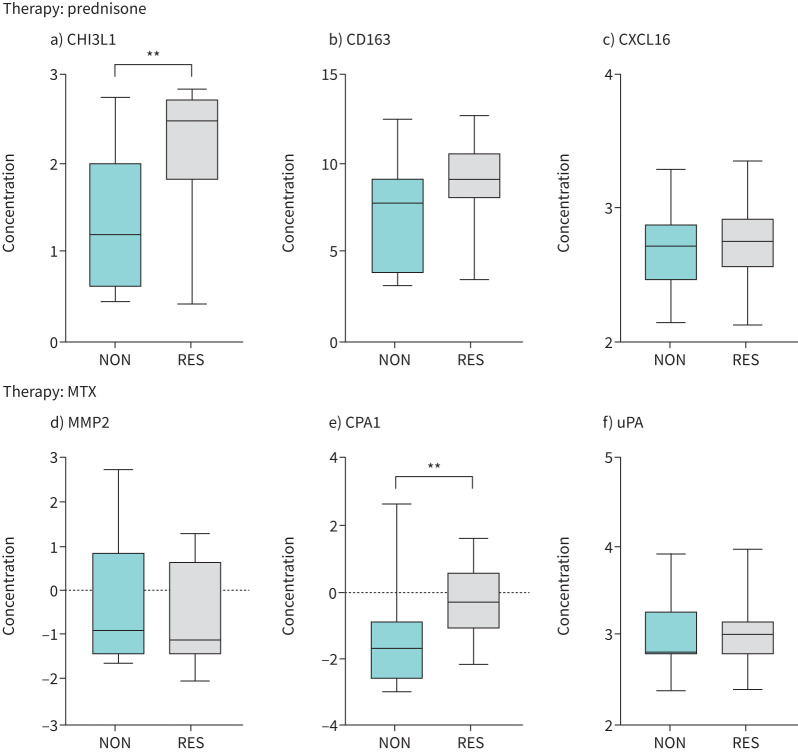
Results: We identified 11 differentially expressed proteins (DEPs) between responders and non-responders to prednisone treatment, and 16 DEPs for patients treated with MTX. Reactome pathway analysis showed DEPs in prednisone to be involved in nuclear factor kappa B and interleukin signalling pathways. The DEPs in MTX were involved in transduction of GPI-anchored proteins and MAPK signalling pathway. CHI3L1 for prednisone and CPA1 for MTX were replicated as significant predictors of response.
Conclusion: This study is the first to show that in pulmonary sarcoidosis the response to treatment with prednisone or MTX can be predicted at baseline by different EV proteins active in different pathways. Using these markers and associated pathways to identify patients with a high probability of response to therapy will aid personalised treatment choice and improve treatment outcome.
Copyright ©The authors 2025.
Conflict of interest statement
Conflicts of interest: The authors have nothing to disclose.
Figures
References
LinkOut - more resources
Full Text Sources