


Bystander neuronal progenitors in forebrain organoids promote protective antiviral responses
- PMID: 40045355
- PMCID: PMC11881317
- DOI: 10.1186/s12974-025-03381-y
Bystander neuronal progenitors in forebrain organoids promote protective antiviral responses
Abstract
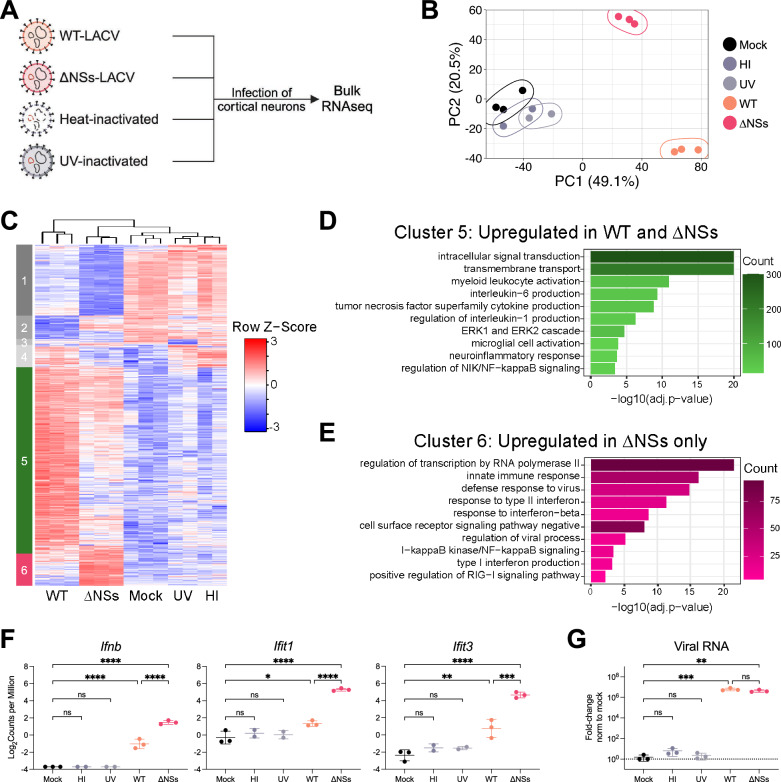
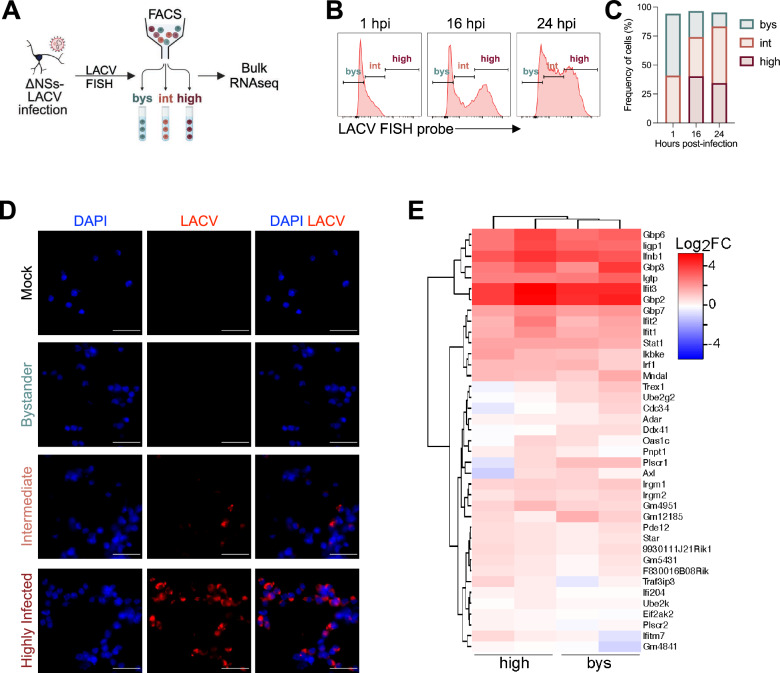
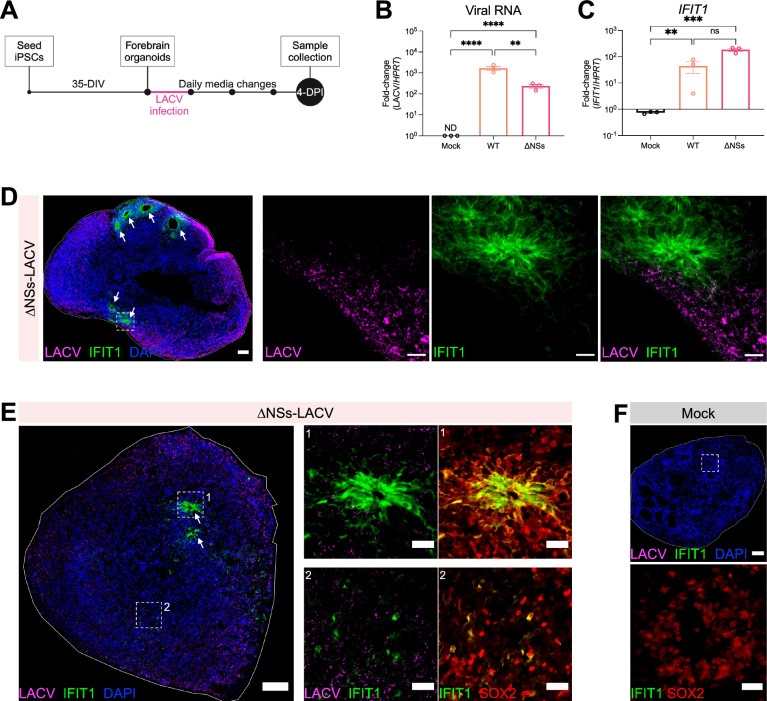
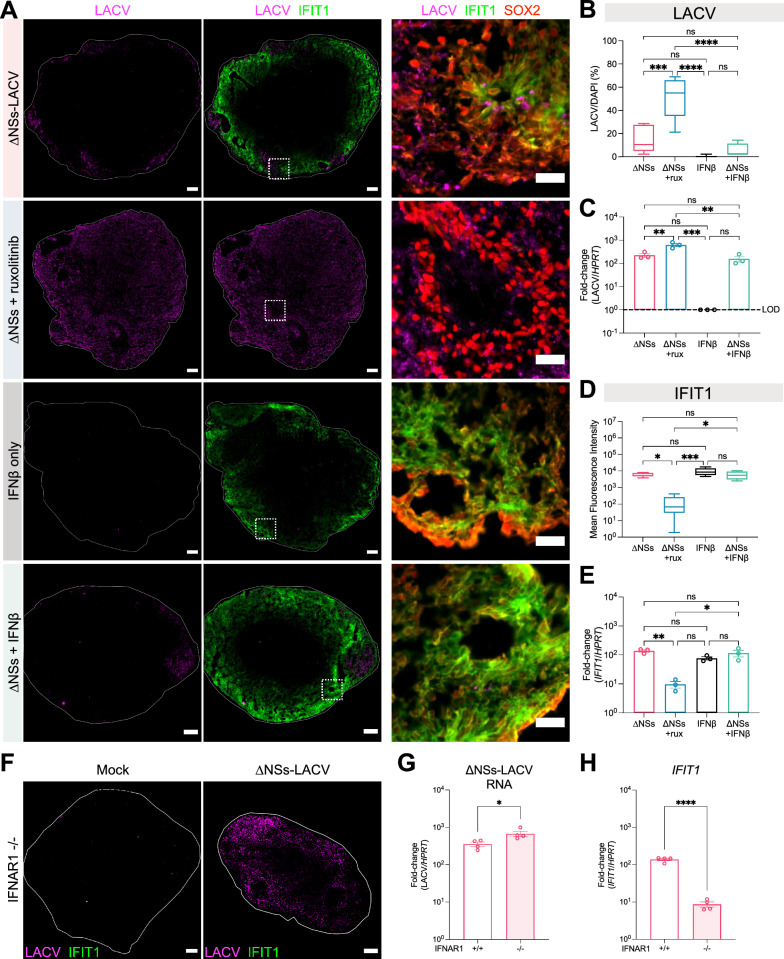
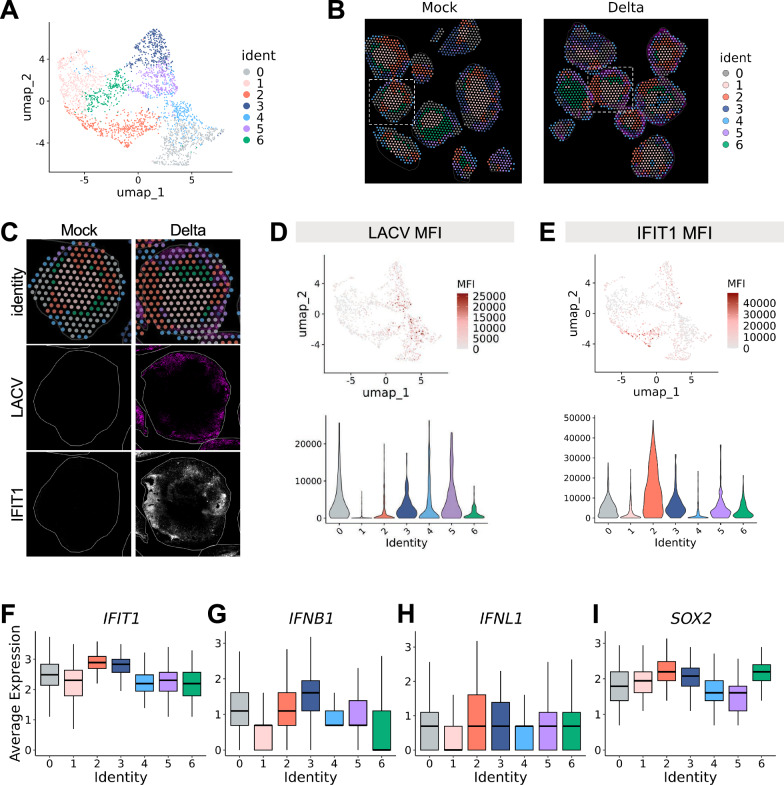
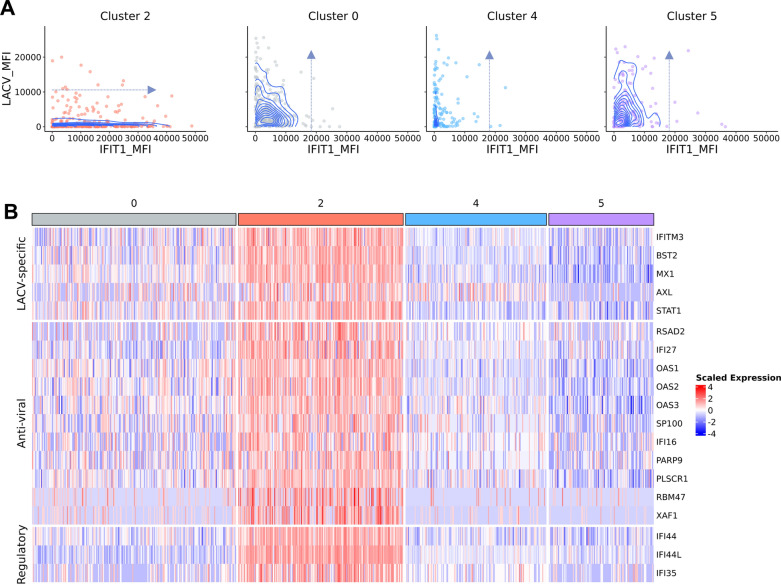
Neurotropic viruses are the most common cause of infectious encephalitis and highly target neurons for infection. Our understanding of the intrinsic capacity of neuronal innate immune responses to mediate protective antiviral responses remains incomplete. Here, we evaluated the role of intercellular crosstalk in mediating intrinsic neuronal immunity and its contribution to limiting viral infection. We found that in the absence of viral antagonism, neurons transcriptionally induce robust interferon signaling and can effectively signal to uninfected bystander neurons. Yet, in two-dimensional cultures, this dynamic response did not restrict viral spread. Interestingly, this differed in the context of viral infection in three-dimensional forebrain organoids with complex neuronal subtypes and cellular organization, where we observed protective capacity. We showed antiviral crosstalk between infected neurons and bystander neural progenitors is mediated by type I interferon signaling. Using spatial transcriptomics, we then uncovered regions containing bystander neural progenitors that expressed distinct antiviral genes, revealing critical underpinnings of protective antiviral responses among neuronal subtypes. These findings underscore the importance of interneuronal communication in protective antiviral immunity in the brain and implicate key contributions to protective antiviral signaling.
© 2025. The Author(s).
Conflict of interest statement
Declarations. Ethics approval and consent to participate: Not applicable. Consent for publication: Not applicable. Competing interests: The authors declare no competing interests.
Figures
References
MeSH terms
LinkOut - more resources
Full Text Sources
