


Transcription factor ELF-1 protects against colitis by maintaining intestinal epithelium homeostasis
- PMID: 40057592
- PMCID: PMC11890729
- DOI: 10.1038/s42003-025-07742-4
Transcription factor ELF-1 protects against colitis by maintaining intestinal epithelium homeostasis
Abstract
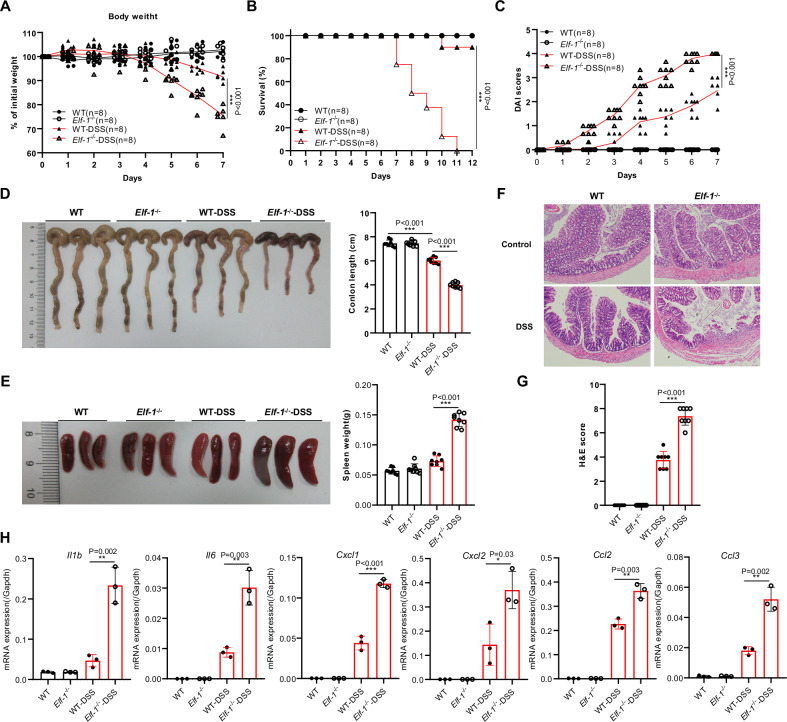
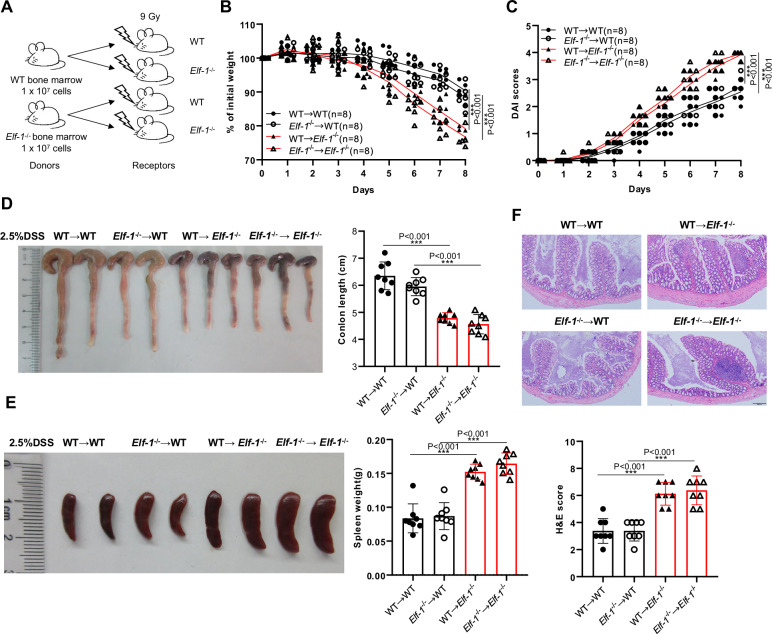
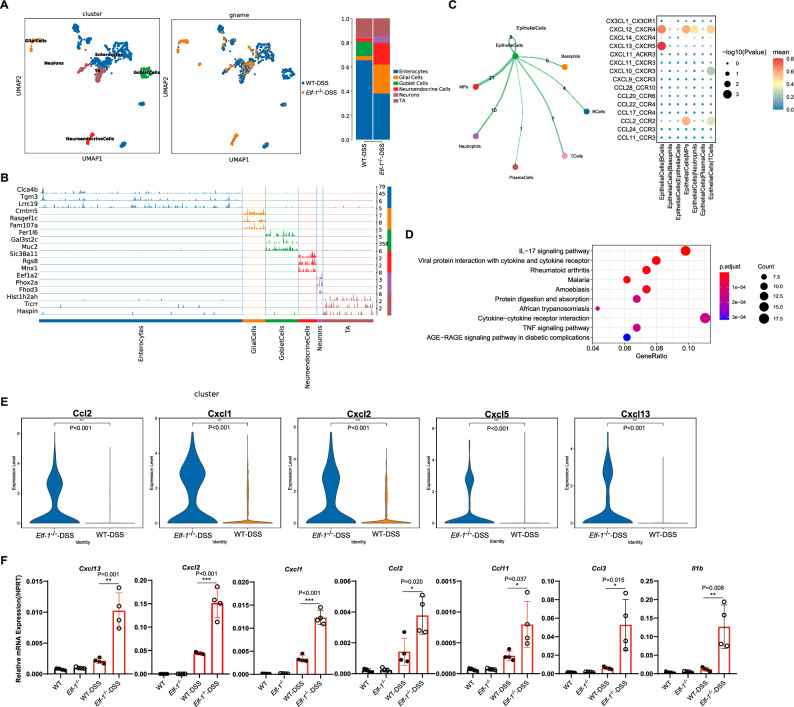
Inflammatory bowel disease (IBD) is a chronic, relapsing, and remitting disease characterized by chronic inflammation in the gastrointestinal tract. The exact etiology and pathogenesis of IBD remain elusive. Although ELF-1 has been known to be highly expressed in epithelial cells for past twenty years, little is known about its function in epithelial cells and epithelial-related IBD. Here, we demonstrated that ELF-1 deficiency in mouse lead to exacerbated DSS-induced colitis, marked by inflammation dominated by neutrophil infiltration and activation of IL-17 signaling pathways in various immune cells, including Th17, ILC3, γδT and NKT cells. Bone marrow transfer experiments confirmed ELF-1 deficiency in non-hematopoietic cells intrinsically worsened DSS-induced colitis. On one hand, ELF-1 deficiency enhanced the production of pro-inflammatory chemokines in colonic epithelial cells, leading to extensive infiltration of neutrophils and other immune cells into the colonic mucosal tissue. On the other hand, ELF-1 directly regulated the expression of the Rack1 gene in colonic epithelial tissue, which has been proved to play critical roles in maintaining intestinal homeostasis. Altogether, ELF-1 plays a protective role in colitis by maintaining intestinal epithelium homeostasis.
© 2025. The Author(s).
Conflict of interest statement
Competing interests: The authors declare no competing interests.
Figures



References
MeSH terms
Substances
Grants and funding
LinkOut - more resources
Full Text Sources
Miscellaneous
