


Small extracellular vesicles and particles (sEVPs) derived from tumor-free pre-metastatic organs promote breast cancer metastasis and support organotropism
- PMID: 40057730
- PMCID: PMC11889877
- DOI: 10.1186/s12943-025-02235-8
Small extracellular vesicles and particles (sEVPs) derived from tumor-free pre-metastatic organs promote breast cancer metastasis and support organotropism
Abstract
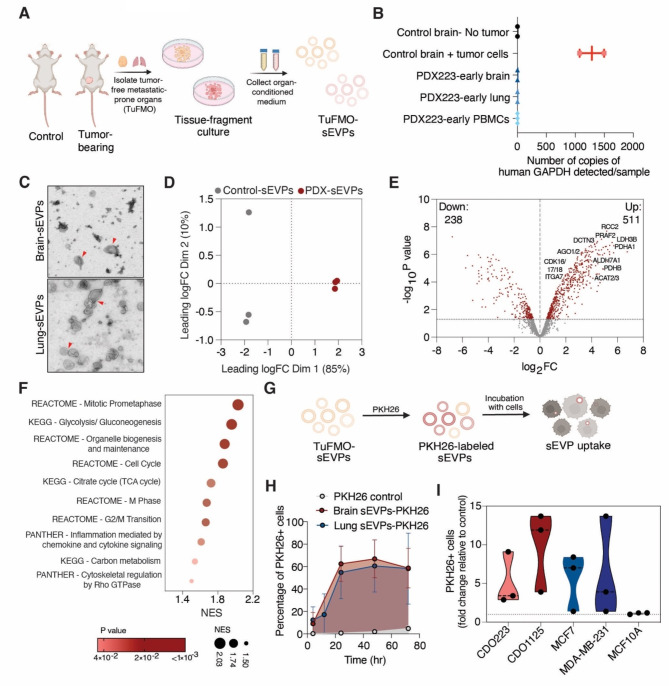
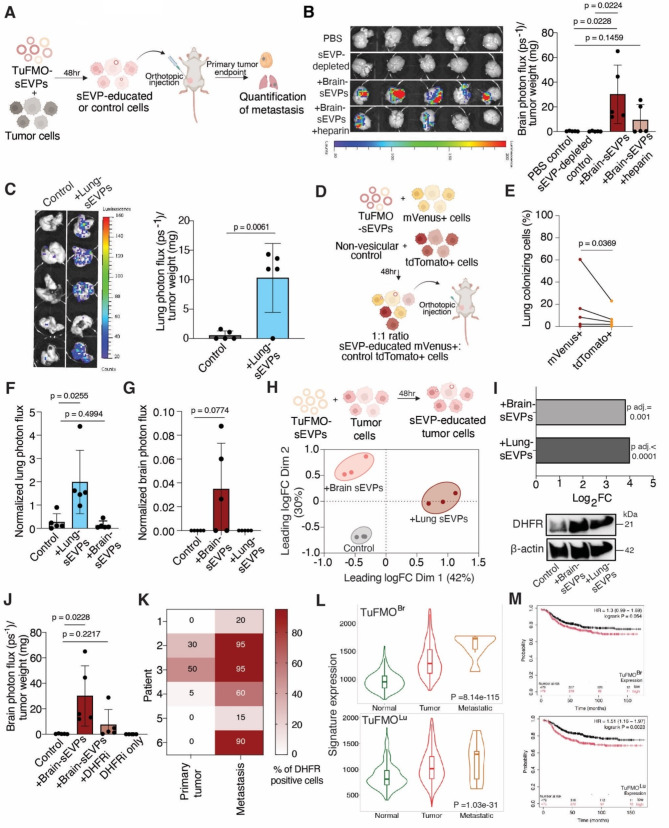
Metastatic breast cancer remains largely incurable, partly due to our incomplete understanding of its intricate underlying mechanisms. Notably, intercellular communication mediated by small extracellular vesicles and particles (sEVPs) has emerged as a key feature of metastasis. While tumor-derived sEVPs have been extensively studied and are known to be pro-metastatic, the role of sEVPs from metastasis-prone normal tissue sites remains primarily undefined. Here, we characterized and studied the function of sEVPs secreted from tumor-free pre-metastatic organs (TuFMO-sEVPs) such as the brain and lungs in both immunocompetent and patient-derived xenograft models. TuFMO-sEVPs from the brain of mammary tumor-bearing mice were found to have a distinct protein content as compared to brain-sEVPs from tumor-free mice, suggesting that the primary tumor can systemically influence the cargo of TuFMO-sEVPs. Importantly, mice orthotopically injected with breast cancer cells which had been educated with either brain or lung TuFMO-sEVPs prior to transplantation showed significantly increased metastasis to the respective organ. We further demonstrated that TuFMO-sEVPs induced the expression of the enzyme dihydrofolate reductase (DHFR) upon uptake by breast cancer cells, leading to their enhanced metastatic capacity. Organ-specific signatures generated from TuFMO-sEVP educated tumor cells were found to be increased in metastatic samples from breast cancer patients as compared to the primary tumor or normal tissue samples and these signatures also significantly correlated with poorer patient outcome. Collectively, our data reveals a novel facet of the metastatic cascade, implicating a role for TuFMO-sEVPs in directing metastasis and providing a potential therapeutic strategy for targeting this process.
Keywords: Brain metastasis; Breast cancer; Dihydrofolate reductase-mediated metastasis; Global proteomics analysis; Lung metastasis; Small extracellular vesicles and particles (sEVPs).
© 2025. The Author(s).
Conflict of interest statement
Declarations. Ethics approval and consent to participate: Animal experiments were performed in compliance with the German legal regulations and were approved by the governmental review board of the state of Baden-Württemberg in Germany, operated by the local Animal Welfare Office (Regierungspräsidium Karlsruhe) under the license number G-169/22. The use of patient-derived material for the establishment of PDX and CDOs used in this study was previously reported by our group (12) and the study was approved by the ethical committee of the University of Heidelberg (case number S-408/2013). Consent for publication: Not applicable. Competing interests: The authors declare no competing interests.
Figures
References
-
- Wortzel I, Dror S, Kenific CM, Lyden D. Exosome-mediated metastasis: communication from a distance. Developmental Cell. Cell; 2019;49:347–60. - PubMed
MeSH terms
LinkOut - more resources
Full Text Sources
Medical
