


Net albumin leakage in patients in the ICU with suspected sepsis. A prospective analysis using mass balance calculations
- PMID: 40057738
- PMCID: PMC11890723
- DOI: 10.1186/s13054-025-05323-9
Net albumin leakage in patients in the ICU with suspected sepsis. A prospective analysis using mass balance calculations
Abstract
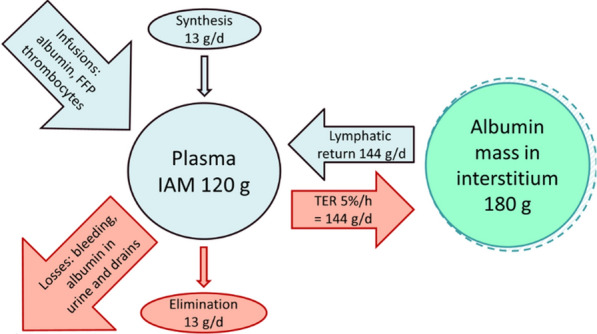
Introduction: Albumin kinetics in septic shock have been extensively studied, but clinical recommendations remain weak. An increased transcapillary escape rate (TER) of albumin has been demonstrated, though TER does not account for lymphatic return. Mass balance calculations, considering lymphatic return, have been used to assess net albumin leakage (NAL) in major surgery but not in sepsis.
Objectives: This study aimed to evaluate NAL in ten ICU patients with suspected sepsis, hypothesizing a net positive leakage. Secondary aims included investigating associations between NAL and fluid overload, glycocalyx shedding products, and cytokines, as well as identifying factors associated with it.
Methods: This prospective, observational study included ten patients within twelve hours of ICU admission for suspected sepsis at Karolinska University Hospital Huddinge. Albumin, hematocrit, and hemoglobin levels were sampled at 0, 1, 2, 4, 8, and 24 h. NAL was estimated using mass balance calculations, comparing proportional changes in albumin and hemoglobin concentrations over time, adjusted for albumin and hemoglobin infusions and losses. A proportionally greater decrease or smaller increase in albumin compared to hemoglobin indicated NAL, representing the net leakage from the circulation to the interstitium minus lymphatic return.
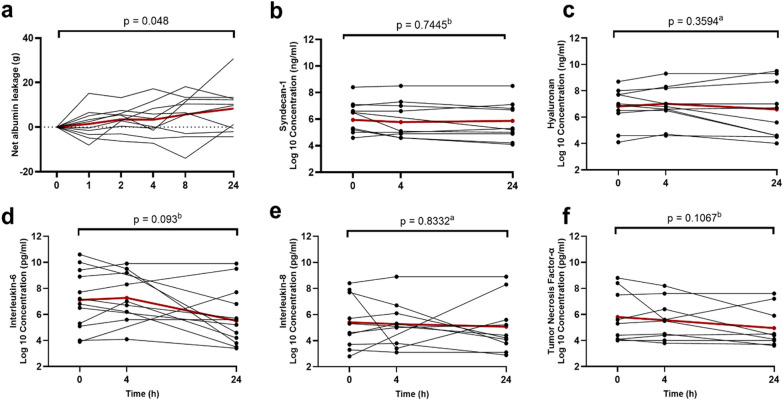
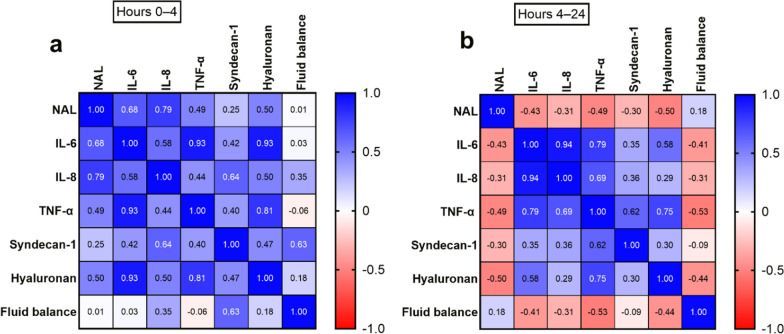
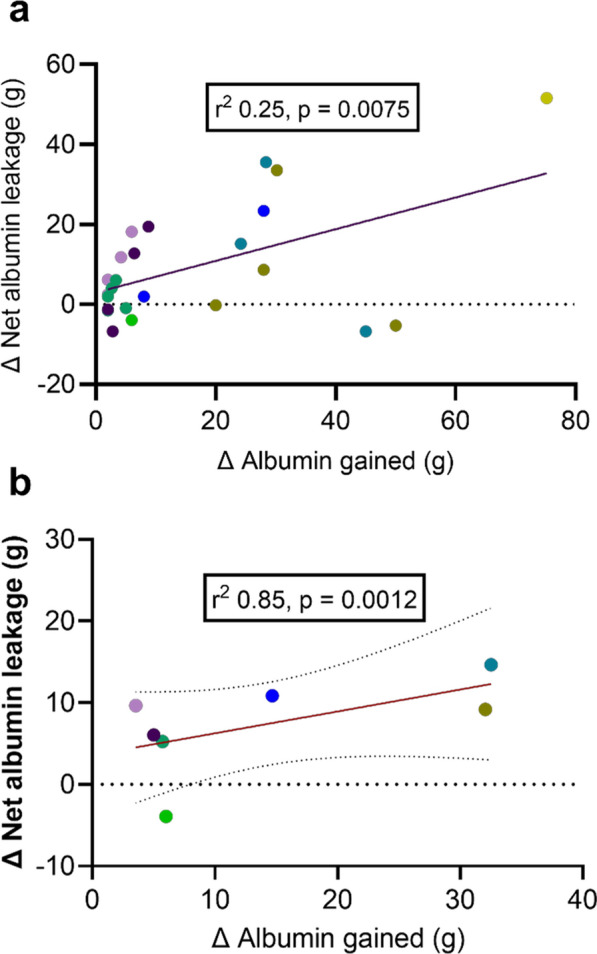
Results: Over 24 h, patients exhibited a net positive albumin leakage to the interstitium of 8 ± 10 g (p = 0.029). NAL showed no correlation with glycocalyx shedding products or fluid overload but had a weak correlation with interleukin-6 and interleukin-8 in the first 4 h. Albumin infusions appeared to increase net leakage.
Conclusion: This study demonstrated a net positive albumin leakage of 8 ± 10 g over 24 h in ICU patients with suspected sepsis, with a weak early correlation to pro-inflammatory cytokines but no significant link to fluid balance or glycocalyx shedding. Notably, albumin infusions were associated with increased net leakage.
© 2025. The Author(s).
Conflict of interest statement
Declarations. Ethics approval and consent to participate: The study was approved by the Swedish Ethical Review Authority (EPN 2016/2064). Patients were initially included with presumed consent and subsequently provided written and oral information by the study team to obtain delayed consent. All collected samples from patients who did not consent were destroyed. Consent for publication: Not applicable. Competing interests: Nothing to declare.
Figures
References
-
- Evans L, Rhodes A, Alhazzani W, Antonelli M, Coopersmith CM, French C, et al. Executive summary: surviving sepsis campaign: international guidelines for the management of sepsis and septic shock 2021. Crit Care Med. 2021;49(11):1974–82. - PubMed
-
- Rewa O, Bagshaw SM. Principles of fluid management. Crit Care Clin. 2015;31(4):785–801. - PubMed
-
- O’Connor ME, Prowle JR. Fluid overload. Crit Care Clin. 2015;31(4):803–21. - PubMed
-
- Meyhoff TS, Hjortrup PB, Wetterslev J, Sivapalan P, Laake JH, Cronhjort M, et al. Restriction of intravenous fluid in ICU patients with septic shock. N Engl J Med. 2022;386(26):2459–70. - PubMed
Publication types
MeSH terms
Substances
LinkOut - more resources
Full Text Sources
Medical
