


The effectiveness of web-based grief intervention for adults who lost a loved one: A systematic review and meta-analysis
- PMID: 40057748
- PMCID: PMC11889856
- DOI: 10.1186/s12904-025-01679-5
The effectiveness of web-based grief intervention for adults who lost a loved one: A systematic review and meta-analysis
Abstract
Background: Many bereaved individuals suffer from intense grief, anxiety, depression and post-traumatic stress disorder. To prevent these conditions from worsening, web-based grief interventions have emerged as a promising solution for providing accessible, flexible, and anonymous support to bereaved individuals. However, two previous meta-analyses focused only on the post-intervention effects of web-based grief interventions on grief, post-traumatic stress disorder, and depression in bereavement individuals, relying on a small number of studies published before 2021. Therefore, after including new research, the present study evaluated the effects of web-based grief interventions on grief, anxiety, depression, and posttraumatic stress disorder in bereaved adults, both post-intervention and after three months of follow-up.
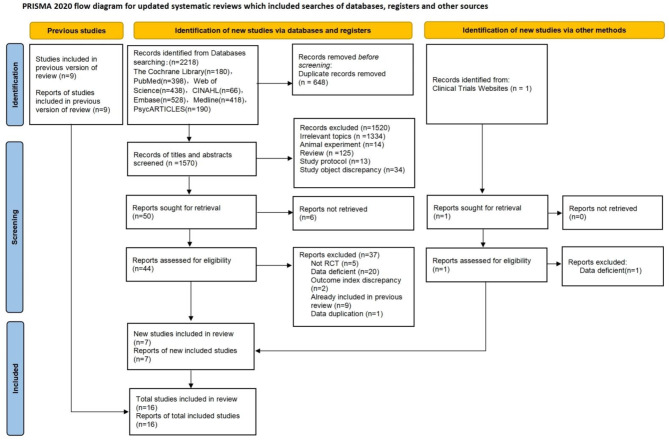
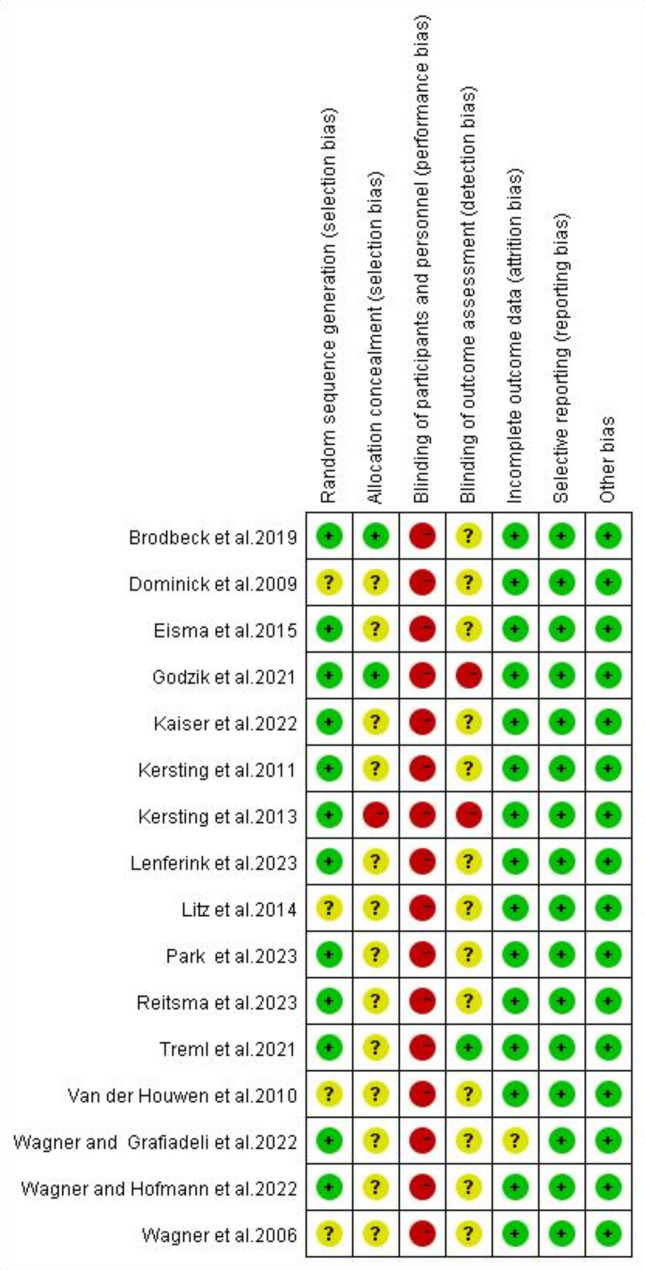
Methods: Randomized controlled trials (RCTs) were retrieved from The Cochrane Library, PubMed, Web of Science, PsycARTICLES, Embase, CINAHL, Medline, and Clinical Trials, with a search time range from database establishment to February 1, 2024, without language limitations. The quality of the included RCTs was evaluated using the Cochrane Risk Assessment Tool, and evaluation was conducted using Review Manager 5.3. PROSPERO Registration: CRD42024506293.
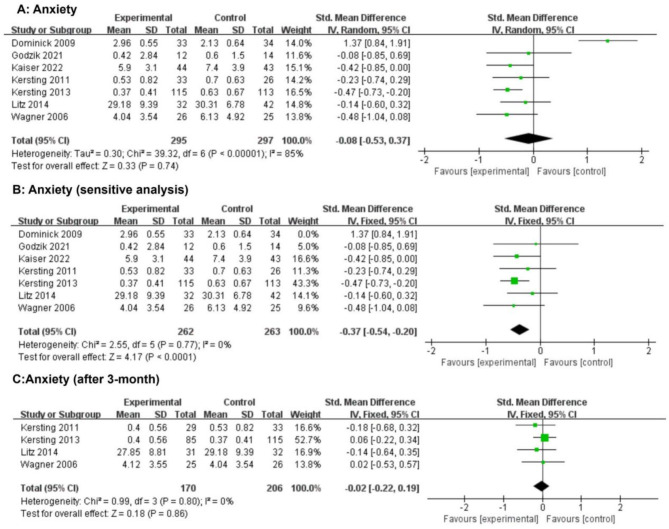
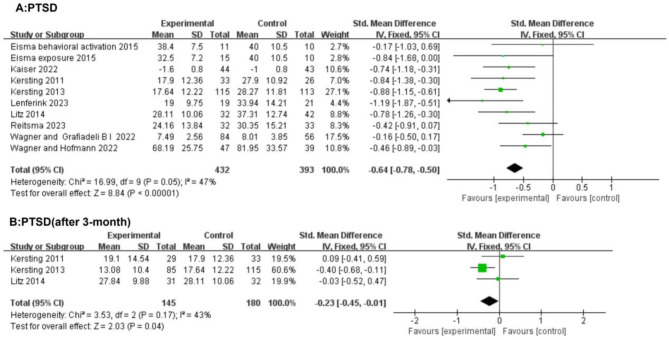
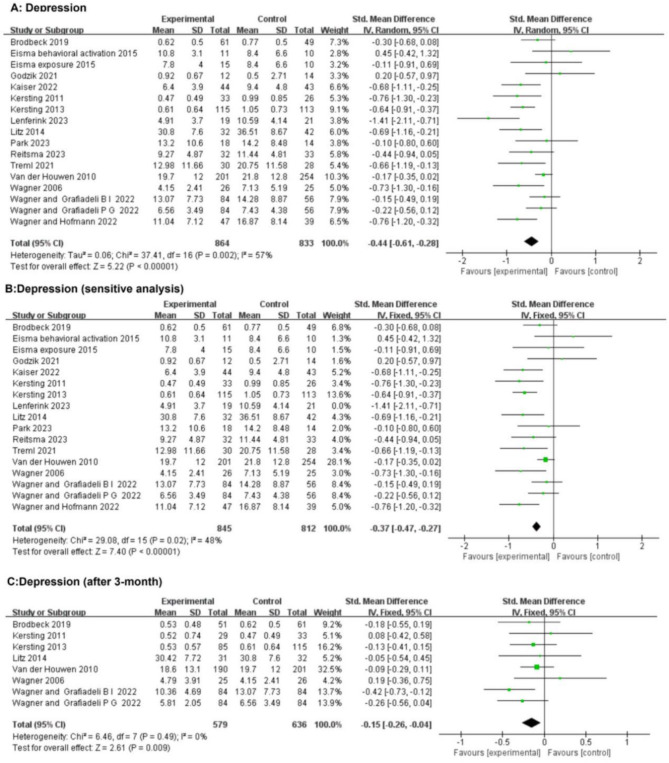
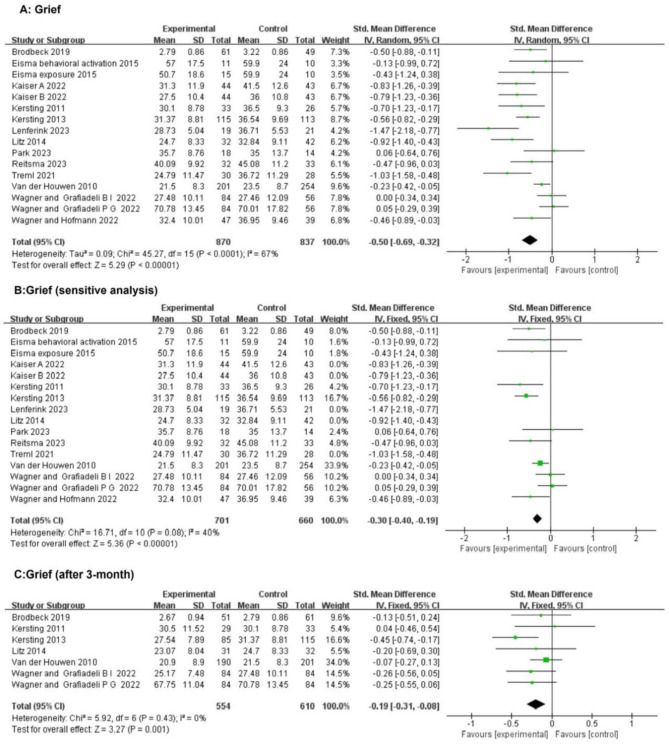
Results: A total of 726 and 771 participants were in the intervention and control groups, respectively. After the implementation of the web-based grief intervention, significant improvements were observed in anxiety (standard mean difference [SMD] = -0.37, 95% CI [-0.54, -0.20] p < 0.0001), posttraumatic stress disorder (SMD = -0.64, 95% CI [-0.78, -0.50], p < 0.00001), depression (SMD = -0.37, 95% CI [-0.47, -0.27], p < 0.00001), and grief (SMD = -0.30, 95% CI [-0.40, -0.19], p < 0.00001) among the bereaved individuals. In the intervention group, after three months of follow-up, significant improvements continued in grief (SMD = -0.19, 95% CI [-0.31, -0.08], p = 0.001), depression (SMD = -0.15, 95% CI [-0.26, -0.04], p = 0.009) and posttraumatic stress disorder (SMD = -0.23, 95% CI [-0.45, -0.01], p = 0.04), whereas no significant improvement was observed in anxiety (SMD = -0.02, 95% CI [-0.22, 0.19], p = 0.86).
Conclusion: Web-based grief interventions have a positive and promising effect on anxiety, depression, grief, and post-traumatic stress disorder in bereaved individuals following the intervention. However, after three months of follow-up, the web-based grief intervention had a lasting positive effect on grief, post-traumatic stress disorder, and depression, but not on anxiety.
Keywords: Grief; Meta-analysis; Online intervention; Systematic review; Web-based.
© 2025. The Author(s).
Conflict of interest statement
Declarations. Competing interests: The authors declare no competing interests. Ethical approval: Not applicable. Consent to participate: Not applicable. Consent to Publish: Not applicable.
Figures
References
-
- Lindemann E. Symptomatology and management of acute grief. Am J Psychiatry. 1944;101:141–8. - PubMed
-
- Correspondence and Comments-Cautioning Health-Care Professionals. Bereaved persons are misguided through the stages of grief (omega-Journal of death and dying, 74.4). Omega (Westport). 2017;75(1):92–4. - PubMed
-
- Chen JH, Bierhals AJ, Prigerson HG, Kasl SV, Mazure CM, Jacobs S. Gender differences in the effects of bereavement-related psychological distress in health outcomes. Psychol Med. 1999;29(2):367–80. - PubMed
-
- Lundorff M, Holmgren H, Zachariae R, Farver-Vestergaard I, O’Connor M. Prevalence of prolonged grief disorder in adult bereavement: a systematic review and meta-analysis. J Affect Disord. 2017;212:138–49. - PubMed
Publication types
MeSH terms
Grants and funding
LinkOut - more resources
Full Text Sources
