


Prenatal irisin is inversely related to the term placental telomere length
- PMID: 40057798
- PMCID: PMC11890717
- DOI: 10.1186/s13104-025-07118-1
Prenatal irisin is inversely related to the term placental telomere length
Abstract
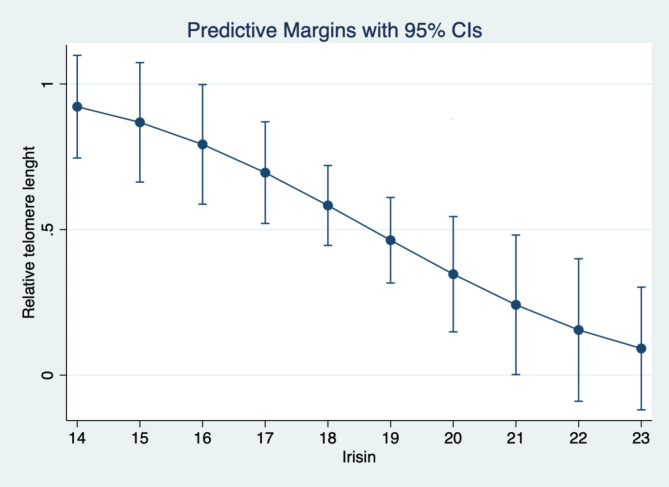
Irisin is a myokine mainly produced by skeletal muscle that impacts the body's systemic metabolism. It is connected to aging, telomere length, and oxidative stress markers in human adults and in vitro. The serum irisin concentration increases during pregnancy and has been linked to some birth outcomes like macrosomia. On the other hand, its inverse relation with the chance of pregnancy disorders like preeclampsia and gestational diabetes suggests a protective role for this myokine in pregnancy. It is suggested that irisin may exert its impact on pregnancy by affecting the placenta, which has not been studied yet. Here, we questioned whether prenatal serum irisin is related to placental markers, including telomere length and antioxidant activity. Research has shown that the status of these markers at birth can predict the predisposition to some chronic diseases later in life. We included 80 pregnant mothers (17-41 years old) and newborn dyads randomly selected from the enrolled participants of the Rafsanjan Birth Cohort Study (one of the five district areas of the PERSIAN birth cohort studies), who delivered at the Nik-Nafs Maternity Hospital in Rafsanjan in 2022. Irisin levels were measured in the mother's blood serum in pregnancy using ELISA. The relative telomere length and the GPX and SOD enzyme activities were measured in the term placenta using real-time PCR and colorimetric assays, respectively. We found an inverse relationship between the serum irisin levels during pregnancy and relative telomere length in the term placenta. Irisin level was not significantly associated with the activity of SOD and GPX enzymes. Therefore, our data does not support the protective role of prenatal irisin on the placental telomere shortening and oxidative stress. Future studies are warranted to assess more placental markers in relation to pregnancy irisin levels.
Keywords: Irisin; Oxidative stress; Placenta; Prenatal; Telomere.
© 2025. The Author(s).
Conflict of interest statement
Declarations. Ethics approval and consent to participate: This study was approved by the Ethics Committee of Rafsanjan University of Medical Sciences (Code of Ethics: IR.RUMS.REC.1401.105). Rafsanjan’s birth cohort study registration and ethics code are 99040 (IR.RUMS.REC.1399.033). All research procedures were conducted under the supervision of the Ethics Committee of Rafsanjan University of Medical Sciences and by PERSIAN birth cohort studies guidelines and protocols. Informed consent was obtained from all participant mothers. This study was performed in accordance with the Declaration of Helsinki. Consent for publication: Not applicable. Competing interests: The authors declare no competing interests. Disclosure statement: The authors have nothing to disclose.
Figures
References
-
- Garcés MF, Peralta JJ, Ruiz-Linares CE, Lozano AR, Poveda NE, Torres-Sierra AL, et al. Irisin levels during pregnancy and changes associated with the development of preeclampsia. J Clin Endocrinol Metabolism. 2014;99(6):2113–9. - PubMed
-
- Kuzmicki M, Telejko B, Lipinska D, Pliszka J, Szamatowicz M, Wilk J, et al. Serum irisin concentration in women with gestational diabetes. Gynecol Endocrinol. 2014;30(9):636–9. - PubMed
-
- Zbucka-Kretowska M, Kuzmicki M, Telejko B, Goscik J, Ciborowski M, Lipinska D, et al. First-trimester irisin and fetuin-A concentration in predicting macrosomia. J Maternal-Fetal Neonatal Med. 2019;32(17):2868–73. - PubMed
-
- Vaughan OR, Fowden AL. Placental metabolism: substrate requirements and the response to stress. Reprod Domest Anim. 2016;51:25–35. - PubMed
MeSH terms
Substances
LinkOut - more resources
Full Text Sources
Miscellaneous
