


An attachment-based program for parents of youth with clinically significant mental health problems: Scaling up and drilling down to mechanisms of change
- PMID: 40060003
- PMCID: PMC11889652
- DOI: 10.1002/jcv2.12248
An attachment-based program for parents of youth with clinically significant mental health problems: Scaling up and drilling down to mechanisms of change
Abstract
Background: Given the prevalence and recent increases in youth mental health problems, there is a pressing need for interventions that target transdiagnostic protective factors that could be targeted as mechanisms of change in treatment. Such interventions are most likely to succeed in meeting population needs if they are scalable, sustainable, and effective. Connect is a manualized, 10-session trauma-informed and attachment-based parent program that is structured, emotion-focused and skills-oriented. Developed for broad implementation by community mental health workers, Connect is designed to promote parent-child attachment security, a well-established transdiagnostic protective factor for youth mental health.
Methods: We examined whether parent-youth attachment anxiety and avoidance predicted reductions in internalizing and externalizing problems in a large one-group clinical sample of youth (N = 527; ages 8-18 years) of parents (N = 690) who completed the Connect program in a longitudinal study with 6 time points (pre-, mid-, and post-treatment; 6-, 12- and 18-month follow-up).
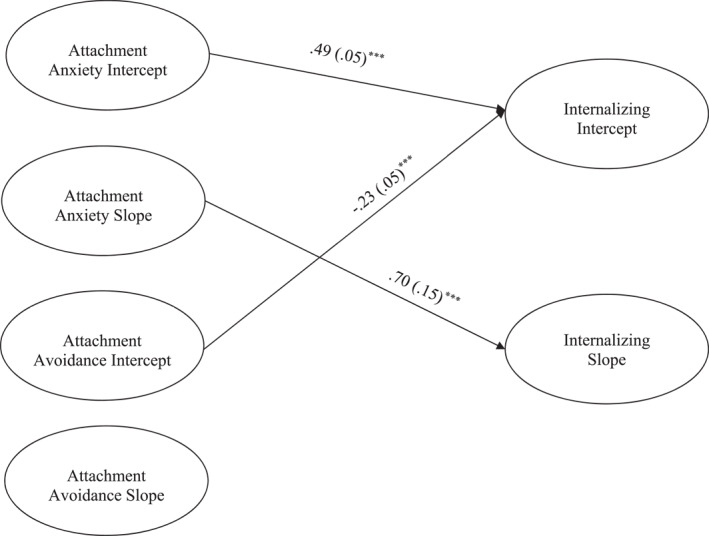
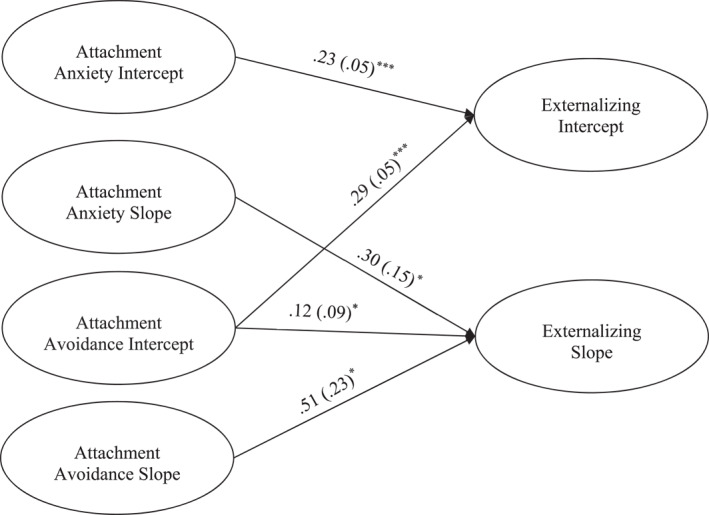
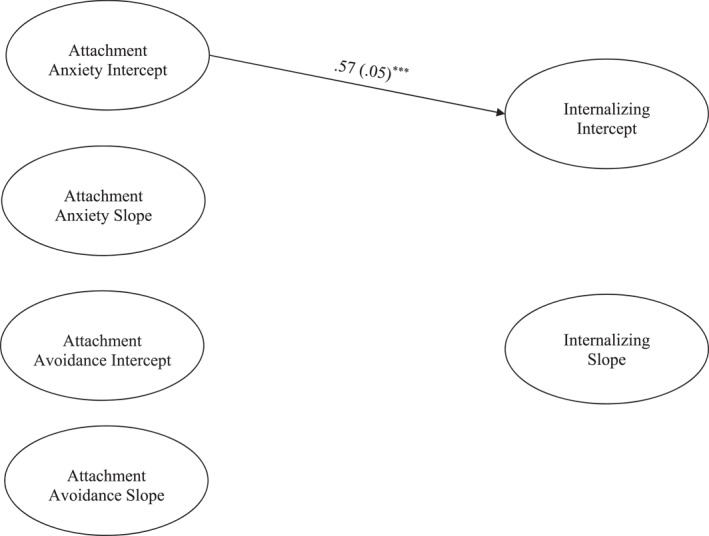
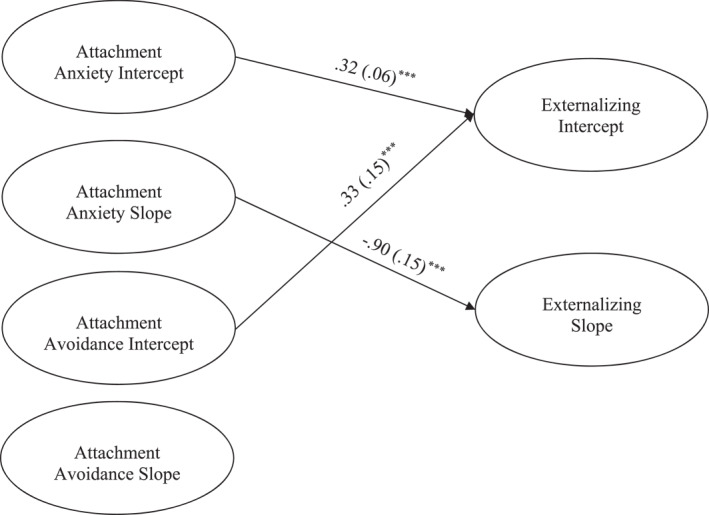
Results: Findings confirmed that parent and youth reports of attachment anxiety and avoidance, as well as internalizing and externalizing problems, significantly declined over the course of the intervention. Parent reported reductions in youth attachment anxiety, but not avoidance, predicted declining levels of youth internalizing problems. As well, parent reported reductions in youth attachment avoidance and anxiety predicted declining youth externalizing behavior. In contrast, youth reports of reductions in youth attachment anxiety, but not attachment avoidance, were associated with declines in youth externalizing problems.
Conclusion: Our findings support the role of attachment as an important transdiagnostic mechanism of change in attachment-based programs for parents of teens with clinically significant mental health problems.
Keywords: adolescence; attachment; attachment‐based treatment; mechanisms of change; transdiagnostic factors; youth mental health.
© 2024 The Authors. JCPP Advances published by John Wiley & Sons Ltd on behalf of Association for Child and Adolescent Mental Health.
Conflict of interest statement
Marlene M. Moretti occasionally receives remuneration for speaking and training engagements related to the Connect program. All other authors have declared they have no competing or potential conflicts of interest.
Figures
References
-
- Ainsworth, M. S. , Blehar, M. C. , Waters, E. , & Wall, S. (1978). In Patterns of attachment: A psychological study of the strange situation (Vol. 18). Erlbaum.
-
- Andersson, M. , Bäckström, M. , Ivarsson, T. , Råstam, M. , & Jarbin, H. (2018). Validity of the brief child and family phone interview by comparison with longitudinal expert all data diagnoses in outpatients. Scandinavian Journal of Child and Adolescent Psychiatry and Psychology, 6(2), 83–90. 10.21307/sjcapp-2018-009 - DOI - PMC - PubMed
-
- Barone, L. , Carone, N. , Costantino, A. , Genschow, J. , Merelli, S. , Milone, A. , Polidori, L. , Ruglioni, L. , & Moretti, M. (2021). Effect of a parenting intervention on decreasing adolescents’ behavioral problems via reduction in attachment insecurity: A longitudinal, multicenter, randomized controlled trial. Journal of Adolescence, 91(1), 82–96. 10.1016/j.adolescence.2021.07.008 - DOI - PubMed
-
- Boyle, M. H. , Cunningham, C. E. , Georgiades, K. , Cullen, J. , Racine, Y. , & Pettingill, P. (2009). The brief child and family phone interview (BCFPI): 2. Usefulness in screening for child and adolescent psychopathology. Journal of Child Psychology and Psychiatry, 50(4), 424–431. 10.1111/j.1469-7610.2008.01971.x - DOI - PubMed
LinkOut - more resources
Full Text Sources
Research Materials