Review
. 2025 Mar 12;26(1):99.
doi: 10.1186/s12931-025-03163-3.

The role of lactate metabolism and lactylation in pulmonary arterial hypertension

Affiliations
Review

The role of lactate metabolism and lactylation in pulmonary arterial hypertension

Tong-Yu Peng et al. Respir Res. .

Abstract

Pulmonary arterial hypertension (PAH) is a complex and progressive disease characterized by elevated pulmonary artery pressure and vascular remodeling. Recent studies have underscored the pivotal role of metabolic dysregulation and epigenetic modifications in the pathogenesis of PAH. Lactate, a byproduct of glycolysis, is now recognized as a key molecule that links cellular metabolism with activity regulation. Recent findings indicate that, in addition to altered glycolytic activity and dysregulated. Lactate homeostasis and lactylation-a novel epigenetic modification-also play a significant role in the development of PAH. This review synthesizes current knowledge regarding the relationship between altered glycolytic activity and PAH, with a particular focus on the cumulative effects of lactate in pulmonary vascular cells. Furthermore, lactylation, an emerging epigenetic modification, is discussed in the context of PAH. By elucidating the complex interplay between lactate metabolism and lactylation in PAH, this review aims to provide insights into potential therapeutic targets. Understanding these metabolic pathways may lead to innovative strategies for managing PAH and improving patient outcomes. Future research should focus on the underlying mechanisms through which lactylation influences the pathophysiology of PAH, thereby aiding in the development of targeted interventions.

Keywords: Glycolysis; Lactate; Lactylation; Protein translational modifications; Pulmonary arterial hypertension.


Conflict of interest statement

Declarations. Ethics approval and consent to participate: Not applicable. Consent for publication: Not applicable. Competing interests: The authors declare no competing interests.

Figures

Fig. 1
Fig. 1
We summarized the classification of PH. (HIV, Human Immunodeficiency Virus; PVOD, Pulmonary Veno-Occlusive Disease; PCH, Pulmonary capillary haemangiomatosis; HFpEF, Heart failure with preserved ejection fraction; HFrEF, Heart Failure with Reduced Ejection Fraction; HFmrEF, heart failure with mid-range Ejection Fraction). Created using BioRender.com
Fig. 2
Fig. 2
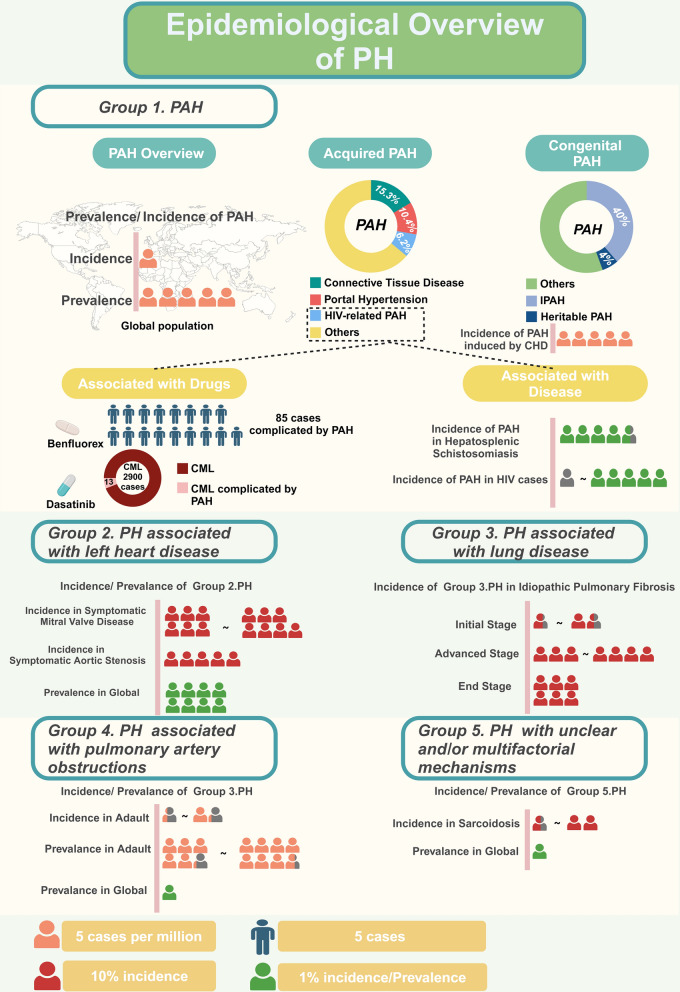
Epidemiological overview of PH, including both congenital and acquired forms. Congenital PAH primarily includes idiopathic and heritable subtypes, with CHD being a significant cause. Acquired PAH is associated with conditions such as connective tissue disease, portal hypertension, and HIV infection, as well as drug-induced cases. The figure also highlights PAH cases linked to specific drugs (e.g., Benfluorex and Dasatinib) and diseases (e.g., schistosomiasis and HIV infection). Additionally, the epidemiological characteristics of PH associated with left heart disease, lung disease, pulmonary artery obstructions, and multifactorial mechanisms are summarized [–27]. Created using BioRender.com
Fig. 3
Fig. 3
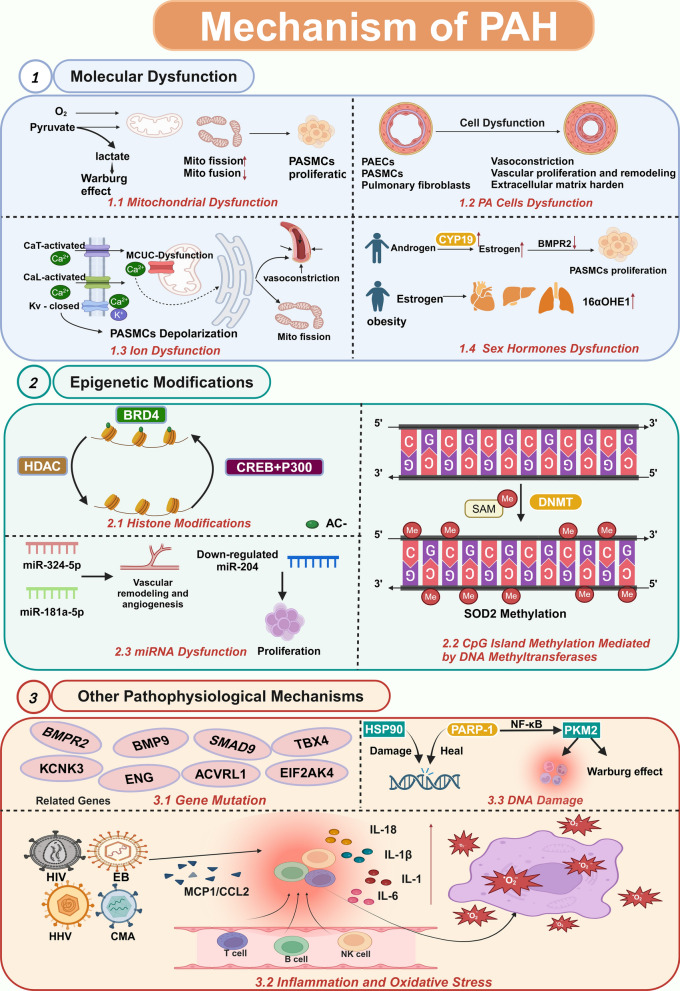
The mechanism of PAH. The main characteristics of PAH include pulmonary vascular contraction and the proliferation and remodeling of PASMCs, resulting in structural and functional changes. Factors contributing to PAH include metabolic dysfunction, epigenetic modifications, gene mutations, DNA damage, inflammation, and oxidative stress. (Mito, mitochondrial; BMPR2, bone morphogenetic protein receptor type 2; 16αOHE1, 16α-hydroxyestrone; DNMT, DNA methylation; Me, methylation). Created using BioRender.com
Fig. 4
Fig. 4
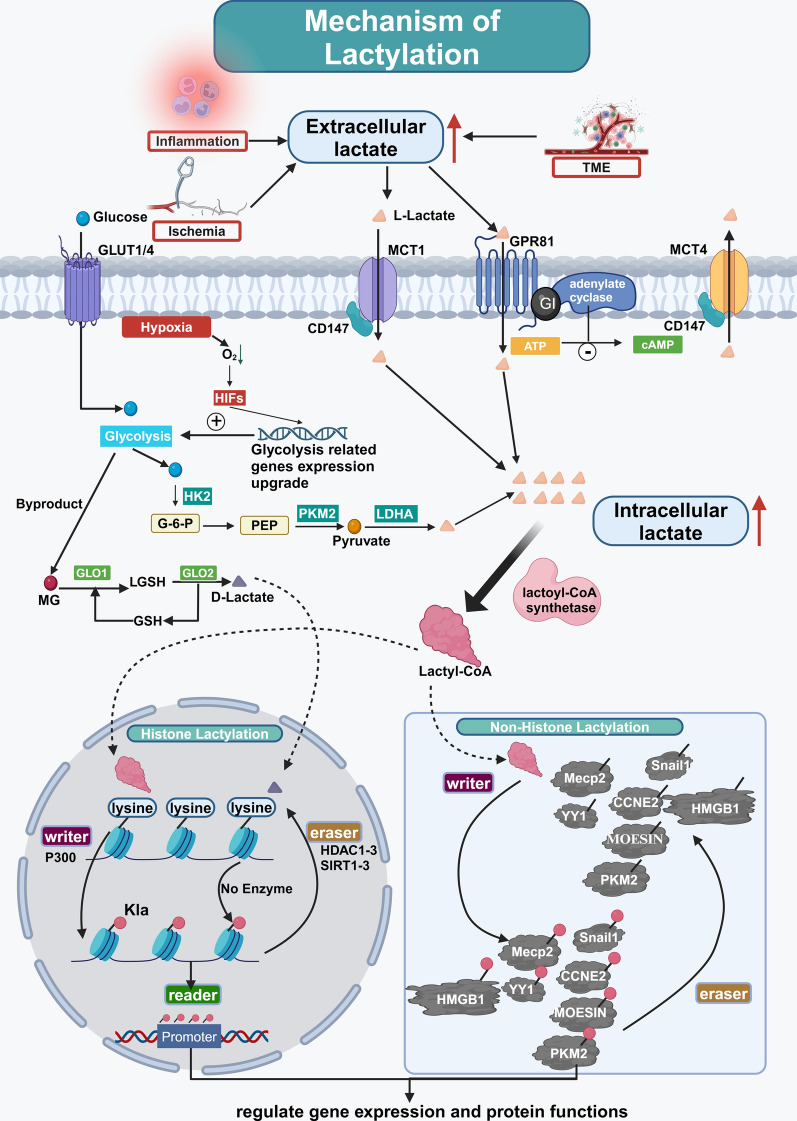
The mechanism of lactylation. Extracellular lactate, elevated in response to factors such as inflammation, hypoxia, and ischemia, enters cells via MCT1 and GPR81. Under hypoxic conditions, HIFs upregulate glycolytic genes and inhibit the citric acid cycle, promoting L-lactate production. MG combines with glutathione via GLO1 to form LGSH, which GLO2 hydrolyzes to regenerate GSH and produce D-lactate. Intracellular lactate is converted into lactoyl-CoA, which drives lactylation of histone and non-histone proteins. The “writers” (e.g., p300) mediate lactylation on lysine residues, while “erasers” (e.g., HDAC1-3, SIRT1-3) remove these modifications. Lactylation finally regulate gene expression. (TME, tumor microenvironment; MG, methylglyoxal; GSH, glutathione; CD147, cluster of differentiation 147; GPR81, a G protein-coupled receptor that regulates lactate transport; ATP, adenosine triphosphate; cAMP, cyclic adenosine monophosphate; Kla, lactylation.) Created using BioRender.com
Fig. 5
Fig. 5
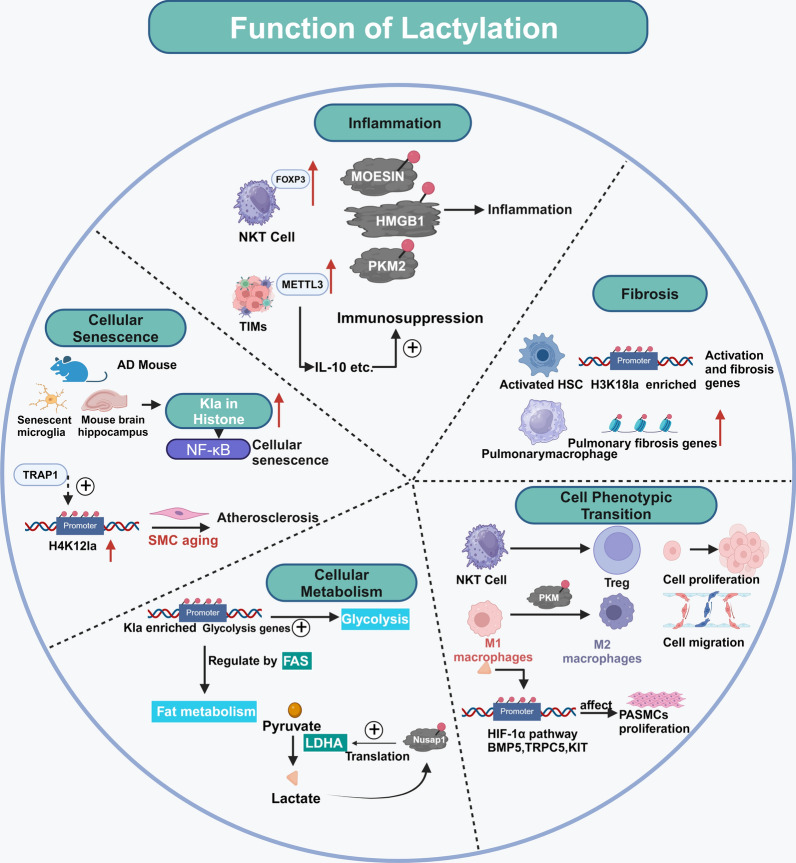
The function of Lactylation. Lactylation significantly impacts inflammation, fibrosis, cellular phenotype transitions, cellular metabolism, cellular senescence. (FOXP3, forkhead box protein P3; NF-κB: nuclear factor-kappa B; TIMs, tumor-infiltrating myeloid cells; FAS, fatty acid synthase.) Created using BioRender.com
Fig. 6
Fig. 6
PAH and lactylation. Lactylation, mediated by the ‘writer’ enzyme P300, influence PASMC proliferation, macrophage polarization, and immune responses. Key mechanisms include the promotion of pulmonary fibrosis, PASMC proliferation via METTL3/YTHDF2-induced PTEN degradation and PI3K/AKT pathway activation, and M1/M2 macrophage ratio imbalance can drive phenotypic transformation and inflammation. These processes contribute to vascular remodeling and immune dysregulation in PAH. Created using BioRender.com
Fig. 7
Fig. 7
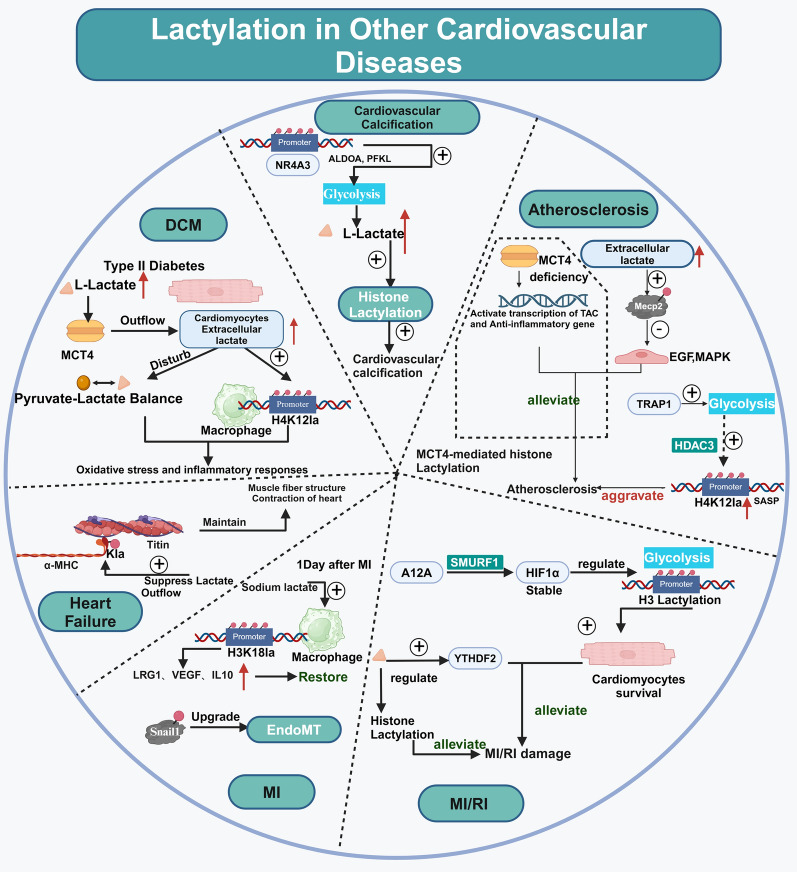
Lactylation in other cardiovascular diseases. NR4A3 promotes glycolysis and histone lactylation, contributing to cardiovascular calcification. In atherosclerosis, MCT4 deficiency reduces lactylation, alleviating inflammation, while TRAP1 and HDAC3-mediated H4K12la aggravates it. In MI/RI, HSP A12A stabilizes HIF1α, enhancing H3la and cardiomyocyte survival. Elevated lactate efflux in diabetic cardiomyopathy increases H4K12 lactylation, inducing oxidative stress. In heart failure, α-MHC lactylation preserves muscle integrity, and in MI, sodium lactate-induced H3K18la promotes cardiac repair. (Abbreviations: EGF, epidermal growth factor; MAPK, mitogen-activated protein kinase; EndoMT, endothelial-to-mesenchymal transition; LRG1, leucine rich alpha-2-glycoprotein 1.) Created using BioRender.com

References

    1. Kovacs G, Bartolome S, Denton CP, Gatzoulis MA, Gu S, Khanna D, et al. Definition, classification and diagnosis of pulmonary hypertension. Eur Respir J. 2024;64:2401324. - PMC - PubMed
    1. Ruopp NF, Cockrill BA. Diagnosis and treatment of pulmonary arterial hypertension: a review. JAMA. 2022;327:1379. - PubMed
    1. Hoeper MM, Humbert M, Souza R, Idrees M, Kawut SM, Sliwa-Hahnle K, et al. A global view of pulmonary hypertension. Lancet Respir Med. 2016;4:306–22. - PubMed
    1. Badesch DB, Raskob GE, Elliott CG, Krichman AM, Farber HW, Frost AE, et al. Pulmonary arterial hypertension. Chest. 2010;137:376–87. - PubMed
    1. Simonneau G, Gatzoulis MA, Adatia I, Celermajer D, Denton C, Ghofrani A, et al. Updated clinical classification of pulmonary hypertension. J Am Coll Cardiol. 2013;62:D34-41. - PubMed

MeSH terms

LinkOut - more resources