


Short-term effects of high-protein, lower-carbohydrate ultra-processed foods on human energy balance
- PMID: 40082711
- PMCID: PMC12021659
- DOI: 10.1038/s42255-025-01247-4
Short-term effects of high-protein, lower-carbohydrate ultra-processed foods on human energy balance
Abstract
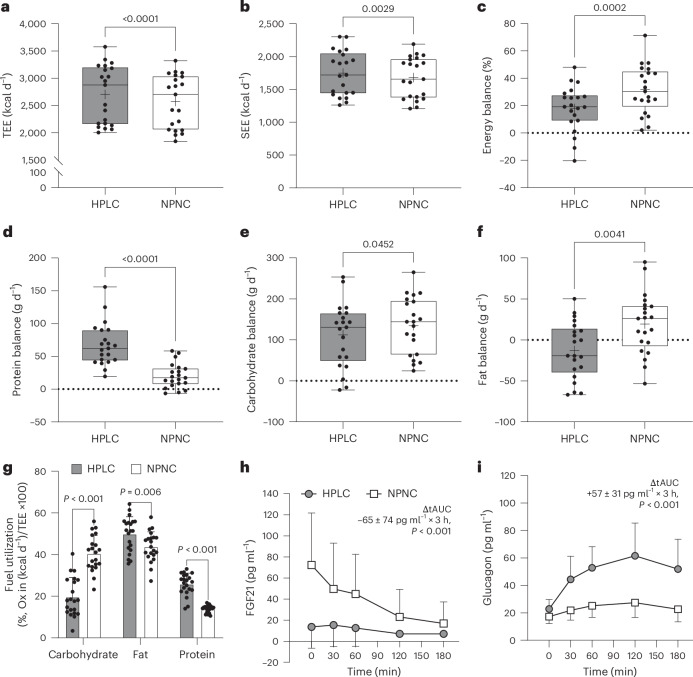
Protein-enriched ultra-processed foods (UPFs) are generally perceived as a healthy and favourable dietary choice for weight management. However, compared with low-processed foods, the consumption of UPFs has been demonstrated to result in overfeeding and gains in body weight and fat mass. Here we investigate the short-term effects of protein-enriched UPFs on energy intake and energy balance in a single-blind crossover trial involving 21 healthy young adults, who were randomly assigned to 2 UPF diets for 54 hours in a whole-room calorimeter. Participants received either a high-protein (30%) and lower-carbohydrate (29%) diet (HPLC-UPF) or a normal-protein (13%) and normal-carbohydrate (46%) diet (NPNC-UPF). Meals were equally palatable, matched for calories, fat and fibre, and consumed ad libitum. As primary outcomes, compared with NPNC-UPF consumption, the HPLC-UPF diet resulted in a higher energy expenditure (128 ± 98 kcal d-1) and lower energy intake (-196 ± 396 kcal d-1), leading to a less-positive energy balance (18% versus 32%) with gains in protein and carbohydrate balance only. Postprandial ghrelin levels were lower, whereas glucagon and peptide YY levels were higher with HPLC-UPF compared with NPNC-UPF (secondary outcomes). Despite a reduction in energy intake and increased energy expenditure, the short-term consumption of protein-enriched UPFs did not prevent overeating but did favourably affect energy partitioning. ClinicalTrials.gov registration: NCT05337007 .
© 2025. The Author(s).
Conflict of interest statement
Competing interests: The authors declare no competing interests.
Figures




References
-
- Astrup, A. & Monteiro, C. A. Does the concept of “ultra-processed foods” help inform dietary guidelines, beyond conventional classification systems? Debate consensus. Am. J. Clin. Nutr.116, 1489–1491 (2022). - PubMed
-
- Simpson, S. J. & Raubenheimer, D. Obesity: the protein leverage hypothesis. Obes. Rev.6, 133–142 (2005). - PubMed
Publication types
MeSH terms
Substances
Associated data
LinkOut - more resources
Full Text Sources
Medical
Research Materials
