


Optogenetic stimulation of cell bodies versus axonal terminals generate comparable activity and functional connectivity patterns in the brain
- PMID: 40090667
- PMCID: PMC12165442
- DOI: 10.1016/j.brs.2025.03.006
Optogenetic stimulation of cell bodies versus axonal terminals generate comparable activity and functional connectivity patterns in the brain
Abstract
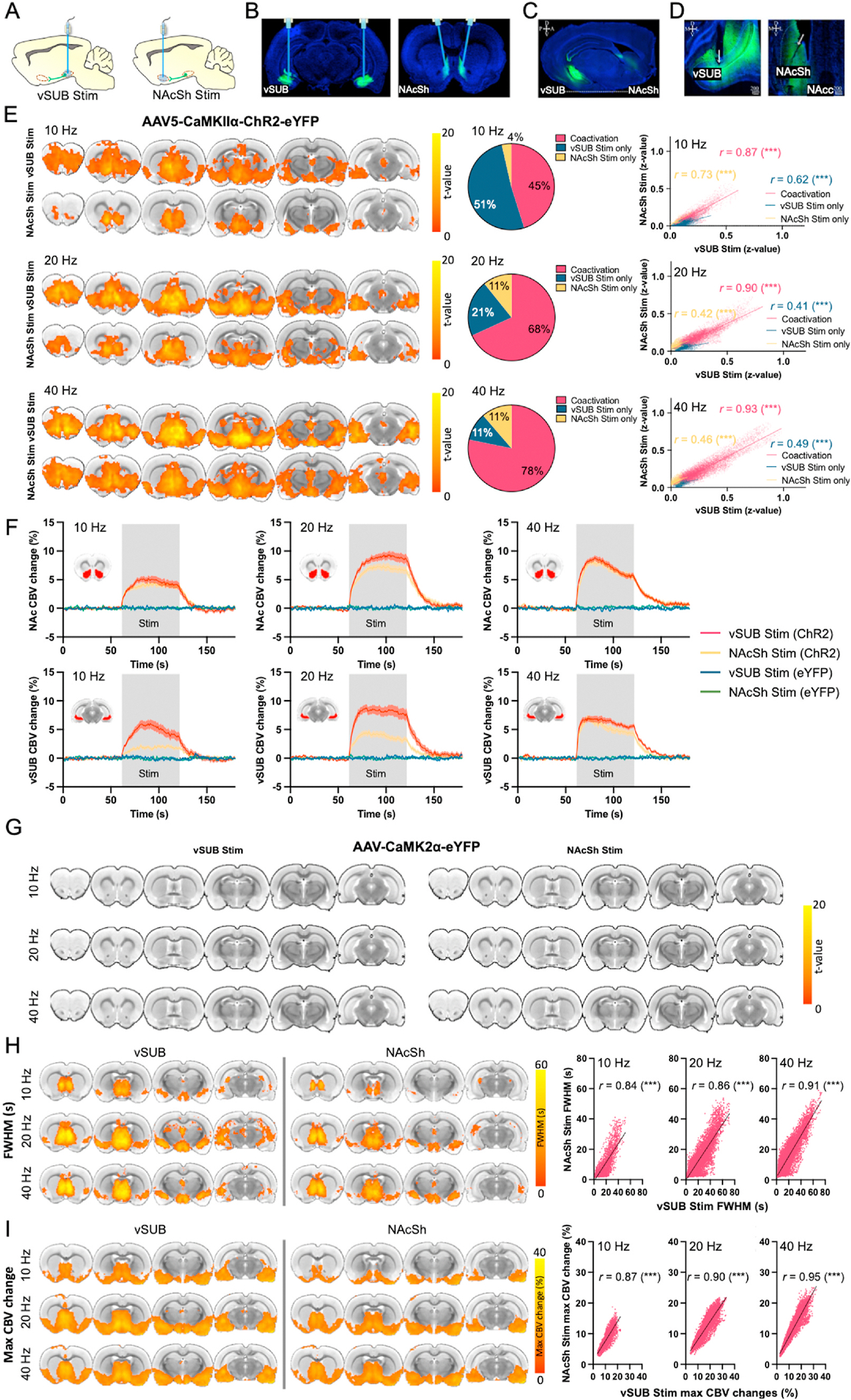
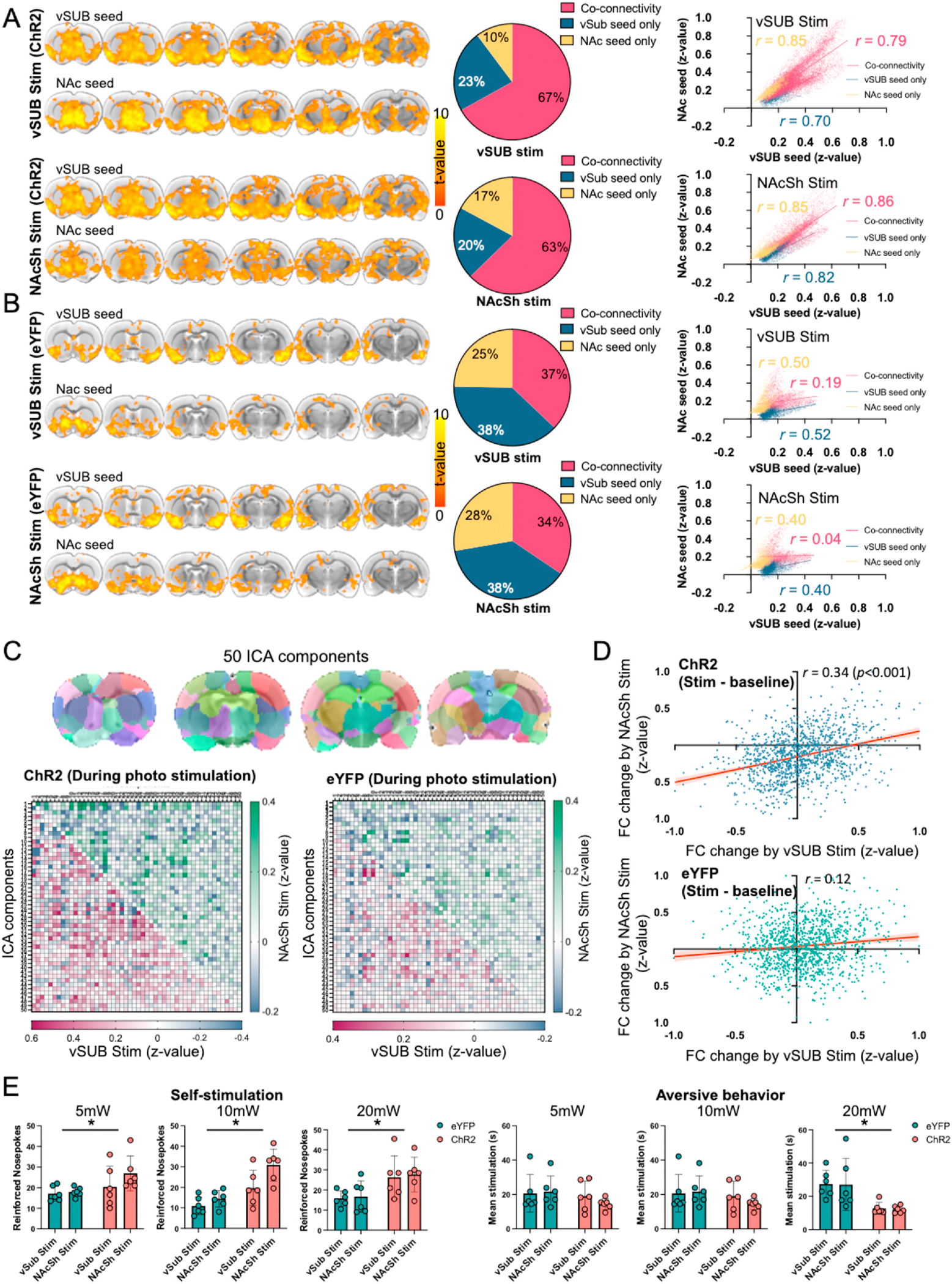
Optogenetic techniques are often employed to dissect neural pathways with presumed specificity for targeted projections. In this study, we used optogenetic fMRI to investigate the effective landscape of stimulating the cell bodies versus one of its projection terminals. Specifically, we selected a long-range unidirectional projection from the ventral subiculum (vSUB) to the nucleus accumbens shell (NAcSh) and placed two stimulating fibers-one at the vSUB cell bodies and the other at the vSUB terminals in the NAcSh. Contrary to the conventional view that terminal stimulation confines activity to the feedforward stimulated pathway, our findings reveal that terminal stimulation induces brain activity and connectivity patterns remarkably similar to those of vSUB cell body stimulation. This observation suggests that the specificity of optogenetic terminal stimulation may induce antidromic activation, leading to broader network involvement than previously acknowledged.
Keywords: Antidromic activation; Functional connectivity; Nucleus accumbens shell (NAcSh); Optogenetics; Ventral subiculum (vSUB); fMRI.
Copyright © 2025 The Authors. Published by Elsevier Inc. All rights reserved.
Conflict of interest statement
Declaration of competing interest The authors declare that they have no known competing financial interests or personal relationships that could have appeared to influence the work reported in this paper.
Figures
References
MeSH terms
Grants and funding
LinkOut - more resources
Full Text Sources
