


Comparison of Cervical Spine Kinematics and Clinical Neck Symptoms Between Mobile Device and Desktop Computer Use
- PMID: 40096247
- PMCID: PMC11902463
- DOI: 10.3390/s25051438
Comparison of Cervical Spine Kinematics and Clinical Neck Symptoms Between Mobile Device and Desktop Computer Use
Abstract
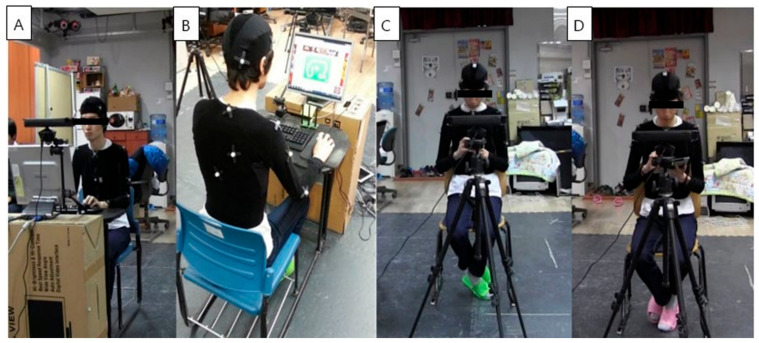
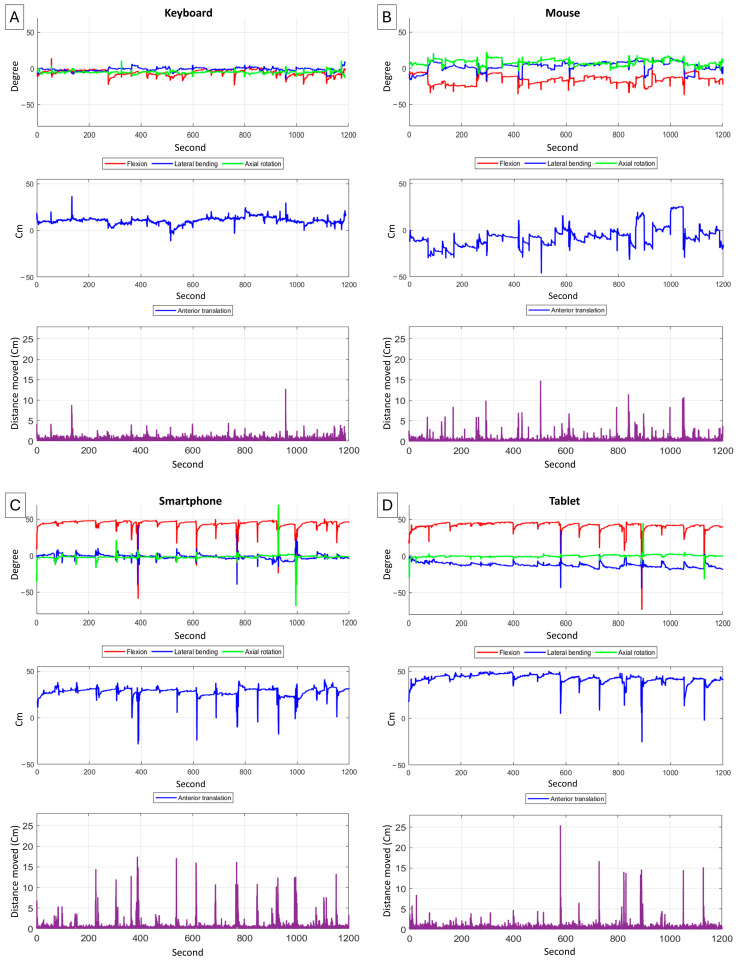
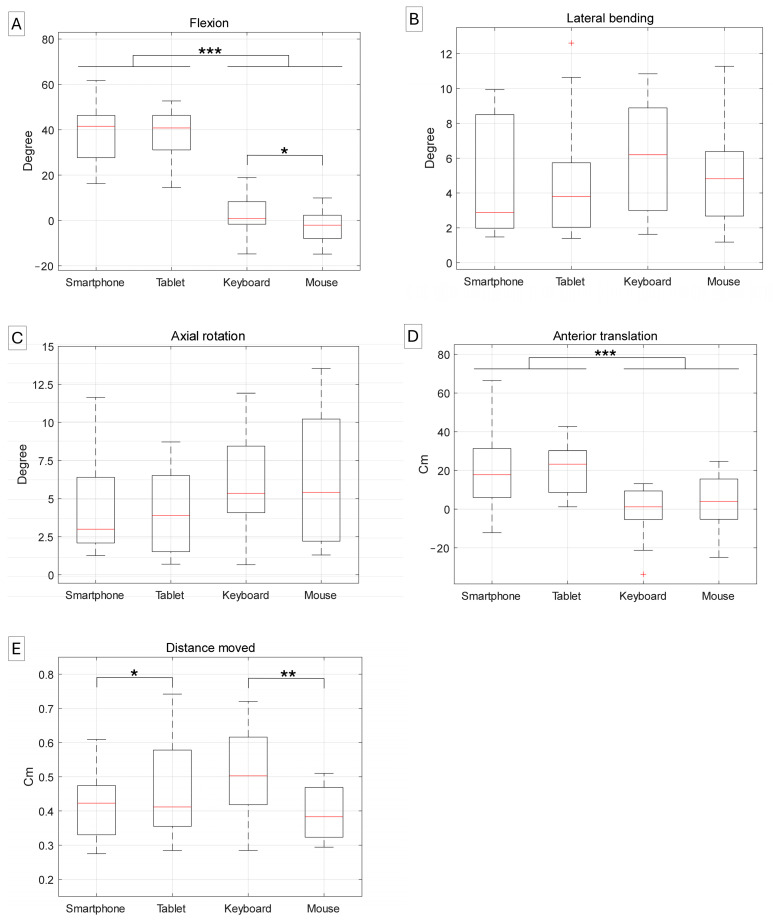
The widespread use of mobile devices and desktop computers has been associated with mechanical neck symptoms, yet few studies have compared cervical kinematics and clinical symptoms between them. In this study, 15 participants (27.7 ± 4.4 years, 12 male) performed four randomly ordered 20 min tasks: two mobile (smartphone and tablet) and two desktop computer (keyboard and mouse) tasks. Kinematic variables, including neck flexion, lateral bending, axial rotation, anterior translation, and total distance moved, were measured using an optical motion capture system, while clinical symptoms, including discomfort, pain, tension, and fatigue, were assessed using a visual analog scale. Paired t-tests and linear mixed models were used for analysis. Results showed that mobile device users exhibited greater neck flexion (38.9° [32.1-45.6°] vs. -0.2° [-4.3-3.9°], p < 0.001) and anterior translation (21.0 cm [12.0-30.1] vs. 1.6 cm [-4.4-7.7], p < 0.001) compared to desktop users. All clinical symptoms were significantly higher during mobile device use (p < 0.05), with neck flexion and anterior translation strongly correlating with symptom severity. In conclusion, mobile device use leads to more severe neck symptoms compared to desktop computer use, which is associated with increased flexion and forward head posture. To reduce neck symptoms, avoiding sustained flexion and forward head positions during mobile device use is recommended.
Keywords: desktop computer; kinematics; mobile device; neck pain.
Conflict of interest statement
The authors declare that they have no competing interest.
Figures
References
Publication types
MeSH terms
LinkOut - more resources
Full Text Sources
Medical
