


Total brain dose estimation in single-isocenter-multiple-targets (SIMT) radiosurgery via a novel deep neural network with spherical convolutions
- PMID: 40100547
- PMCID: PMC12166947
- DOI: 10.1002/mp.17748
Total brain dose estimation in single-isocenter-multiple-targets (SIMT) radiosurgery via a novel deep neural network with spherical convolutions
Abstract
Background and purpose: Accurate prediction of normal brain dosimetric parameters is crucial for the quality control of single-isocenter multi-target (SIMT) stereotactic radiosurgery (SRS) treatment planning. Reliable dose estimation of normal brain tissue is one of the great indicators to evaluate plan quality and is used as a reference in clinics to improve potentially SIMT SRS treatment planning quality consistency. This study aimed to develop a spherical coordinate-defined deep learning model to predict the dose to a normal brain for SIMT SRS treatment planning.
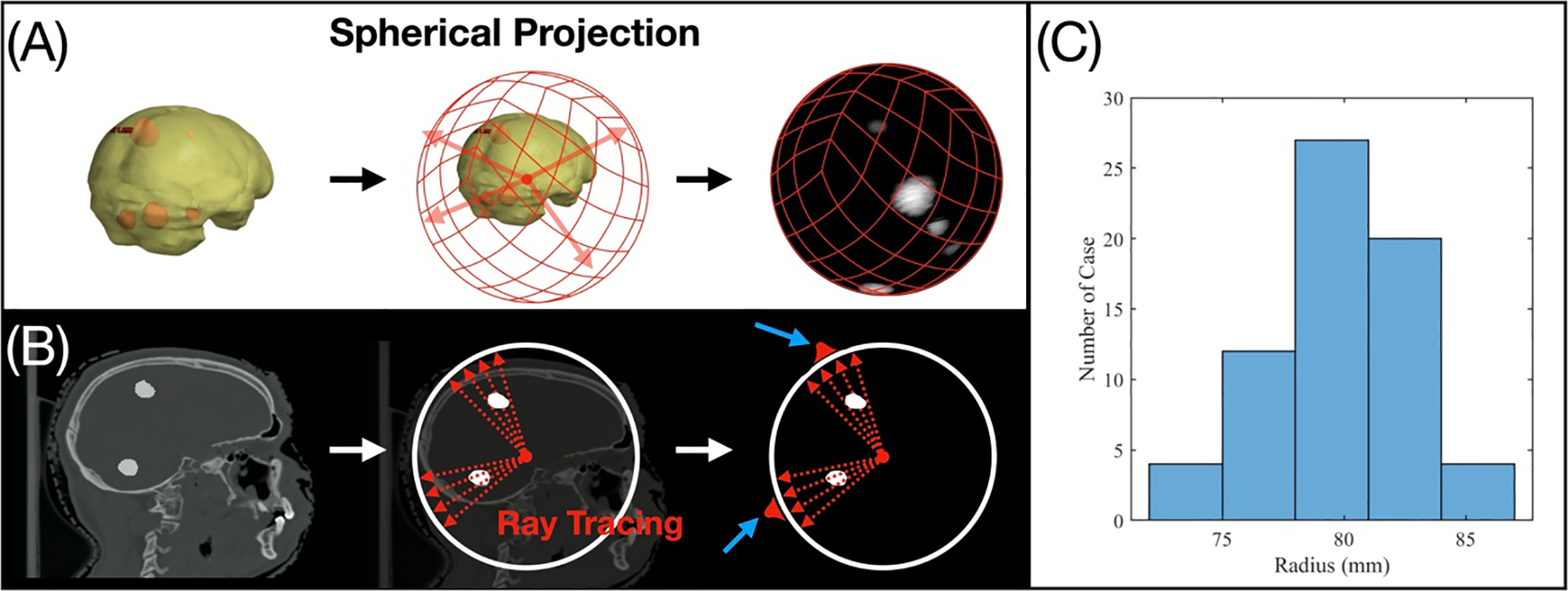
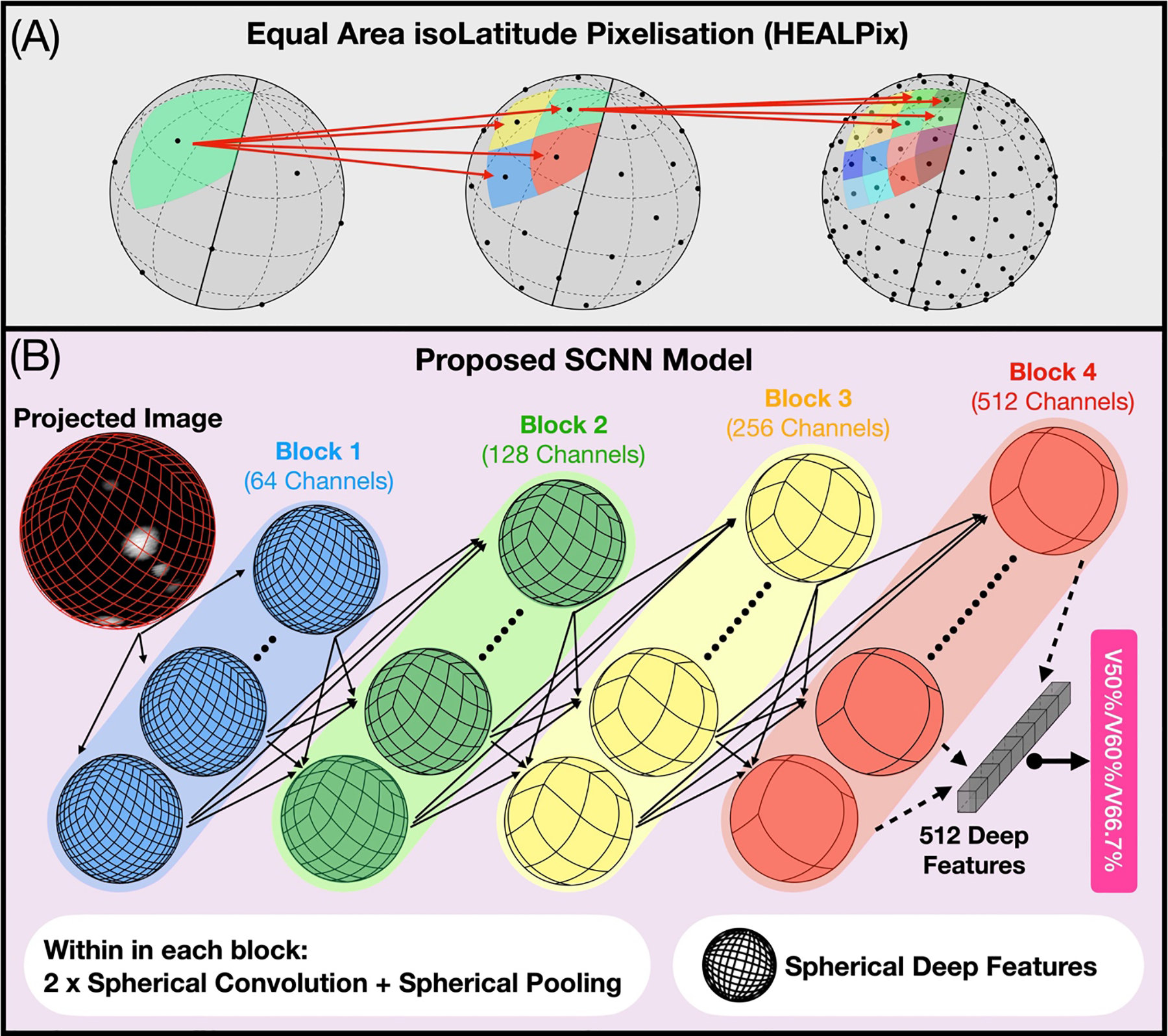
Methods: By encapsulating the human brain within a sphere, 3D volumetric data of planning target volume (PTVs) can be projected onto this geometry as a 2D spherical representation (in azimuthal and polar angles). A novel deep learning model spherical convolutional neural network (SCNN) was developed based on spherical convolution to predict brain dosimetric evaluators from spherical representation. Utilizing 106 SIMT cases, the model was trained to predict brain V50%, V60%, and V66.7%, corresponding to V10Gy and V12Gy, as key dosimetric indicators. The model prediction performance was evaluated using the coefficient of determination (R2), mean absolute error (MAE), and mean absolute percentage error (MAPE).
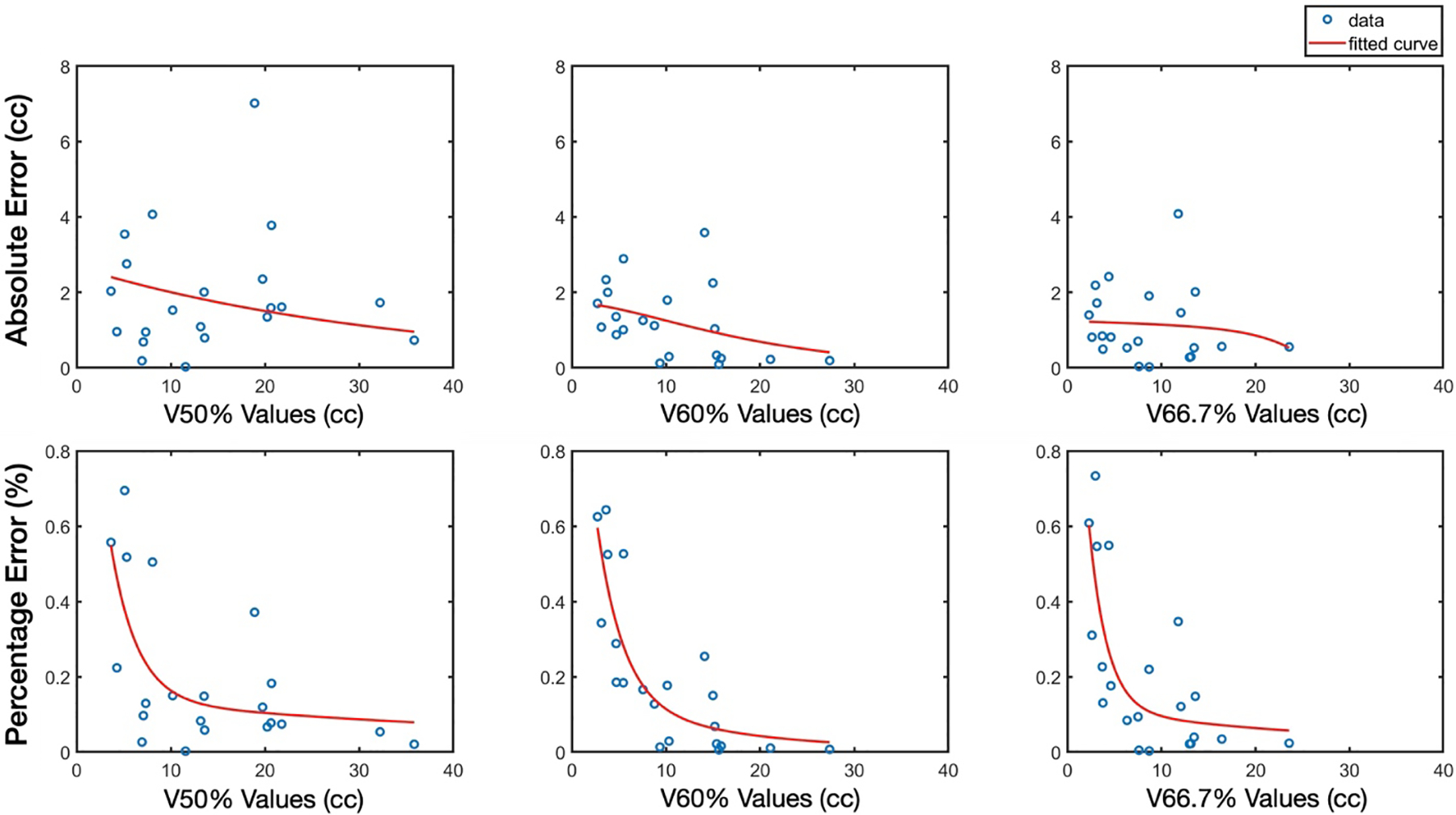
Results: The SCNN accurately predicted normal brain dosimetric values from the modeled spherical PTV representation, with R2 scores of 0.92 ± 0.05/0.94 ± 0.10/0.93 ± 0.09 for V50%/V60%/V66.7%, respectively. MAEs values were 1.94 ± 1.61 cc/1.23 ± 0.98 cc/1.13 ± 0.99 cc, and MAPEs were 19.79 ± 20.36%/20.79 ± 21.07%/21.15 ± 22.24%, respectively.
Conclusions: The deep learning model provides treatment planners with accurate prediction of dose to normal brain, enabling improved consistency in treatment planning quality. This method can be extended to other brain-related analyses as an efficient data dimension reduction method.
Keywords: SIMT; SRS; deep learning; plan quality; spherical convolution.
© 2025 American Association of Physicists in Medicine.
Figures
References
-
- Barnett GH, Linskey ME, Adler JR, et al. Stereotactic radiosurgery—an organized neurosurgery-sanctioned definition. J Neurosurg. 2007;106(1):1–5. - PubMed
-
- Andrews DW, Scott CB, Sperduto PW, et al. Whole brain radiation therapy with or without stereotactic radiosurgery boost for patients with one to three brain metastases: phase III results of the RTOG 9508 randomised trial. The Lancet. 2004;363(9422):1665–1672. - PubMed
-
- Kondziolka D, Patel A, Lunsford LD, Kassam A, Flickinger JC. Stereotactic radiosurgery plus whole brain radiotherapy versus radiotherapy alone for patients with multiple brain metastases. Int J Radiat Oncol Biol Phys. 1999;45(2):427–434. - PubMed
-
- Adler JR Jr, Colombo F, Heilbrun MP, Winston K. Toward an expanded view of radiosurgery. Neurosurgery. 2004;55(6):1374–1376. - PubMed
-
- Friedman WA. LINAC radiosurgery. Neurosurg Clin N Am. 1990;1(4):991–1008. - PubMed
MeSH terms
Grants and funding
LinkOut - more resources
Full Text Sources
