


Burden of intimate partner violence, mental health issues, and help-seeking behaviors among women in Nepal
- PMID: 40100963
- PMCID: PMC11921001
- DOI: 10.1177/17455057251326416
Burden of intimate partner violence, mental health issues, and help-seeking behaviors among women in Nepal
Abstract
Background: Intimate partner violence (IPV) is the most common form of violence, presenting a significant public health concern, especially for women and girls. Help-seeking can reduce future IPV and mitigate adverse health outcomes, including mental health issues.
Objectives: This study is the first national assessment on IPV, mental health consequences, and associated help-seeking behaviors in Nepal.
Design: A cross-sectional descriptive study.
Methods: Using secondary data from the 2022 Nepal Demographic and Health Survey, this study includes 5178 women aged 15-49 and employs multivariate regression analysis to explore the association between IPV and mental health problems, as well as factors influencing help-seeking behavior for both issues.
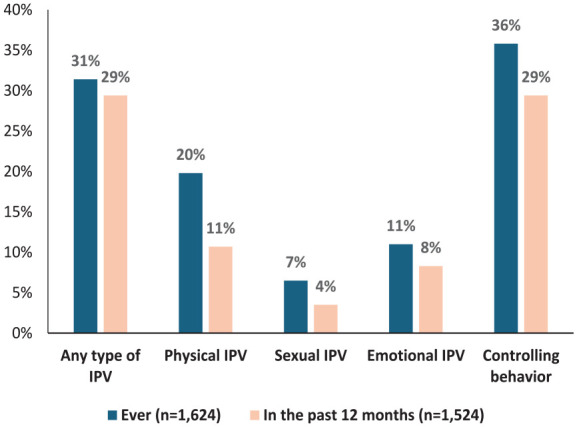
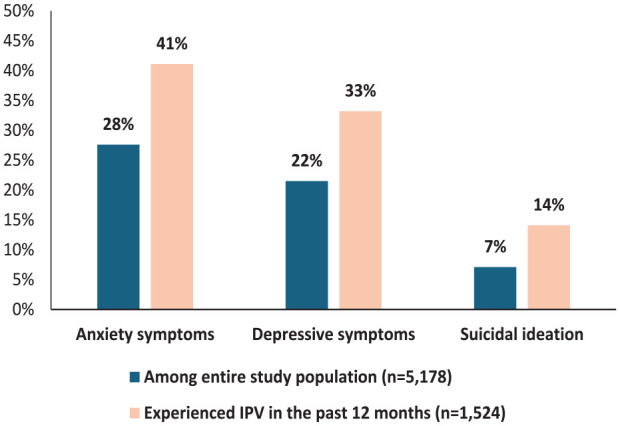
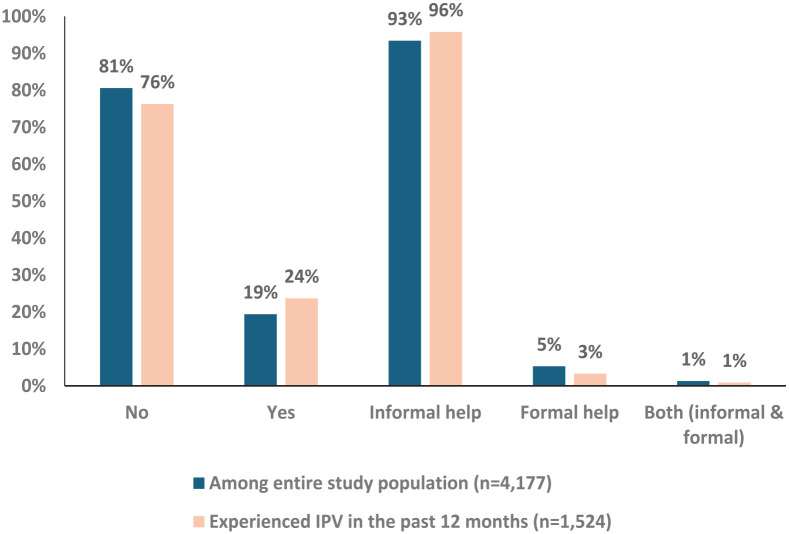
Results: Among participants, 31.4% reported ever experiencing IPV, and most (29.4% of all women) in the past 12 months. Of those ever experiencing IPV, 72.0% had not sought help for IPV, and 92.2% of those who did, opted for informal support. A total of 27.6% (n = 1427) of female interviewees reported anxiety symptoms, 21.5% (n = 1110) depressive symptoms, and 7.1% (n = 368) suicidal ideation within the past 2 weeks. These rates were higher among women who had experienced IPV in the past 12 months, with 41.1% reporting anxiety, 33.2% depression symptoms, and 14.1% suicidal ideation. Of the 4194 respondents with symptoms of anxiety, depression, or suicidal ideation who were asked about help-seeking for mental health issues, 19.4% (n = 812) had sought help, primarily from informal sources (93.4%, n = 759). Emotional IPV in the past 12 months increased the odds of anxiety (adjusted odds ratio (aOR) 3.00, 95% confidence interval (CI) 2.08-4.31), depression (aOR 3.09, 95% CI 2.19-4.37), and suicidal ideation (aOR 1.91, 95% CI 1.20-3.04). Sexual IPV increased the odds of anxiety (aOR 2.88, 95% CI 1.67-4.95) and depression (aOR 2.12, 95% CI 1.32-3.41), while controlling behavior heightened the odds of depression (aOR 2.42, 95% CI 2.02-2.89) and suicidal ideation (aOR 2.24, 95% CI 1.25-4.02).
Conclusion: This nationwide study reveals a high prevalence of IPV and related mental health problems among women in Nepal and a low rate of help-seeking behavior, in particular to formal support structures. Stronger health system responses and empowering informal support are essential to improve referrals and raise awareness for violence survivors.
Keywords: GBV; IPV; NDHS; Nepal; gender-based violence; help-seeking; intimate partner violence; mental health; women.
Conflict of interest statement
The author(s) declared no potential conflicts of interest with respect to the research, authorship, and/or publication of this article.
Figures
References
-
- Oram S, Fisher HL, Minnis H, et al. The Lancet Psychiatry Commission on intimate partner violence and mental health: advancing mental health services, research, and policy. Lancet Psychiatry 2022; 9(6): 487–524. - PubMed
-
- United Nations. Intensification of efforts to prevent and eliminate all forms of violence against women and girls. Report (A/77/302), United Nations, August 2022.
-
- World Health Organization. Violence info—intimate partner violence, http://apps.who.int/violence-info/intimate-partner-violence (2022, accessed 13 February 2024).
-
- World Health Organization. Violence against women prevalence estimates, 2018. Global, regional and national prevalence estimates for intimate partner violence against women and global and regional prevalence estimates for non-partner sexual violence against women. Report. Geneva: World Health Organization, 2021.
MeSH terms
LinkOut - more resources
Full Text Sources
Medical
Miscellaneous
