


Global trend and disparity in the burden of thyroid cancer attributable to high body-mass index from 1990 to 2021 and projection to 2049: a systematic analysis based on the Global Burden of Disease Study 2021
- PMID: 40102768
- PMCID: PMC11921707
- DOI: 10.1186/s12889-025-21960-9
Global trend and disparity in the burden of thyroid cancer attributable to high body-mass index from 1990 to 2021 and projection to 2049: a systematic analysis based on the Global Burden of Disease Study 2021
Abstract
Background: Obesity and overweight are increasingly recognized as significant risk factors for the incidence and progression of thyroid cancer (TC). However, its epidemiological investigation including the disease burden and its trends remains insufficiently explored. This research aimed to reveal and predict the disease burden of thyroid cancer attributable to high body-mass index (TC-HBMI), which would offer significant references for focused prevention and disease management methods.
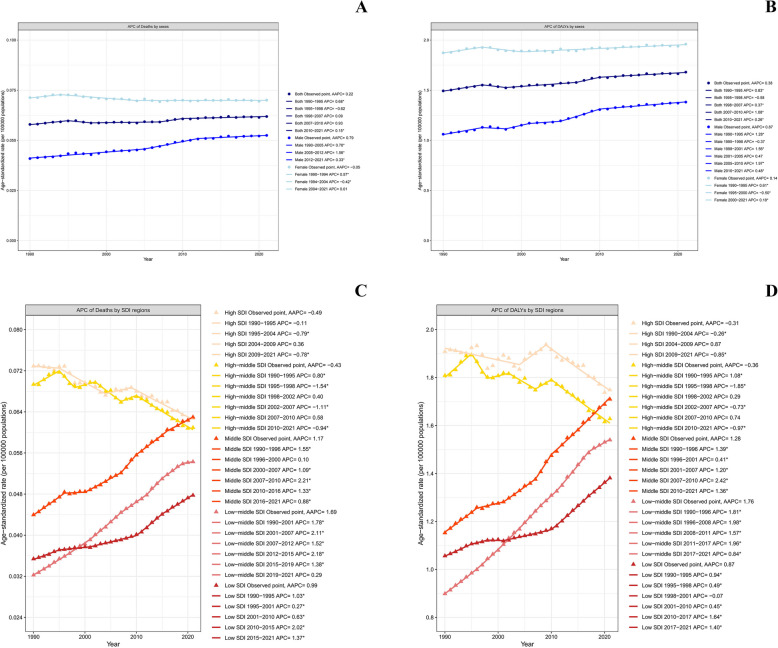
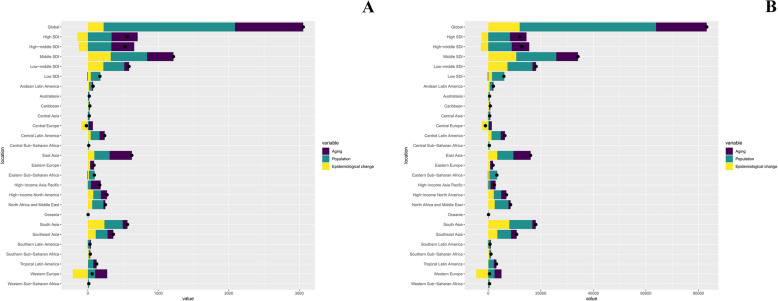
Methods: The study extracted data from the Global Burden of Disease Study 2021 (GBD 2021). Deaths case, disability-adjusted life years (DALYs) case, age-standardized mortality rate (ASMR) and age-standardized DALYs rate (ASDR) were obtained from GBD 2021 to assess the global burden from 1990 to 2021. Decomposition analysis explored the driving factors to TC-HBMI. The Average Annual Percent Change (AAPC) in ASMR and ASDR of TC-HBMI was determined to analyze temporal trends by Joinpoint regression analysis. Bayesian age-period-cohort (BAPC) model was utilized to project the disease burden untill 2049.
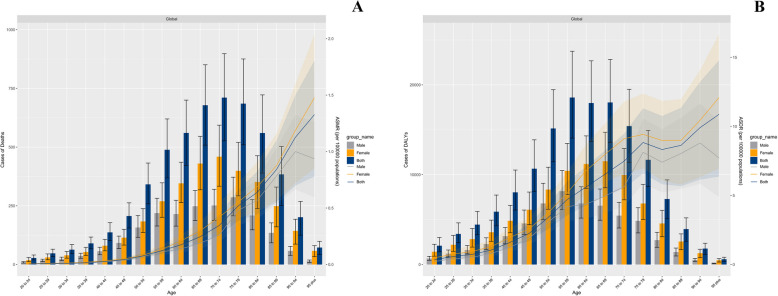
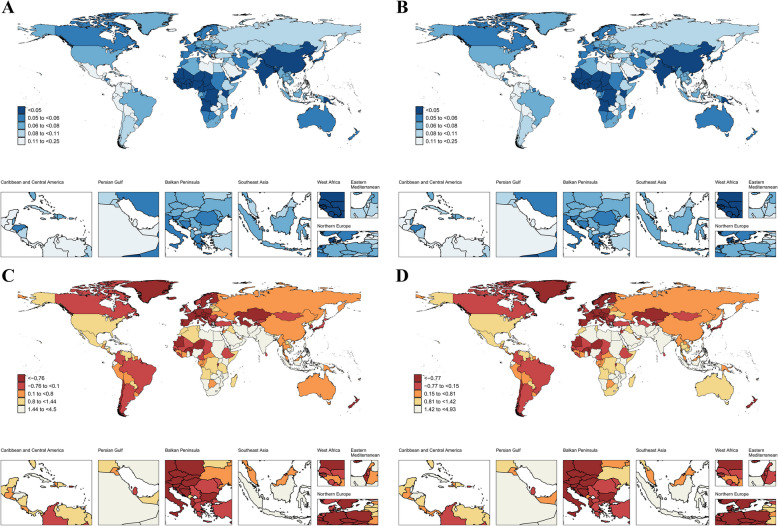
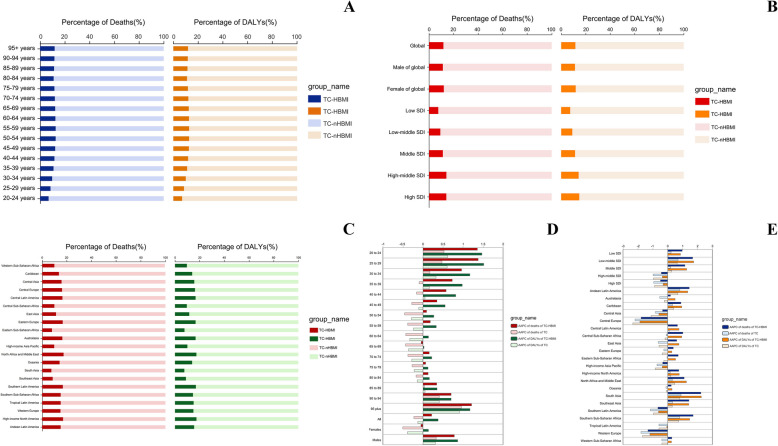
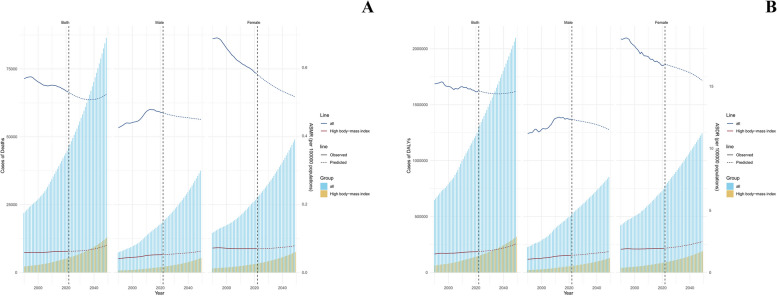
Results: The global deaths and DALYs of TC-HBMI were 5,255 and 144,955 in 2021, exhibiting a continuous growth trend over the past 32 years. The ASMR and ASDR for males showed faster growth. The disease burden was greatest among middle-aged and older populations, while the rapidly increase in adolescents should not be overlooked. High socio-demographic index (SDI) regions and Latin America each recorded the highest disease burden within their respective categories of SDI regions and GBD regions. Additionally, Predictive models indicated a gradual upward trend from 2022 to 2049.
Conclusion: The study revealed that the global disease burden of TC-HBMI had continuously increased from 1990 to 2021, and it was predicted to escalate until 2049. The findings emphasize the need for more detailed TC screening and weight loss measures tailored to specific regions and populations, which would benefit efforts to curb the projected rise in TC-HBMI deaths and DALYs.
Keywords: Disability-adjusted life years; Deaths; Global Burden of Disease Study 2021; High body-mass index; Thyroid cancer.
© 2025. The Author(s).
Conflict of interest statement
Declarations. Ethics approval and consent to participate: Not applicable. Consent to participate: In accordance with ethical standards, all participants involved in this study provided their informed consent to participate. Confidentiality and privacy were guaranteed throughout the research process. Participants were also made aware of their right to withdraw from the study at any time without any negative consequences. Competing interests: The authors declare no competing interests.
Figures
References
-
- Shi X, Tang H, Zhang T, Wang Y, Shen C, Zhang Y, Du Y, Wei W, Li Z, Liu C, et al. Thyroid-stimulating hormone suppression in low-risk papillary thyroid cancer: a large-scale retrospective analysis of real-world data. EClinicalMedicine. 2024;77:102912. 10.1016/j.eclinm.2024.102912. - DOI - PMC - PubMed
-
- Agate L, Lorusso L, Elisei R. New and old knowledge on differentiated thyroid cancer epidemiology and risk factors. J Endocrinol Invest. 2012;35:3–9. - PubMed
MeSH terms
Grants and funding
- 404053503/National Administration of Traditional Chinese Medicine High-Level Key Discipline: Traditional Chinese Medicine Endocrinology
- DZMG-LJRC0001/Dongzhimen Hospital of Beijing University of Chinese Medicine High-Level Hospital Project - Leading Talent
- No. 7222278/Beijing Natural Science Foundation General Program
- No. 82074354/National Natural Science Foundation General Program
LinkOut - more resources
Full Text Sources
Medical
Miscellaneous
