


Substance use and traumatic events among Afghan general population: findings from the Afghanistan national mental health survey
- PMID: 40102771
- PMCID: PMC11917001
- DOI: 10.1186/s12888-025-06677-8
Substance use and traumatic events among Afghan general population: findings from the Afghanistan national mental health survey
Abstract
Purpose: Substance use and traumatic events are prevalent in Afghanistan, but their relationship is under-investigated.
Methods: A nationally-representative, cross-sectional survey was conducted in 8 regions of Afghanistan in 2017 (N = 4474). First, we examined the burden of substance use, and demographic correlates (e.g., gender, age) in the Afghan general population; second, we examined the association between traumatic and stressful experiences, including PTSD, and any substance use, tobacco use and sedative use.
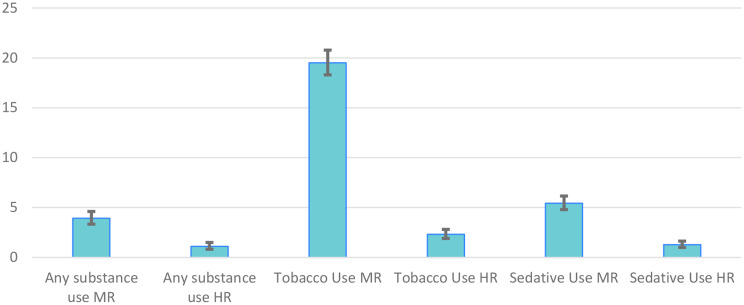
Results: Substance use disorder is prevalent in Afghanistan, with prevalence of any substance use at 5.03%, tobacco use at 21.82%, and sedative use prevalence at 6.71%. Women and people with middle and high economic status were less likely to use any substance and tobacco, however, women were more likely use sedative compared to men. People who had collective violence and experienced any traumatic event more likely to use any substances, tobacco and sedative compared to their counterparts. Finally, individuals with PTSD, depression and generalized anxiety were more likely to use any substances, tobacco and sedative compared to individuals without these psychiatric disorders.
Conclusion: Substance use and dependence are prevalent in Afghanistan, an area with exposure to conflict and trauma for a majority of the population, underscoring the pervasive impact of trauma exposure on population health in this area. As resources are deployed to assist the Afghan population through conflict, attention to substance use and psychiatric disorders is needed to fully address population health.
Keywords: Depression; Generalized anxiety; PTSD; Substance use; Tobacco use; Traumatic event.
© 2025. The Author(s).
Conflict of interest statement
Declarations. Ethics approval and consent to participate: The project was approved by the Afghanistan Institutional Review Board, National Public Health Institute, Ministry of Public health the 12/31/2016: IRB n° 335541. Informed Consent was provided by all the participants in the study. All methods were performed in accordance with the ethical standards as laid down in the Declaration of Helsinki and its later amendments or comparable ethical standards. Competing interests: The authors declare no competing interests. Conflict of interest: The authors declare no competing interests.
Figures
References
-
- UNODC. Drug Situation in Afghanistan: Latest Findings and Emerging Threats. UNODC. 2021. https://www.unodc.org/documents/data-and-analysis/Afghanistan/Afghanista...
-
- Cottler LB, Ajinkya S, Goldberger BA, Ghani MA, Martin DM, Hu H, et al. Prevalence of drug and alcohol use in urban Afghanistan: epidemiological data from the Afghanistan National urban drug use study (ANUDUS). Lancet Glob Heal. 2014;2:e592–600. - PubMed
-
- Degenhardt L, Bharat C, Glantz MD, Bromet EJ, Alonso J, Bruffaerts R, et al. The associations between traumatic experiences and subsequent onset of a substance use disorder: findings. Drug Alcohol Depend. 2022;240:109574. from the World Health Organization World Mental Health surveys. - PubMed
-
- Levin Y, Bar-Or RL, Forer R, Vaserman M, Kor A, Lev-Ran S. The association between type of trauma, level of exposure and addiction. Addict Behav. 2021;118:106889. - PubMed
MeSH terms
LinkOut - more resources
Full Text Sources
Medical
Research Materials
