


Totipotency or plenipotency: rethinking stem cell bipotentiality
- PMID: 40107116
- PMCID: PMC12279028
- DOI: 10.1016/j.gde.2025.102342
Totipotency or plenipotency: rethinking stem cell bipotentiality
Abstract
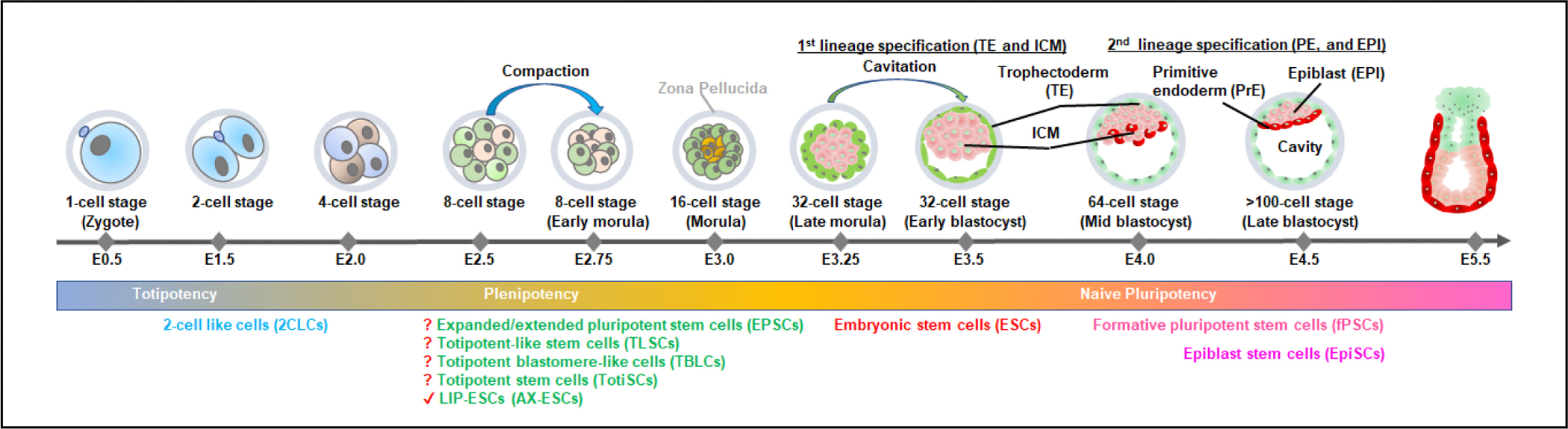
The term 'totipotency' has often been misapplied in stem cell research to describe cells with embryonic and extraembryonic bipotentiality, despite a lack of evidence that they can generate an entire organism from a single cell. Additionally, no specific term currently distinguishes bipotential stem cells from pluripotent cells, which contribute poorly to extraembryonic tissues. This review examines the developmental continuum from totipotency to pluripotency in early embryos and revisits the previously proposed concept of plenipotency in preimplantation development. We evaluate emerging stem cell models that exhibit bipotentiality but have lost the ability to autonomously initiate and sustain the sequential fate decisions necessary to develop into a complete organism. Unlike totipotent embryonic cells, which retain the information required to initiate fate decisions at the correct timing and cell numbers, these stem cells have lost that capacity. This loss of critical developmental information distinguishes totipotency from plenipotency, with bipotential stem cells aligning more closely with the latter. By distinguishing plenipotency from totipotency and pluripotency, we aim to refine terminology, enhance our understanding of early embryonic development, and address ethical considerations in human research.
Copyright © 2025 Elsevier Ltd. All rights reserved.
Conflict of interest statement
Declaration of Competing Interest The authors declare that they have no known competing financial interests or personal relationships that could have appeared to influence the work reported in this paper.
Figures
References
Publication types
MeSH terms
Grants and funding
LinkOut - more resources
Full Text Sources
