Spatial immune remodeling of the liver metastases: discovering the path to antimetastatic therapy
- PMID: 40107672
- PMCID: PMC11927485
- DOI: 10.1136/jitc-2024-011002
Spatial immune remodeling of the liver metastases: discovering the path to antimetastatic therapy
Abstract
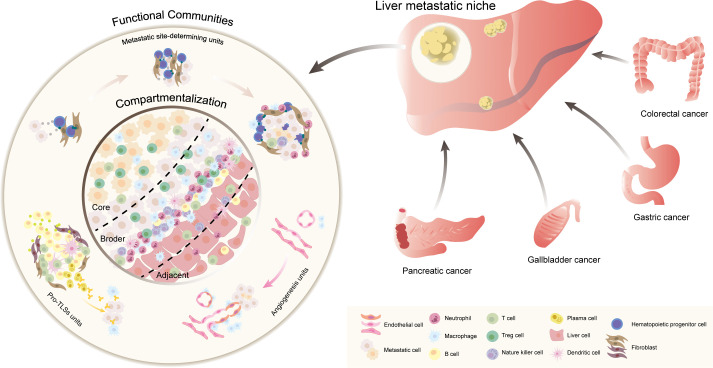
The intrinsic characteristics of metastatic tumors are of great importance in terms of the development of antimetastatic treatment strategies. Elucidation from a spatial immune perspective has the potential to provide a more comprehensive understanding of the mechanisms underlying immune escape, effectively addressing the limitations of relying solely on the analysis of immune cell subpopulation transcriptional profiles. Advances in spatial omics technology enable researchers to precisely analyze precious liver metastasis samples in a high-throughput manner, revealing spatial alterations in immune cell distribution induced by metastasis and exploring the molecular basis of the remodeling process. The aggregation of specific cell subpopulations in distinct regions not only modifies local immune characteristics but also concurrently affects global biological behaviors of liver metastatic tumors. Identifying specific spatial immune characteristics in pretreatment or early-stage treatment tissue samples may achieve accurate clinical predictions. Moreover, developing strategies that target spatial immune remodeling is a promising avenue for future antimetastatic therapy.
Keywords: Immune modulatory; Tumor infiltrating lymphocyte - TIL; Tumor microenvironment - TME.
© Author(s) (or their employer(s)) 2025. Re-use permitted under CC BY-NC. No commercial re-use. See rights and permissions. Published by BMJ Group.
Conflict of interest statement
Competing interests: The authors declare that they have no known competing financial interests or personal relationships that could have appeared to influence the work reported in this paper.
Figures
References
Publication types
MeSH terms
LinkOut - more resources
Full Text Sources
Medical