


The effect of tart cherry juice (TCJ) supplementation on exercise-induced muscle damage (EIMD) in an athletic population
- PMID: 40110326
- PMCID: PMC11918606
- DOI: 10.1097/MS9.0000000000002914
The effect of tart cherry juice (TCJ) supplementation on exercise-induced muscle damage (EIMD) in an athletic population
Abstract
Introduction: This systematic review and meta-analysis quantified the effect of tart cherry juice (TCJ) supplementation on exercise-induced muscle damage (EIMD). Evidence supported TCJ's beneficial effects on muscular function and inflammatory biomarkers interleukin (IL)-6 and IL-8.
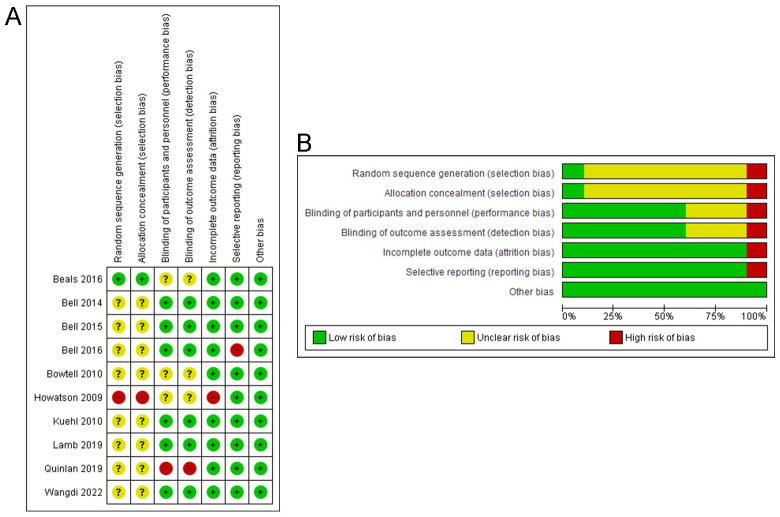
Method: PubMed, Scopus, and Web of Science were searched up to January 2024. Risk of bias was assessed using RevMan® software. Mean differences and 95% confidence intervals (CIs) of maximal voluntary isometric contraction (MVIC), inflammatory markers, creatine kinase (CK), and visual analog scale (VAS) score were pooled using fixed- or random-effect models. Heterogeneity was assessed using Chi-square or I 2 statistics.
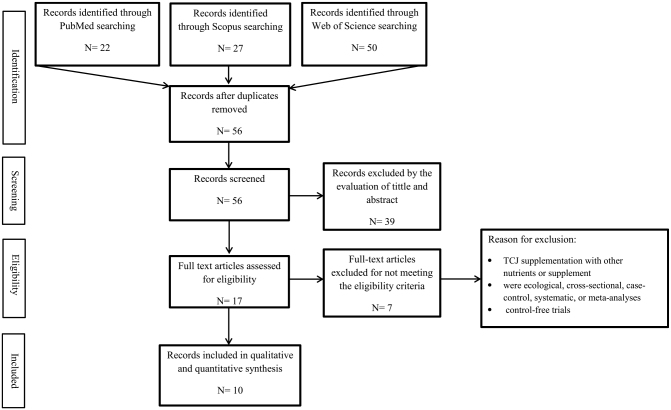
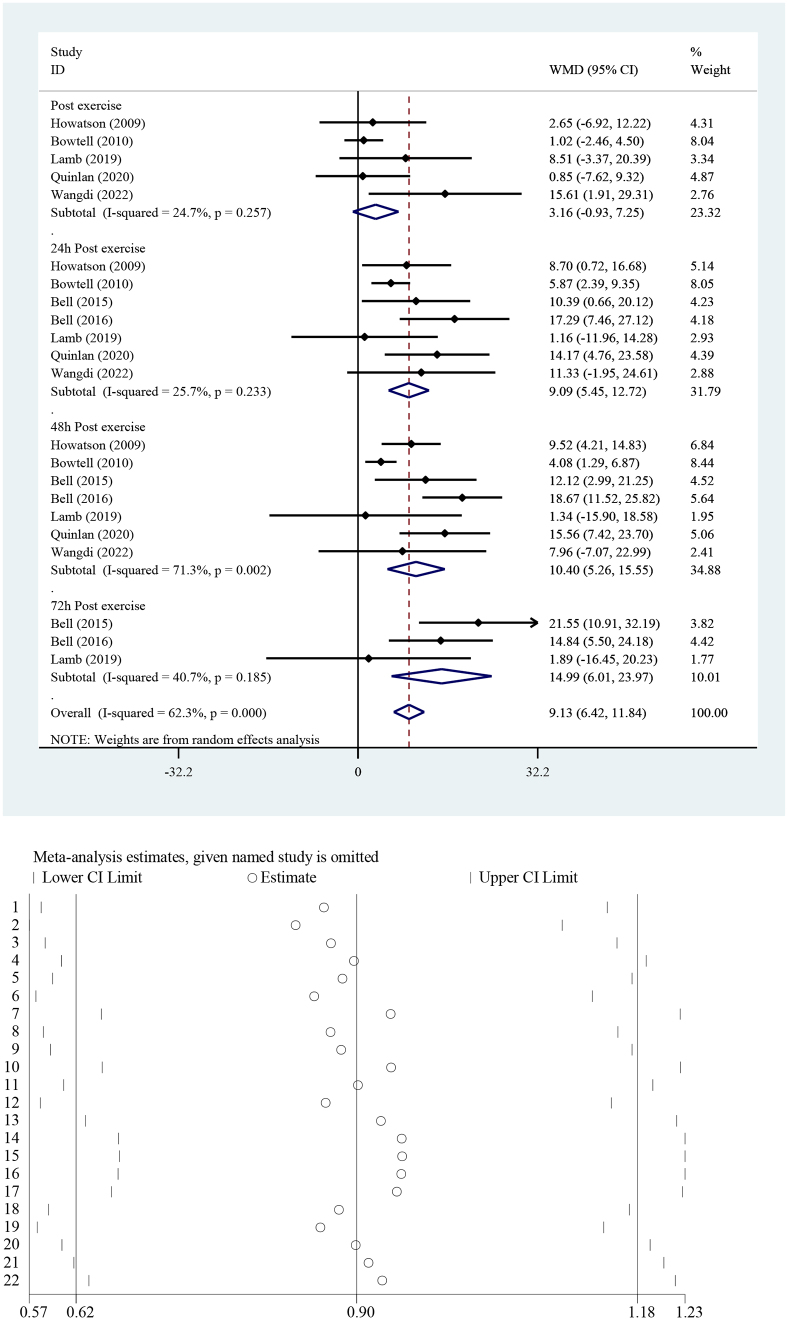
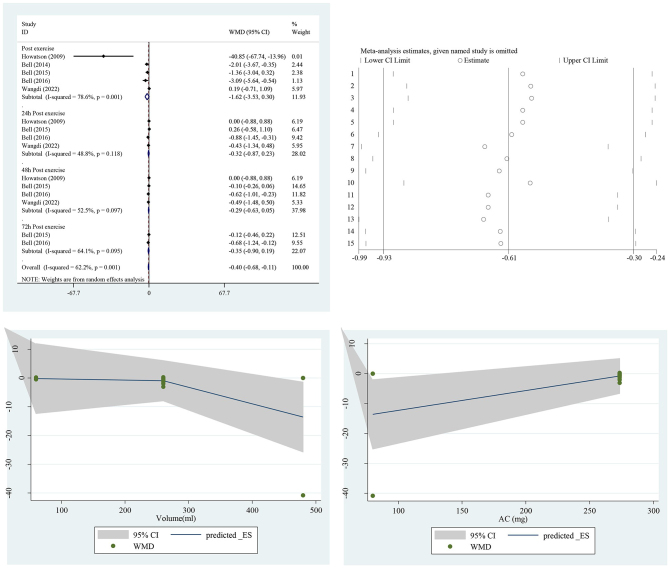
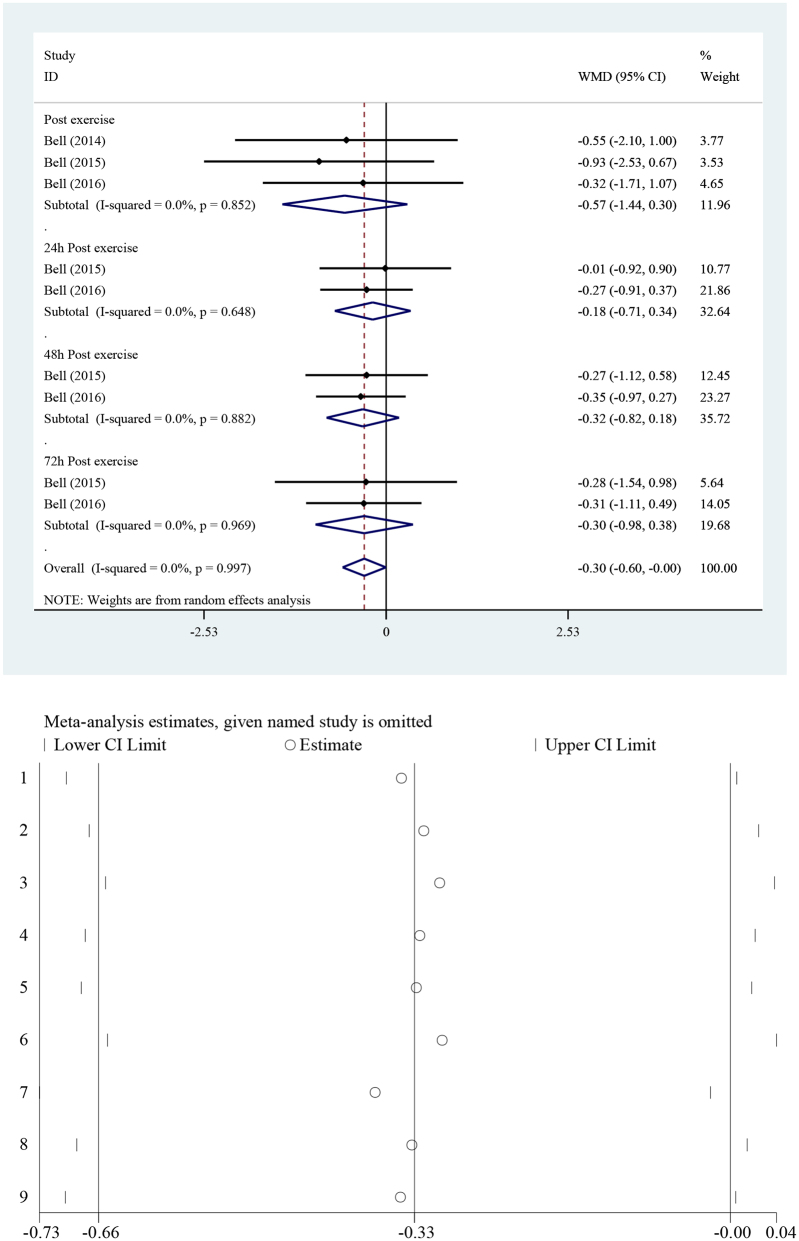
Results: Ten trials were included in the analysis. TCJ supplementation significantly improved MVIC [weighted mean difference (WMD) = 9.13%, 95% CI (6.42-11.84), I 2 = 62.3%] and decreased IL-6 [WMD = -0.4 pg/ml, 95% CI (-0.68 to -0.11), I 2 = 62.2%] and IL-8 [WMD = -0.3 pg/ml, 95% CI (-0.6 to -0.0), I 2 = 46.3%]. No significant changes were found in CK, C-reactive protein, IL-1β, tumor necrosis factor-alpha, or VAS score. Dose-response analysis revealed a significant non-linear association between daily TCJ dose and MVIC effect size.
Conclusion: TCJ supplementation may improve muscle function and some inflammatory biomarkers in EIMD. Further high-quality studies with larger sample sizes are needed to determine TCJ's long-term effects.
Keywords: exercise-induced muscle damage; inflammatory biomarkers; maximal voluntary isometric contraction; meta-analysis; muscle function; tart cherry juice.
Copyright © 2025 The Author(s). Published by Wolters Kluwer Health, Inc.
Conflict of interest statement
We wish to confirm that there are no known conflicts of interest associated with this publication, and there has been no significant financial support for this work that could have influenced its outcome.
Figures
References
-
- Hallal PC, Andersen LB, Bull FC, et al. . Global physical activity levels: surveillance progress, pitfalls, and prospects. Lancet 2012;380:247–57. - PubMed
-
- Kohl 3rd HW, Craig CL, Lambert EV, et al. . The pandemic of physical inactivity: global action for public health. Lancet 2012;380:294–305. - PubMed
-
- Trost SG, Blair SN, Khan KM. Physical Inactivity Remains the Greatest Public Health Problem of the 21st Century: Evidence, Improved Methods and Solutions Using the ‘7 investments that work’ as a Framework. 169–70. BMJ Publishing Group Ltd and British Association of Sport and Exercise Medicine; 2014. - PubMed
-
- Almeida OP, Khan KM, Hankey GJ, et al. . 150 minutes of vigorous physical activity per week predicts survival and successful ageing: a population-based 11-year longitudinal study of 12 201 older Australian men. Br J Sports Med 2014;48:220–25. - PubMed
LinkOut - more resources
Full Text Sources
Research Materials