Development of Repetitive Mechanical Oscillation Needle-Free Injection through Electrically Induced Microbubbles
- PMID: 40110347
- PMCID: PMC11919823
- DOI: 10.34133/cbsystems.0225
Development of Repetitive Mechanical Oscillation Needle-Free Injection through Electrically Induced Microbubbles
Abstract
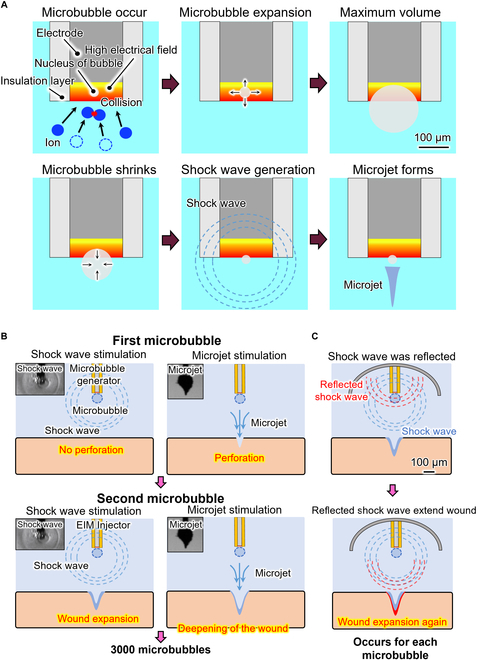
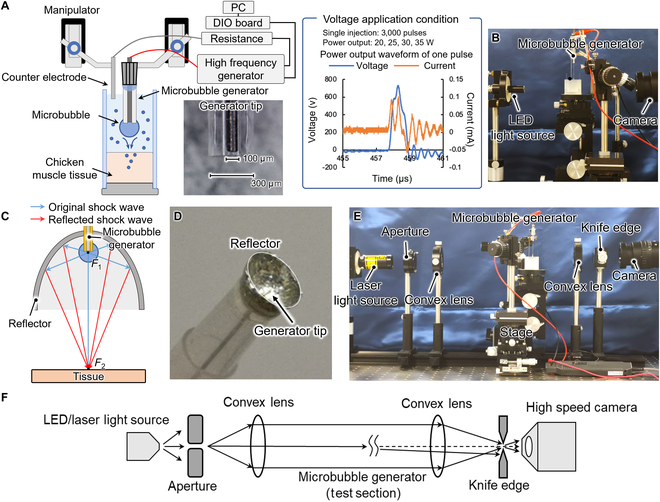
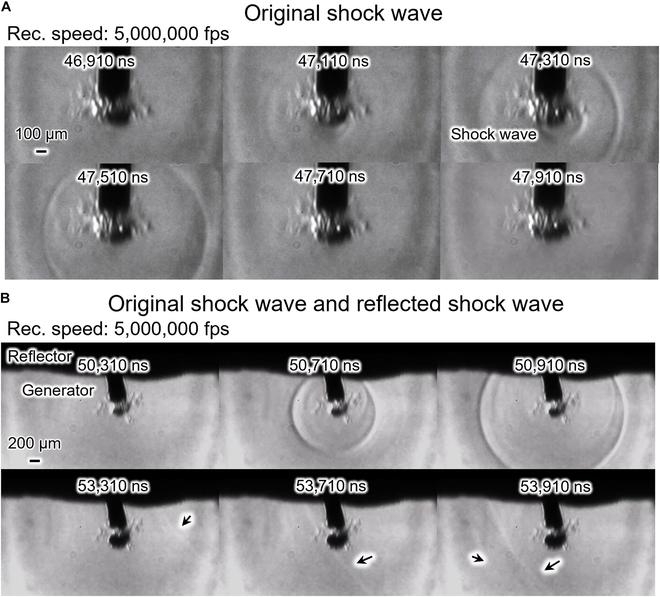
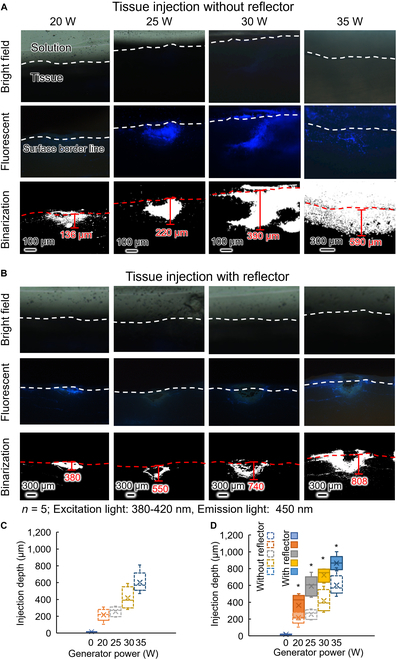
We previously developed a novel needle-free reagent injection method based on electrically induced microbubbles. The system generates microbubbles and applies repetitive mechanical oscillation associated with microbubble dynamics to perforate tissue and introduce a reagent. In this paper, we propose improving the reagent injection depth by reflecting the shock wave through microbubble dynamics. Our results show that the developed shock wave reflection method improves the ability of the electrically induced microbubble injection system to introduce a reagent. The method extends the application potential of electrically induced microbubble needle-free injection.
Copyright © 2025 Yibo Ma et al.
Conflict of interest statement
Competing interests: The authors declare that they have no competing interests.
Figures
References
-
- Vadlapatla R, Gayakwad S, Yellepeddi V, Wong EY. Needle-free injectors. In: Drug delivery devices and therapeutic systems. Cambridge (MA): Academic Press; 2021. p. 199–211.
-
- Han HS, Hong JY, Kwon TR, Lee SE, Yoo KH, Choi SY, Kim BJ. Mechanism and clinical applications of needle-free injectors in dermatology: Literature review. J Cosmet Dermatol. 2021;20(12):3793–3801. - PubMed
-
- Pingle P, Joshi I, Sodhi RK, Madan J, Mehra NK, Singh PK, Srivastava S, Khatri DK, Singh SB. Needle-free technology for biomedical applications. Multifunct Nano. 2022;149–173.
LinkOut - more resources
Full Text Sources