


Fertility intention and its correlates with reproductive-aged married women in Ethiopia: an adapted theory of planned behavior (TPB)
- PMID: 40119469
- PMCID: PMC11929286
- DOI: 10.1186/s41043-025-00790-w
Fertility intention and its correlates with reproductive-aged married women in Ethiopia: an adapted theory of planned behavior (TPB)
Abstract
Background: In Ethiopia, despite different attempts to manage rapid population growth and reduce the average number of births per woman, the expected changes outlined in the National Health Sector Transformation Plan (HSTP II) and Reproductive health (RH 2015 2020) strategies have not been fully realized over the past decade. The population continues to grow at a rate of 2.7 and fertility rates remain at 4.6. Fertility is one of the three key aspects in shaping population dynamics, as women's fertility intention for children play a significant role in determining actual fertility rates. In addition, it can be an instructive tool for discovering more about overall fertility patterns, which is important for understanding future reproductive behaviors. In women, fertility intention refers to their preferences regarding the number of children they wish to have in the future, considering factors such as the costs and benefits associated with childbearing.
Methods: This study used cross-sectional data from Performance Monitoring for Action Ethiopia (PMA-ET) 2020.The hypothesis tested in this analysis was adapted and used TPB constructs as a guiding behavioral theoretical model. The study included 3916 women aged 15-49 years who were not pregnant. Frequencies and percentages were commuted to characterize women. Chi-square tests were conducted to evaluate associations and assess sample cell size adequacy across categories. Multilevel binary logistic regression statistical modeling was employed to identify important factors influencing women's fertility intention. The findings were reported in terms of percentages and odds ratios, with 95% confidence intervals. Statistical significance was established at a significance level of 0.05.
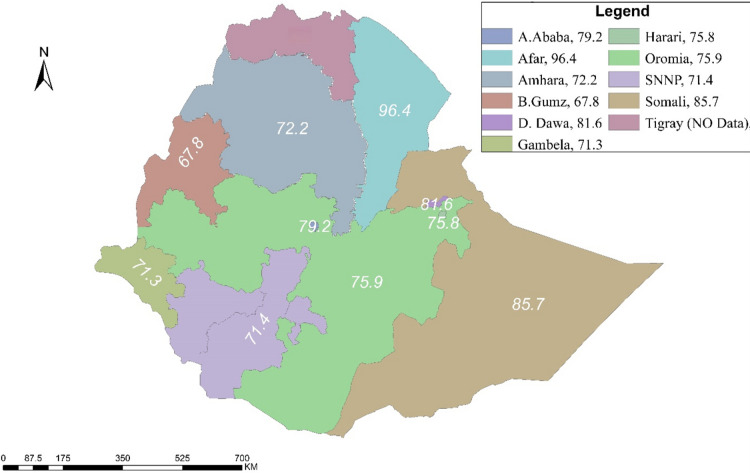
Results: Three-quarters 74.9% (95% CI; 72.5%-77.1%) of married reproductive-aged women in Ethiopia intended to have a/another child. Women who reported having a forced pregnancy by partner, Muslim and Protestant religion, 19 years and above old at first sex, and secondary or higher education were found to increase the likelihood of fertility intention to have a child. However, women who reported 30 years of age or older, had three or more live births, had a family size of five or more members, had a moderate family planning (FP) knowledge, positive subjective social norm towards FP and living in Addis and Dire Dawa were found to have lower odds of women's fertility intention.
Conclusion: The prevailing strong intention for high fertility in Ethiopia delays efforts to quickly decrease fertility and calls for implementation of multifaceted strategies that maintain high fertility intention rates. Accordingly, demographic and socio-physiological factors were found to affect women's intention to have children. Awareness of these influencing factors is crucial for designing fertility programs and policies tailored to demographics strategies. Specifically, these strategies should be sufficiently diverse to create a positive social norm toward FP use, which can lead to information sharing, reduced stigma, and community support that can play significant importance in shaping individuals' fertility intention and reproductive behaviors.
Keywords: Ethiopia; Fertility intention; Intention for more children; PMA; Theory of planned behavior.
© 2025. The Author(s).
Conflict of interest statement
Declarations. Ethics approval and consent to participate: Not applicable. Competing interests: The authors declare no competing interests.
Figures

References
-
- Evens E, Tolley E, Headley J, McCarraher DR, Hartmann M, Mtimkulu VT, et al. Identifying factors that influence pregnancy intentions: evidence from South Africa and Malawi. Cult Health Sex. 2015;17(3):374–89. - PubMed
-
- Bongaarts JP. The measurement of wanted fertility. Popul Dev Rev. 1990;16:487–506.
-
- UNDESA U, editor Population Dynamics: Thematic Think Piece. 2010 Highlevel Plenary Meeting of the General Assembly on the Millennium Development Goals2012.
-
- Bekele S, Hailemariam A. Population dynamics and environment in Ethiopia: an overview. 2010; (1).
MeSH terms
LinkOut - more resources
Full Text Sources
Miscellaneous
