


Regulation of intestinal health by Lactobacillus rhamnosus GG during fasting-induced molting in laying hens
- PMID: 40120246
- PMCID: PMC11987612
- DOI: 10.1016/j.psj.2025.105057
Regulation of intestinal health by Lactobacillus rhamnosus GG during fasting-induced molting in laying hens
Abstract
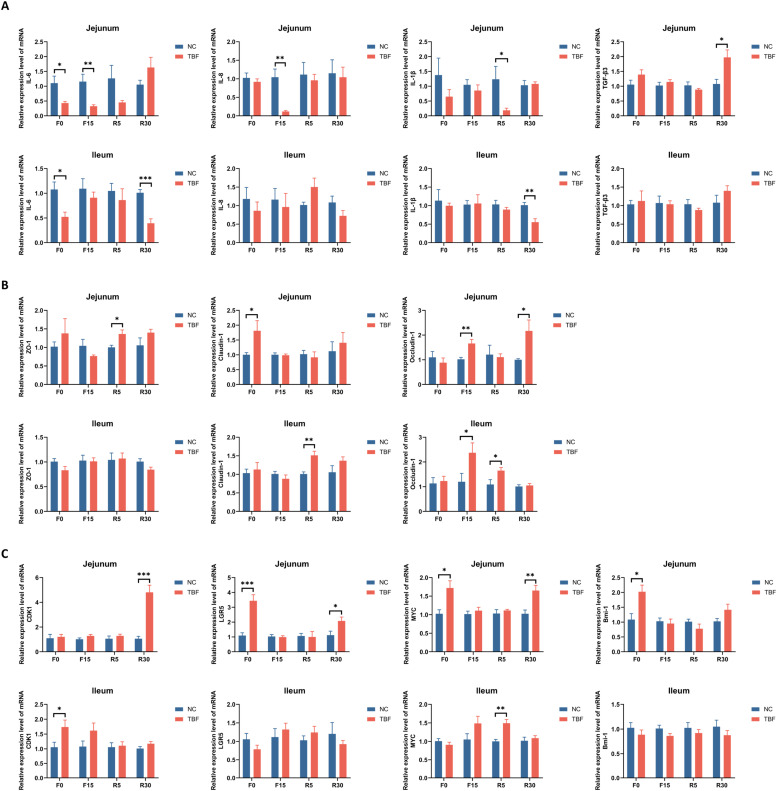
This study aims to investigate the regulatory effects of adding Lactobacillus rhamnosus GG (LGG) during the fasting-induced molting (FIM) process on the intestinal mucosal barrier and microbiota of laying hens. A total of 288 houdan chickens of 420 days of age were randomly divided into four groups, with nine replicates in each group and each replicate containing eight chickens: NC group (no LGG added); TB group (LGG was added during the pre-fasting period (F0 period)); TF group (LGG was added during the fasting period (F15 period)); TBF group (LGG was added during both the pre-fasting and fasting periods). The FIM experiment focused on four key time points: F0, F15, the 5th day (R5), and the 30th day (R30) of refeeding. At each time point, one chicken was randomly selected from each replicate, euthanized via jugular vein exsanguination, and samples of the jejunum and ileum tissues, fixed samples, and cecal contents were collected for subsequent experiments. The results show that compared with the other three groups, the TBF group exhibited significant improvements in terms of egg production rate, egg quality, and changes in the ratio of villus height to crypt depth (V/C) in the jejunum and ileum. Compared with NC group, TBF group significantly increased the activity of antioxidant enzymes in serum during fasting, enhanced of the body's immune function, and also improved the intestinal barrier function, reduced intestinal inflammation and the content of oxidase, and further enhanced the digestion and absorption ability of FIM laying hens. The 16S sequencing results indicated that compared with the NC group, the TBF group significantly increased the abundance of beneficial bacteria during the refeeding period, reduced the number of pathogenic bacteria, optimized the intestinal microbiota structure, and promoted the production of short-chain fatty acids (SCFAs). In conclusion, the addition of LGG during the pre-FIM and fasting periods can improve the structure of the intestinal microbiota, promote the production of SCFAs, and improve intestinal barrier function, thereby enhancing intestinal health. This study provides a theoretical foundation and reference for the development of intestinal health and nutritional strategies for FIM laying hens.
Keywords: Fasting-induced molting; Intestinal health; Lactobacillus rahamnosus GG; Microbiota; Short-chain fatty acids.
Copyright © 2025. Published by Elsevier Inc.
Conflict of interest statement
Declaration of competing interest The authors declare no conflict of interest.
Figures




References
-
- Aho V.T.E., Houser M.C., Pereira P.A.B., Chang J., Rudi K., Paulin L., Hertzberg V., Auvinen P., Tansey M.G., Scheperjans F. Relationships of gut microbiota, short-chain fatty acids, inflammation, and the gut barrier in Parkinson's disease. Mol. Neurodegener. 2021;16:6. doi: 10.1186/s13024-021-00427-6. - DOI - PMC - PubMed
-
- Alander M., Satokari R., Korpela R., Saxelin M., Vilpponen-Salmela T., Mattila-Sandholm T., von Wright A. Persistence of colonization of human colonic mucosa by a probiotic strain, Lactobacillus rhamnosus GG, after oral consumption. Appl. Environ. Microb. 1999;65:351–354. doi: 10.1128/aem.65.1.351-354.1999. - DOI - PMC - PubMed
MeSH terms
LinkOut - more resources
Full Text Sources
Miscellaneous
