


Bacteriuria profile and antimicrobial sensitivity among pregnant women attending antenatal care at Jazan and Sabyia general hospitals, Jazan Region, KSA: A cross-sectional study
- PMID: 40125617
- PMCID: PMC12255912
- DOI: 10.1002/ijgo.70082
Bacteriuria profile and antimicrobial sensitivity among pregnant women attending antenatal care at Jazan and Sabyia general hospitals, Jazan Region, KSA: A cross-sectional study
Abstract
Background: Bacteria in urine, which is known as bacteriuria, is divided clinically into two types: symptomatic, where the patient experiences urinary complaints, and asymptomatic (ASB), in which the patient has no complaints. Pregnant women who have ASB may later develop symptomatic urinary tract infection, which is considered one of the most common bacterial infections in pregnancy and which, if untreated, can result in serious adverse pregnancy outcomes.
Objective: The goal of this research was to find out the prevalence of bacteriuria and its related factors among pregnant women in the Jazan Region, Saudi Arabia, recognize correlated microbial organisms, and identify the antimicrobial profile.
Methods: A cross-sectional study was conducted at Jazan and Sabyia general hospitals from June 28, 2023 to June 28, 2024. A systematic random sample of 392 pregnant women was selected. Urine samples were collected from them for bacteriological cultures and antimicrobial sensitivity testing. Data were collected and analyzed.
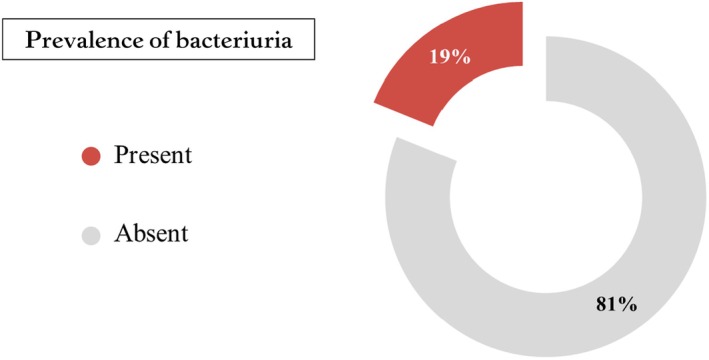
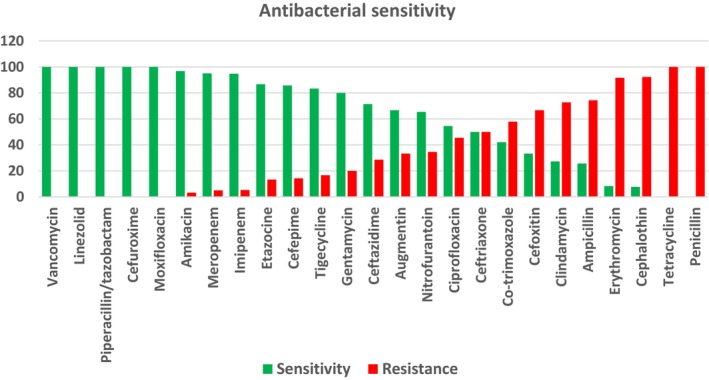
Results: Out of 392 participants, 19% had bacteriuria. Most women were aged 26-35, overweight, and resided in urban areas. The most common bacteria found were Escherichia coli (39.2%) and Klebsiella pneumoniae (17.6%). Antimicrobial sensitivity was highest for cefuroxime and vancomycin and lowest for erythromycin and penicillin. Significant predictors of bacteriuria were residence, body mass index, gestational age, hemoglobin levels, and hemoglobin A1c levels.
Conclusion: The study revealed a significant prevalence of bacteriuria among pregnant women in Jazan Region, highlighting the importance of routine screening and targeted interventions for high-risk groups. Effective antibiotic stewardship programs are essential to managing resistance patterns.
Keywords: UTI; antibiotic resistance; asymptomatic bacteriuria; microbial sensitivity.
© 2025 The Author(s). International Journal of Gynecology & Obstetrics published by John Wiley & Sons Ltd on behalf of International Federation of Gynecology and Obstetrics.
Conflict of interest statement
The authors declare no conflicts of interest.
Figures
References
-
- Crader MF, Kharsa A, Leslie SW. Bacteriuria. StatPearls Publishing; 2024. https://www.ncbi.nlm.nih.gov/books/NBK482276/ - PubMed
-
- Schneeberger C, Kazemier BM, Geerlings SE. Asymptomatic bacteriuria and urinary tract infections in special patient groups: women with diabetes mellitus and pregnant women. Curr Opin Infect Dis. 2014;27(1):108‐114. https://pubmed.ncbi.nlm.nih.gov/24296584/ - PubMed
-
- Kalinderi K, Delkos D, Kalinderis M, Athanasiadis A, Kalogiannidis I. Urinary tract infection during pregnancy: current concepts on a common multifaceted problem. J Obstet Gynaecol (Lahore). 2018;38(4):448‐453. - PubMed
-
- Smaill FM, Vazquez JC. Antibiotics for asymptomatic bacteriuria in pregnancy. Cochrane Database Syst Rev. 2019;2019:CD000490. www.cochranelibrary.com - PubMed
-
- Taha AB. Bacteriological profile, antimicrobial susceptibility, and factors associated with urinary tract infection in pregnant women. J Infect Dev Ctries. 2024;18(3):391‐398. - PubMed
MeSH terms
Substances
Grants and funding
LinkOut - more resources
Full Text Sources
Medical
