


Re-participation intention in individuals playing tennis for recreational purposes: investigation of differences based on low and high involvement
- PMID: 40129495
- PMCID: PMC11931121
- DOI: 10.3389/fpsyg.2025.1546405
Re-participation intention in individuals playing tennis for recreational purposes: investigation of differences based on low and high involvement
Abstract
Purpose: This study examined how the level of involvement influences the re-participation intentions of recreational tennis players.
Method: To measure the participants' leisure involvement levels; the leisure involvement scale, developed by Kyle et al. (2007) and adapted to the Turkish language by Gürbüz et al. (2018) was used. The behavioral intentions scale developed by Zeithaml et al. (1996) was used to measure participants' re-participation intentions. The research group consists of a total of 327 volunteer individuals, 172 males (52.6%) and 155 females (47.4%), selected by convenience sampling method among individuals who play tennis for recreational purposes. The normality test of the data obtained was tested by checking the skewness-kurtosis values and it was determined that the data showed normal distribution. In this context, in addition to descriptive statistics, Hierarchical-Non-Hierarchical Clustering Analysis, and Univariate analyses were used in the analysis of the data.
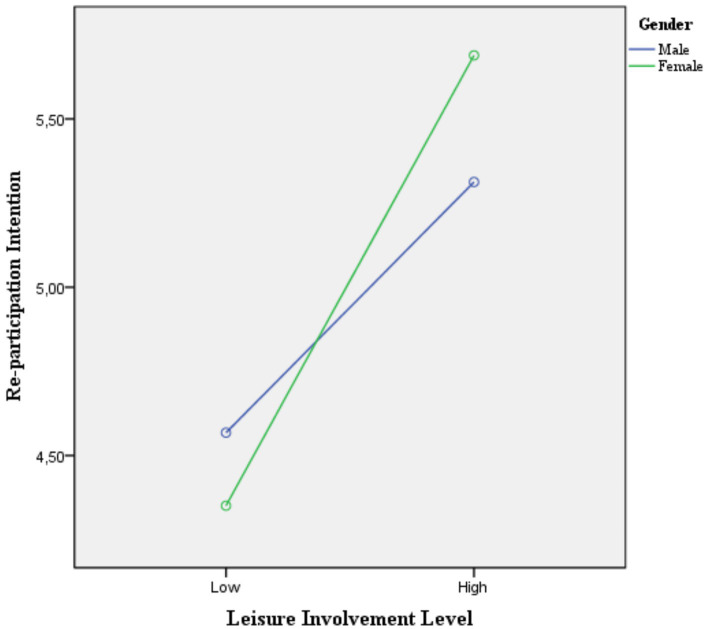
Results: According to the research findings, it was determined that there was a statistically significant difference in the re-participation intentions of the participants who played tennis for recreational purposes according to their involvement levels.
Conclusion: It was observed that participants with high involvement levels had higher re-participation intentions than those with low involvement.
Keywords: involvement; racket sports; re-participation intention; recreation; tennis.
Copyright © 2025 Karakullukcu, Ayhan, Kalkan, Okudan, Talaghir and Iconomescu.
Conflict of interest statement
The authors declare that the research was conducted in the absence of any commercial or financial relationships that could be construed as a potential conflict of interest.
Figures
References
-
- Ahmad M. S. S. (2021). Leisure involvement and place attachment on shopping mall revisit intention: the mediating role of quality of life. Int. J. Manag. Res. Emerg. Sci. 11, 12–23. doi: 10.56536/ijmres.v11i1.124 - DOI
-
- Ahn B. W., Kwon Y. H. (2019). The structural relationship between leisure attitude, facilitation, constraint, satisfaction, and re-participate intention among marine sports participants. J. Korea Acad. Ind. Cooper. Soc. 20, 772–779. doi: 10.5762/KAIS.2019.20.12.772 - DOI
-
- Ayhan C. (2023) in Tekrar katılım niyetinin yordayıcıları: Serbest zaman ilgilenimi, serbest zaman tatmini, rekreasyonel akış deneyimi ve rekreasyonel fayda. ed. Soyer F. (Ankara: Gazi Kitabevi; ).
-
- Bammel G., Burrus-Bammel L. L. (1996). Leisure and human behavior. Dubuque, IA: W. C. Brown.
LinkOut - more resources
Full Text Sources
