


Deciphering consumer perceptions of Kisra prepared from biofortified and non-biofortified sorghum cultivars using the rate-all-that-apply (RATA) method
- PMID: 40129667
- PMCID: PMC11930805
- DOI: 10.3389/fnut.2025.1563247
Deciphering consumer perceptions of Kisra prepared from biofortified and non-biofortified sorghum cultivars using the rate-all-that-apply (RATA) method
Abstract
Introduction: Micronutrient deficiency remains a significant public health challenge in developing countries, including Sudan, particularly in rural areas, where access to a well-balanced diet is limited. This study evaluated consumer sensory acceptance and quality of Kisra, a traditional Sudanese fermented flatbread prepared from a combination of biofortified and non-biofortified sorghum cultivars.
Methods: A panel of 100 assessors aged 18-75 evaluated nine Kisra products using hedonic overall liking and the rate-all-that-apply (RATA) technique.
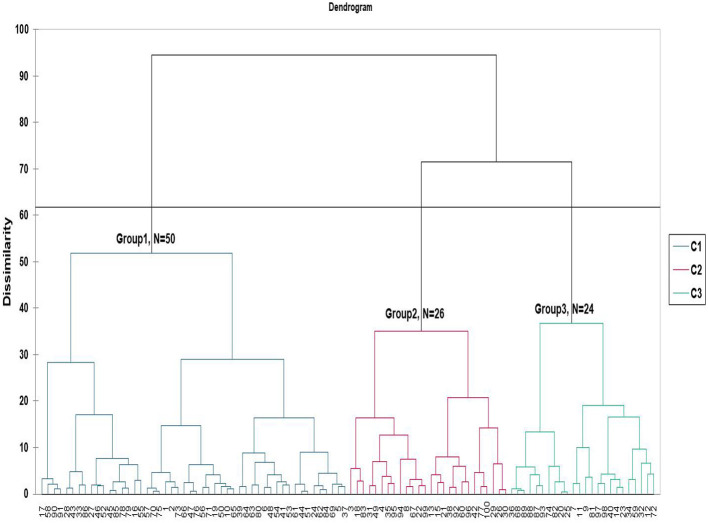
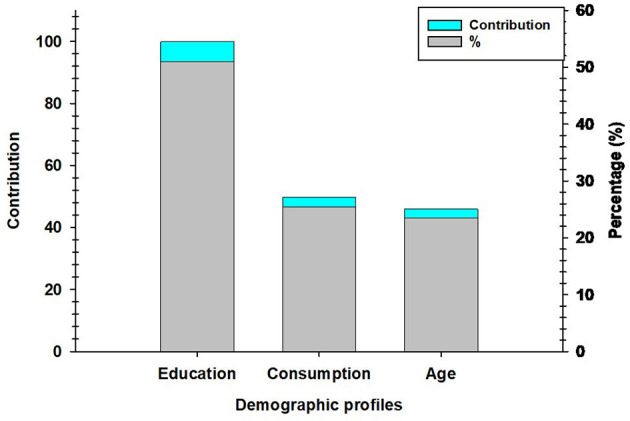
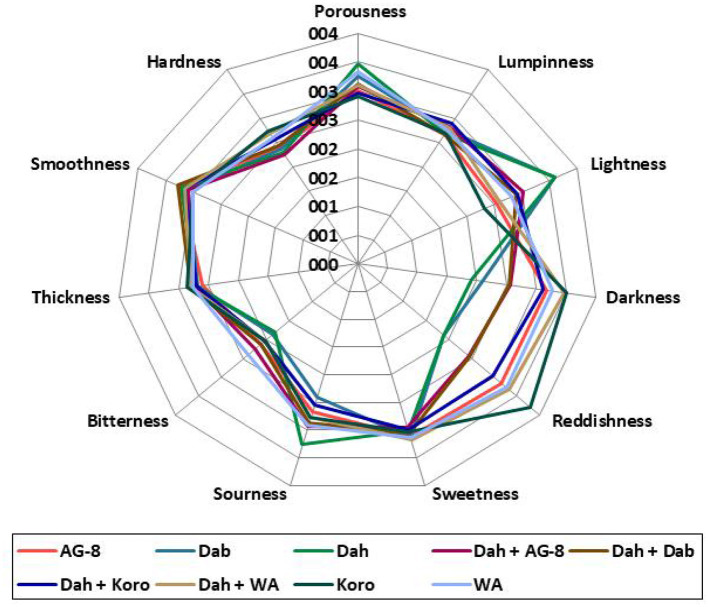
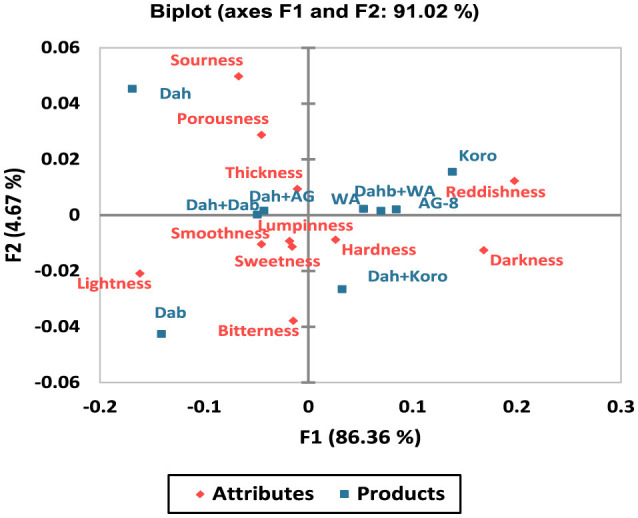
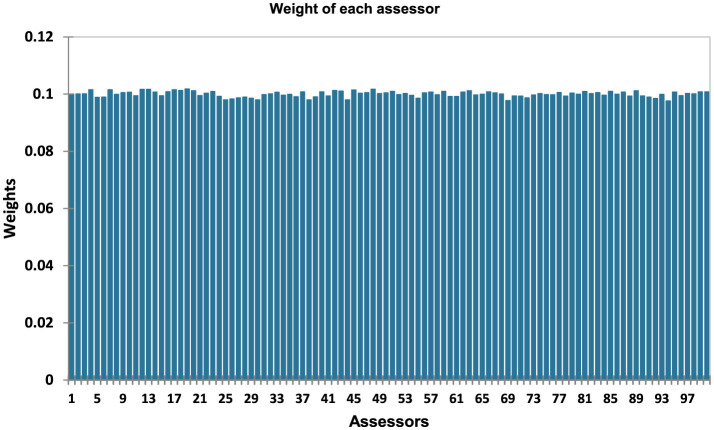
Results and discussion: Kisra made from the biofortified Dahab cultivar received the highest overall liking scores (~8, "like very much"), whereas blends such as Dahab + Dabar and Dahab + Arfa-gadamek showed moderate sensory acceptance (~7). Hierarchical agglomerative analysis grouped the assessors into three clusters comprising 50%, 26%, and 24% of the panel. Among the demographic factors, education level had the most significant influence on overall liking (51%), followed by consumption frequency (25.5%), and age (23.5%). The RATA model demonstrated a high assessor repeatability (0.994), homogeneity (0.904), and low global error (9.617). Sensory attributes, namely porousness, thickness, and sourness, were key drivers of preferences for Kisra made from Dahab. These findings underscore the effectiveness of RATA in the product and scaling biofortified Kisra to combat malnutrition and cater to diverse consumer preferences.
Keywords: Kisra; Sudan; malnutrition; market segmentation; sensory acceptance.
Copyright © 2025 Sayed Abdelhalim, Gobara Hamid, Shaheen, Böhme, Sir Elkhatim, Idris, Hamad, Muneer, Rahmatov and Elsafy.
Conflict of interest statement
The authors declare that the research was conducted in the absence of any commercial or financial relationships that could be construed as a potential conflict of interest.
Figures
References
-
- Abusalih H, Sabeib ZA. Update of the nutritional situation in the Republic of the Sudan. N Afr J Food Nutr Res. (2020) 4, S17–24. 10.51745/najfnr.4.9.S17-S24 - DOI
-
- Fadol AA, Tong G, Raza A, Mohamed WM. Consumption patterns, integrated food security phase classification, and the multifaceted nature of food insecurity in Sudan. GeoJournal. (2024) 89:99. 10.1007/s10708-024-11097-4 - DOI
LinkOut - more resources
Full Text Sources
