


Minimal invasive extracorporeal circulation versus conventional cardiopulmonary bypass in cardiac surgery: a contemporary systematic review and meta-analysis
- PMID: 40131383
- PMCID: PMC11985097
- DOI: 10.1093/ejcts/ezaf112
Minimal invasive extracorporeal circulation versus conventional cardiopulmonary bypass in cardiac surgery: a contemporary systematic review and meta-analysis
Abstract
Objectives: The question whether minimally invasive extracorporeal circulation (MiECC) represents the optimal perfusion strategy in cardiac surgery remains unanswered. We sought to systematically review the entire literature and thoroughly address the impact of MiECC versus conventional cardiopulmonary bypass (cCPB) on adverse clinical outcomes after cardiac surgery.
Methods: We searched PubMed, Scopus and Cochrane databases for appropriate articles as well as conference proceedings from major congresses up to 31 August 2024. All randomized controlled trials (RCTs) that fulfilled pre-defined MiECC criteria were included in the analysis. The primary outcome was mortality, while morbidity and transfusion requirements were secondary outcomes. The risk of bias was assessed using the Cochrane Risk of Bias 2 tool. All studies meeting the outcomes of interest of this systematic review were eligible for synthesis.
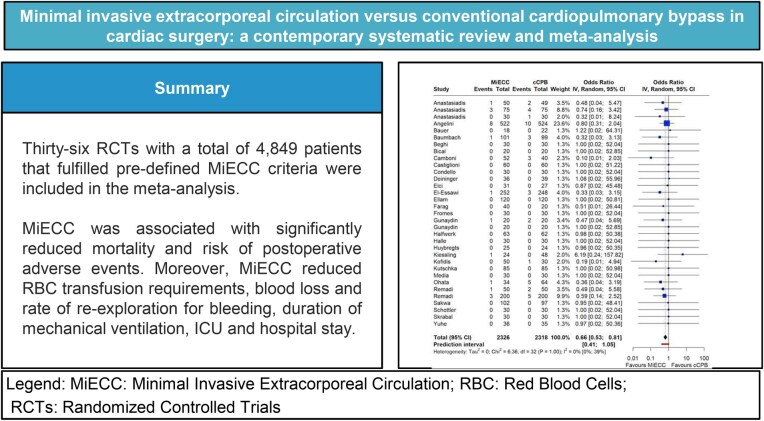
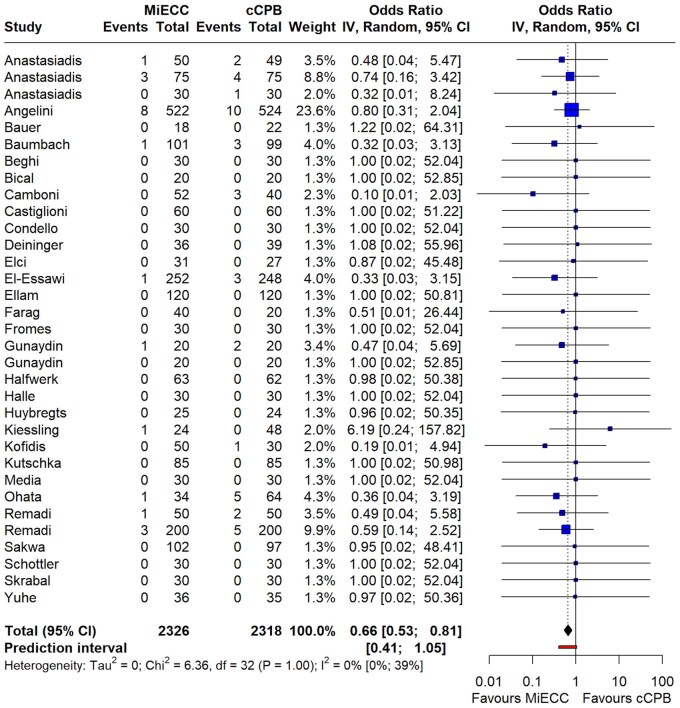
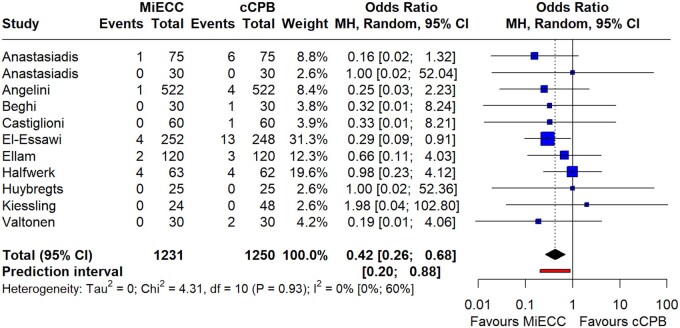
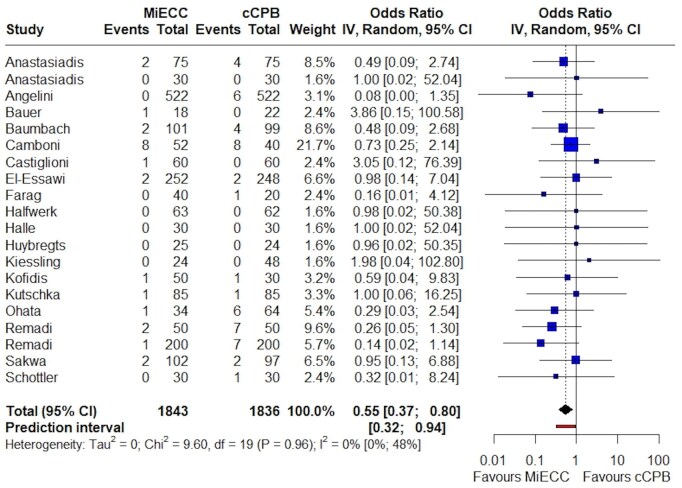
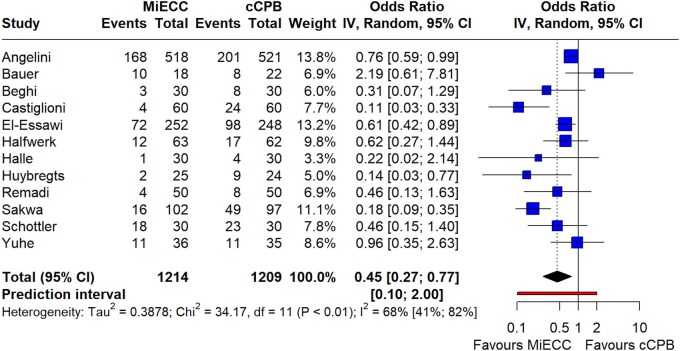
Results: Of the 738 records identified, 36 RCTs were included in the meta-analysis with a total of 4849 patients. MiECC was associated with significantly reduced mortality [odds ratio (OR) 0.66; 95% confidence interval (CI) 0.53-0.81; P = 0.0002; I2 = 0%] as well as risk of postoperative myocardial infarction (OR 0.42; 95% CI 0.26-0.68; P = 0.002; I2 = 0%) and cerebrovascular events (OR 0.55; 95% CI 0.37-0.80; P = 0.007; I2 = 0%). Moreover, MiECC reduced RBC transfusion requirements, blood loss and rate of re-exploration for bleeding together with incidence of atrial fibrillation. This resulted in significantly reduced duration of mechanical ventilation, ICU and hospital stay.
Conclusions: This meta-analysis provides robust evidence for the beneficial effect of MiECC in reducing postoperative morbidity and mortality after cardiac surgery and prompts for a wider adoption of this technology.
Keywords: Cardiopulmonary bypass; Coronary artery bypass grafting; Extracorporeal circulation; Meta-analysis; Minimal invasive extracorporeal circulation.
© The Author(s) 2025. Published by Oxford University Press on behalf of the European Association for Cardio-Thoracic Surgery.
Figures
References
-
- Kim KM, Arghami A, Habib R et al. The Society of Thoracic Surgeons Adult Cardiac Surgery Database: 2022 update on outcomes and research. Ann Thorac Surg 2023;115:566–74. - PubMed
-
- Wahba A, Milojevic M, Boer C et al. ; EACTS/EACTA/EBCP Committee Reviewers. 2019 EACTS/EACTA/EBCP guidelines on cardiopulmonary bypass in adult cardiac surgery. Eur J Cardiothorac Surg 2020;57:210–51. - PubMed
-
- Anastasiadis K, Murkin J, Antonitsis P et al. Use of minimal invasive extracorporeal circulation in cardiac surgery: principles, definitions and potential benefits. A position paper from the Minimal invasive Extra-Corporeal Technologies international Society (MiECTiS). Interact CardioVasc Thorac Surg 2016;22:647–62. - PMC - PubMed
-
- Anastasiadis K, Antonitsis P, Haidich AB, Argiriadou H, Deliopoulos A, Papakonstantinou C. Use of minimal extracorporeal circulation improves outcome after heart surgery; a systematic review and meta-analysis of randomized controlled trials. Int J Cardiol 2013;164:158–69. - PubMed
Publication types
MeSH terms
LinkOut - more resources
Full Text Sources
Medical
